BPC-157 For Weight Loss: What Science Says (2026)
BPC-157 for Weight Loss – (🔥COMPLETE GUIDE & RESEARCH!). Discover potential benefits, limitations, safety concerns, and expert insights.
BPC-157 for Weight Loss: Understanding the Science Behind This Popular Peptide
Weight loss remains one of the most searched health topics worldwide, with many people looking beyond traditional approaches to find new solutions for managing body composition, metabolism, and overall wellness.
Understanding what BPC-157 is, what research actually shows, and how it may relate to weight management can help separate scientific evidence from online speculation.
BPC-157 is a synthetic peptide derived from a naturally occurring protective protein sequence found in gastric juices.
Researchers have studied it primarily for its potential role in healing processes, inflammation pathways, and tissue recovery.
For anyone considering BPC-157 for body composition goals, it is important to understand both the potential mechanisms being investigated and the current limitations of available evidence.
What Is BPC-157?
BPC-157 stands for Body Protection Compound-157. It is a laboratory-created peptide made up of 15 amino acids that researchers have studied for its possible biological effects.
Peptides are short chains of amino acids that act as signaling molecules in the body. They can influence different processes by interacting with cells, tissues, and biological pathways.
BPC-157 has received attention because early research suggests it may be involved in areas such as:
- Tissue repair
- Blood vessel formation
- Inflammatory response regulation
- Digestive system support
- Cellular recovery processes
The peptide was originally researched because of its connection with protective factors found in the digestive system.
Scientists became interested in whether it could support healing beyond the stomach environment.
Most available studies involving BPC-157 have been performed on animals or laboratory models.
Human clinical research remains limited, meaning many popular claims about its effects are still being investigated.
Why Are People Searching for BPC-157 and Weight Loss?
The connection between BPC-157 and weight loss comes from several areas of interest.
Many people looking into this peptide are interested in improving:
- Body composition
- Exercise recovery
- Physical performance
- Metabolic health
- Fat management
The interest has grown partly because some experimental studies suggest BPC-157 may influence pathways related to inflammation, blood flow, and energy regulation.
Chronic inflammation and metabolic dysfunction are often associated with weight management challenges.
Supporting certain body processes does not automatically mean a substance causes fat loss.
Weight loss typically depends on multiple factors, including:
- Energy balance
- Nutrition quality
- Physical activity
- Sleep patterns
- Hormonal health
- Stress management
- Individual genetics
A peptide that affects one biological pathway may not create meaningful changes in body weight without other lifestyle factors.
Does BPC-157 Help With Weight Loss?
Currently, there is not enough human evidence to confirm that BPC-157 directly causes weight loss.
Some early research has created interest because BPC-157 appears to interact with systems that may influence overall health.
These include processes related to inflammation control, circulation, and tissue recovery.
It is not currently established as a weight-loss medication, and it has not been approved by major regulatory agencies specifically for reducing body weight.
The claims surrounding BPC-157 and weight management are mainly based on:
- Animal studies
- Laboratory research
- Anecdotal reports
- Theoretical biological connections
More controlled human studies are needed before researchers can determine whether BPC-157 has a meaningful effect on weight reduction.
How BPC-157 May Be Connected to Body Weight Research
Although direct weight-loss evidence is limited, researchers have explored several possible pathways that may explain why people associate BPC-157 with metabolic health.
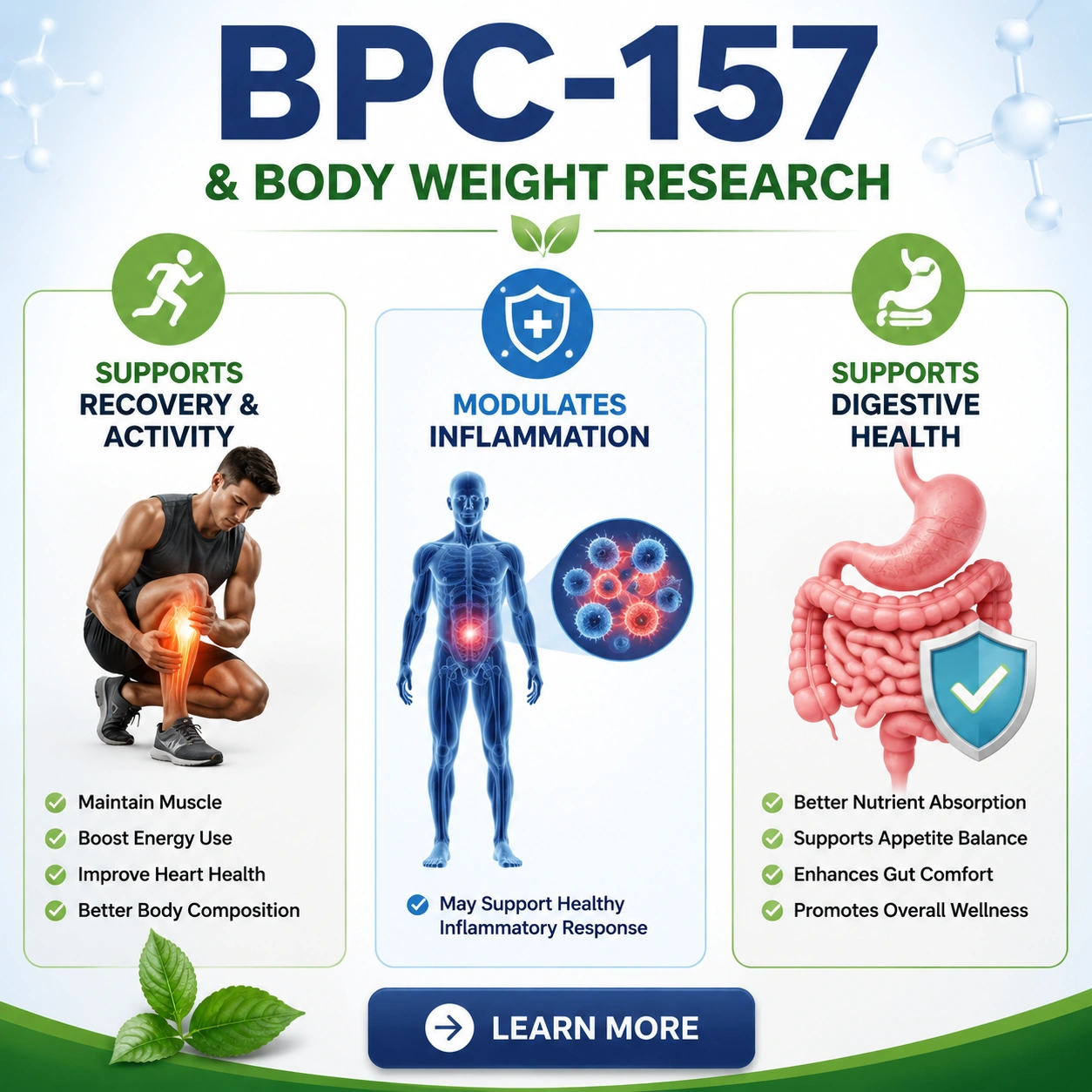
Supporting Recovery and Physical Activity
One reason BPC-157 attracts attention among athletes and fitness communities is its connection with recovery research.
Some experimental studies suggest BPC-157 may support repair processes involving muscles, tendons, and other tissues.
Improved recovery may indirectly support weight management because people who recover better from exercise may be able to maintain more consistent activity routines.
Regular movement plays an important role in:
- Maintaining muscle mass
- Supporting energy expenditure
- Improving cardiovascular health
- Managing body composition
Exploring Inflammation Pathways
Inflammation is often discussed in relation to obesity and metabolic health.
Excess body fat, especially around internal organs, can be associated with increased inflammatory activity. Researchers continue studying how inflammation affects metabolism and weight regulation.
Because BPC-157 has been investigated for its possible influence on inflammatory responses, scientists have explored whether it may have broader effects on body systems.
Possible Effects on Digestive Health
The digestive system plays an important role in overall wellness and metabolism.
Research into BPC-157 has focused heavily on gastrointestinal processes. Some studies suggest it may support certain protective mechanisms in the digestive tract.
This has contributed to speculation about possible connections between BPC-157 and weight management.
Digestive health can influence:
- Nutrient absorption
- Appetite regulation
- Gut comfort
- Overall wellness
BPC-157 and Metabolism: What Researchers Are Investigating
Metabolism involves the complex network of processes that convert food into energy and regulate how the body stores and uses fuel.
Researchers interested in BPC-157 are examining whether the peptide may influence biological pathways connected with:
- Cellular communication
- Blood vessel development
- Recovery responses
- Stress adaptation
Some experimental findings suggest BPC-157 may affect certain signaling pathways involved in healing and regeneration.
However, metabolism is controlled by many systems, including:
- Insulin sensitivity
- Hormones
- Liver function
- Muscle activity
- Dietary intake
- Sleep quality
A single peptide is unlikely to replace the combined effects of healthy nutrition, exercise, and sustainable lifestyle habits.
Does BPC-157 Burn Fat Directly?
Based on current scientific evidence, there is no confirmed proof that BPC-157 directly burns fat or causes significant weight reduction in humans.
Many online discussions describe BPC-157 as a potential weight-loss peptide because of its possible effects on recovery, inflammation, and cellular processes.
Direct fat reduction usually involves changes in processes such as:
- Reduced calorie intake
- Increased energy expenditure
- Improved appetite regulation
- Enhanced fat metabolism
- Changes in hormonal signaling
BPC-157 has not been clinically proven to activate these processes in humans.
The interest comes mainly from experimental findings showing that BPC-157 may influence certain biological pathways.
Researchers continue studying whether these effects could have broader applications in metabolic health.
The Difference Between Recovery Support and Weight Loss
A common misunderstanding is confusing improved physical recovery with actual weight loss.
If a compound helps the body recover after exercise, it may allow someone to train more consistently.
For example:
- Better recovery may support regular workouts
- Regular workouts may help maintain muscle
- Maintaining muscle may support healthy metabolism
- A consistent routine may contribute to weight management
Weight reduction occurs when the body consistently uses more energy than it consumes. This process depends on a combination of nutrition, movement, sleep, and other health factors.
BPC-157 may be researched for recovery-related benefits, but those potential effects should not be confused with direct weight-loss activity.
Current Scientific Research on BPC-157
Most research involving BPC-157 has been conducted through laboratory studies and animal models.
Researchers have investigated its possible role in areas such as:
- Tissue healing
- Blood vessel development
- Digestive protection
- Inflammatory response
- Recovery processes
Animal studies have produced interesting findings, which is one reason the peptide has attracted attention.
Before a compound can be considered effective for weight loss, researchers typically need:
- Controlled human clinical trials
- Large participant groups
- Long-term safety data
- Clear measurements of body composition changes
Currently, these types of studies are limited for BPC-157 and weight management. This means claims about significant fat loss remain unconfirmed.
Why Human Research Matters
Many health compounds appear promising during early research stages but produce different results when tested in humans.
Human Biology Is More Complex
The human body involves thousands of interacting systems.
A substance that affects one pathway may not create noticeable changes in overall health or body weight.
Weight management involves interactions between:
- Brain signals
- Hormones
- Digestive processes
- Muscle activity
- Fat storage systems
- Lifestyle behaviors
Dosage and Long-Term Effects Are Still Unclear
Another challenge with BPC-157 research is understanding appropriate use.
Researchers are still studying:
- Effective amounts
- Duration of use
- Long-term effects
- Potential interactions
Without enough human data, it is difficult to determine how BPC-157 should be used for weight-related goals.
Potential Benefits Being Studied Beyond Weight Loss
Although BPC-157 is not established as a weight-loss treatment, researchers have investigated several other possible areas.
Tissue Recovery Support
BPC-157 gained attention because of studies examining its relationship with healing processes.
Research has explored whether it may support recovery involving:
- Muscles
- Tendons
- Ligaments
- Other tissues
Digestive System Research
BPC-157 has been studied for possible protective effects within the digestive system.
Some research suggests it may influence processes involved with maintaining normal gastrointestinal function.
Because digestive health is connected with overall wellness, this area continues to receive scientific interest.
Inflammatory Response Research
Researchers have examined whether BPC-157 may influence certain inflammatory pathways.
Inflammation is an important area of study because long-term inflammatory activity can affect many aspects of health.
However, more research is needed to understand whether these findings have meaningful effects in humans.
Safety Concerns and Possible Risks of BPC-157
Because human research is limited, the complete safety profile of BPC-157 is not fully understood.
Potential concerns include:
Limited Long-Term Data
One of the biggest challenges is the lack of large, long-term human studies. Researchers do not yet have enough information about extended use.
Important unanswered questions include:
- How does long-term use affect the body?
- Are there risks from repeated exposure?
- How does it interact with existing health conditions?
Product Quality Concerns
Another concern is product quality.
Because BPC-157 is often discussed in research and online communities, some products may vary in:
- Purity
- Manufacturing standards
- Label accuracy
- Storage conditions
Consumers should be careful with products that make unrealistic promises.
Possible Side Effects
Reported experiences vary because controlled human studies are limited.
Some individuals have reported issues such as:
- Headache
- Nausea
- Fatigue
- Changes at the injection site
Anyone considering experimental peptides should discuss their situation with a qualified healthcare professional.
Who Should Be Especially Careful With BPC-157?
Extra caution may be appropriate for people who:
- Are pregnant or breastfeeding
- Have serious medical conditions
- Take prescription medications
- Have hormone-related conditions
- Have a history of complex health issues
Because research is still developing, individual health circumstances matter.
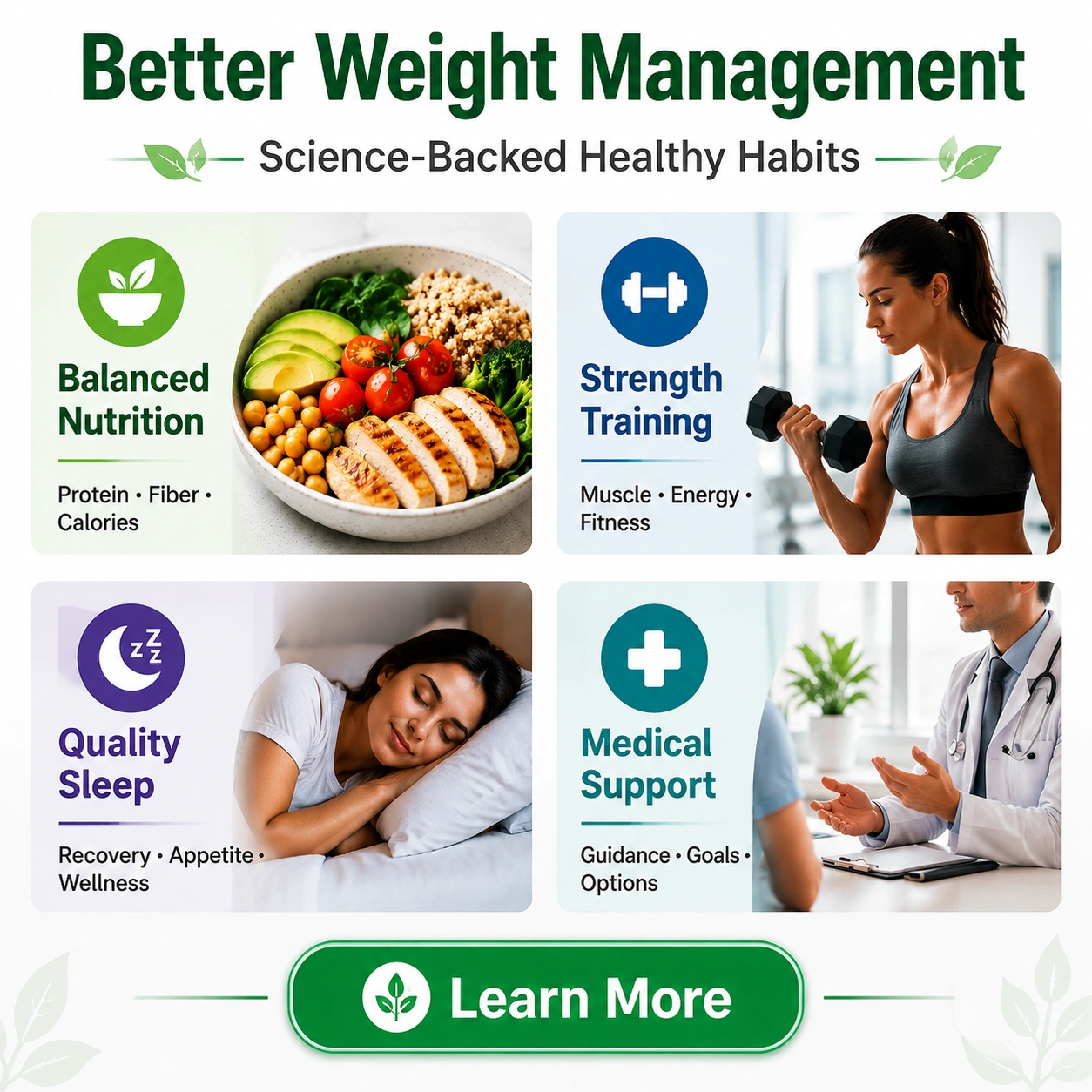
Better-Supported Approaches for Weight Management
While research continues on compounds like BPC-157, several approaches have stronger scientific support.
✦Balanced Nutrition
A sustainable eating pattern remains one of the strongest foundations for managing body weight.
Important factors include:
- Adequate protein intake
- High-fiber foods
- Nutrient-rich meals
- Appropriate calorie balance
✦Strength Training and Regular Movement
Exercise supports:
- Muscle maintenance
- Energy use
- Physical function
- Overall health
Resistance training is especially valuable because maintaining muscle can support a healthier body composition.
✦Quality Sleep
Sleep affects many systems related to weight management.
Poor sleep may influence:
- Hunger signals
- Food choices
- Energy levels
- Recovery ability
✦Medical Weight Management Options
For individuals with obesity or weight-related health concerns, evidence-based medical options may be available.
Healthcare providers can evaluate:
- Health history
- Weight goals
- Risk factors
- Appropriate treatment options
BPC-157 vs. Proven Weight Loss Treatments
BPC-157 and approved weight-management treatments are very different.
Established weight-loss treatments have undergone clinical testing to evaluate:
- Effectiveness
- Safety
- Proper dosing
- Long-term outcomes
BPC-157 remains an experimental peptide with limited human evidence. The difference is the level of scientific validation.
Final Verdict: Is BPC-157 Worth Considering for Weight Loss?
BPC-157 has generated significant interest because of its potential role in recovery, inflammation research, and cellular processes.
However, current evidence does not prove that BPC-157 directly causes weight loss or burns fat in humans.
The peptide may continue to be studied because early research has shown interesting biological activity. Future clinical trials may provide more information about its possible applications.
For sustainable weight management, proven strategies such as nutrition, exercise, sleep improvement, and professional medical guidance remain the most reliable approaches.
BPC-157 is an interesting area of research, but it should be viewed as experimental rather than a guaranteed solution for losing weight.

.
