GLP-1 Probiotic: Benefits, Gut Health, and How It Works
Interest in GLP-1 probiotics is growing as more people explore natural ways to support weight management, digestive health, and metabolic wellness.
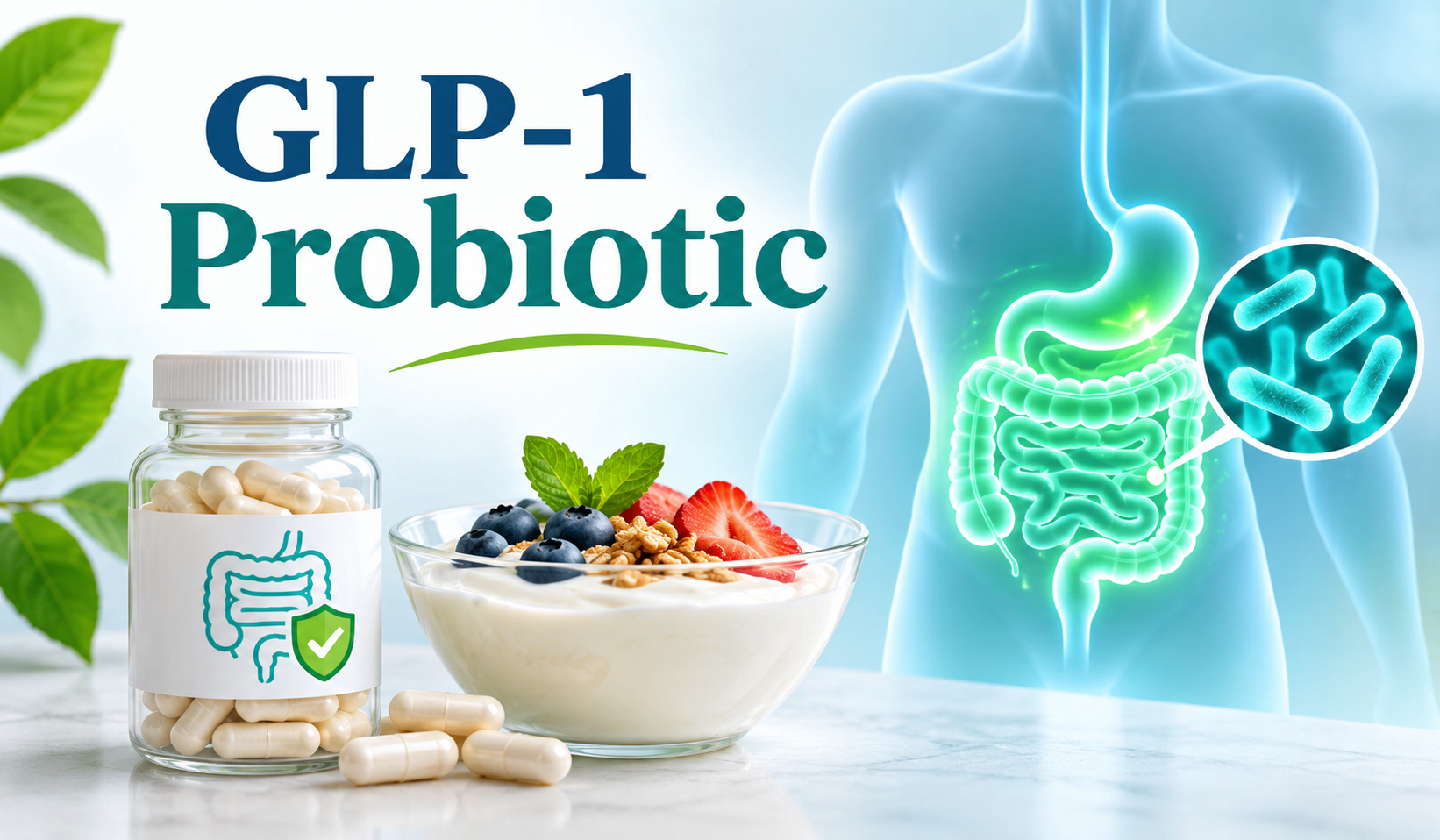
GLP-1 medications have transformed the conversation around appetite control and weight loss, researchers are also studying how beneficial gut bacteria may influence the body’s natural production of GLP-1.
The connection is fascinating because the digestive system does much more than break down food. It communicates with the brain, helps regulate blood sugar, and produces hormones that influence hunger and fullness. The trillions of microorganisms living in the gut may play an important role in these processes.
This has led to increased attention on GLP-1 probiotic supplements, particularly products containing beneficial microorganisms associated with digestive function and metabolic health.
But can probiotics actually increase GLP-1? Do they help with weight loss? And could they offer a natural alternative to prescription GLP-1 medications?
This comprehensive guide explores the science behind GLP-1 probiotics, their potential benefits, the bacterial strains being researched, and practical ways to support your gut microbiome.
 GLP-1 Starting at $59 Per Month – 100% Online
What Is a GLP-1 Probiotic?
A GLP-1 probiotic is a term commonly used to describe a probiotic supplement designed to support gut health and potentially influence the body’s natural glucagon-like peptide-1 (GLP-1) activity.
GLP-1 is a hormone produced primarily by specialized intestinal cells called L cells. It is released after eating and plays an important role in regulating appetite, blood glucose, and digestion.
Probiotics are beneficial live microorganisms that can support certain aspects of digestive health when consumed in adequate amounts.
Some researchers believe specific gut bacteria may influence GLP-1 secretion through their interactions with intestinal cells, dietary fibers, and microbial metabolites.
Unlike prescription GLP-1 medications, probiotics do not directly act as pharmaceutical GLP-1 receptor agonists. Instead, researchers are investigating whether they can help support the biological environment involved in natural GLP-1 regulation.
The term “GLP-1 probiotic” is primarily a marketing or descriptive category rather than an established medical classification.
How Do GLP-1 Probiotics Work?
The relationship between probiotics and GLP-1 involves several biological pathways connecting the gut microbiome, digestive system, and metabolic processes.
1. Supporting the Gut Microbiome
The gut microbiome contains trillions of microorganisms that help digest food, interact with the immune system, and produce biologically active compounds.
Specific probiotics may influence the microbial environment by interacting with existing bacteria and supporting digestive processes.
A diverse, well-functioning microbiome is associated with several aspects of metabolic health, including glucose regulation and energy balance.
Researchers are investigating whether changes in particular bacterial populations can influence GLP-1 release.
2. Producing Short-Chain Fatty Acids
When intestinal bacteria ferment certain dietary fibers, they produce compounds called short-chain fatty acids (SCFAs).
Three important SCFAs include acetate, propionate, and butyrate.
These compounds help support intestinal function and may interact with receptors on hormone-producing intestinal cells.
Laboratory and animal research suggests that some SCFAs can stimulate pathways involved in GLP-1 secretion. Human responses are more complex, and increasing SCFAs does not necessarily guarantee meaningful weight loss.
3. Influencing Appetite Signals
The gut and brain constantly exchange information through hormonal and nervous-system pathways.
GLP-1 is one of the hormones involved in communicating fullness after meals.
Researchers are examining whether particular microorganisms influence appetite-related signaling by changing the intestinal environment or producing specific metabolites.
This is a promising field, but everyday probiotic supplements have not been shown to reproduce the powerful appetite-suppressing effects of prescription GLP-1 drugs.
4. Supporting Blood Sugar Regulation
GLP-1 helps stimulate insulin secretion when blood glucose levels rise and reduces inappropriate glucagon secretion.
The intestinal microbiome may also influence how the body processes nutrients and responds to glucose.
Some probiotic interventions have produced improvements in certain metabolic markers, but findings depend on the strains, participants, and study design.
Probiotics should therefore be considered a possible addition to metabolic health strategies rather than an established treatment for diabetes.
Potential Benefits of GLP-1 Probiotics
GLP-1 probiotics are being investigated for several potential benefits. The strength of evidence varies considerably between outcomes.
Digestive Health Support
Some well-studied probiotic strains can support digestive regularity and help with specific gastrointestinal symptoms. Their benefits depend on the strain and the condition being addressed.
Healthy Appetite Regulation
Gut bacteria may influence the hormonal signals involved in hunger and fullness. Scientists are studying whether targeted microbial interventions can meaningfully influence these responses.
Weight Management Support
Some probiotic trials have reported modest changes in weight, waist circumference, or body composition. Results remain inconsistent, and probiotic supplements are not established weight-loss treatments.
Metabolic Wellness
Certain probiotics and related microbiome interventions may influence glucose metabolism and insulin sensitivity. These effects are being investigated as part of broader metabolic health research.
Gut Barrier Function
Some beneficial microorganisms interact with the intestinal lining and may help maintain normal gut barrier function. A healthy intestinal barrier plays an important role in digestive and immune health.
Support for a Balanced Microbiome
A microbiome-friendly diet, sometimes combined with targeted probiotics, may help maintain beneficial microbial activity. This is relevant to overall digestive health as well as ongoing research into metabolic signaling.
GLP-1 Starting at $59 Per Month – 100% Online
Best Probiotic Strains Being Studied for GLP-1 Support
Not all probiotics work the same way. Different bacterial species and strains have distinct effects, making it important to understand which microorganisms are being studied.
1. Akkermansia muciniphila
One of the most interesting microorganisms in metabolic research, Akkermansia muciniphila lives in the intestinal mucus layer and has been studied for its relationship with intestinal barrier function, glucose regulation, and body composition.
A 2026 randomized trial involving 142 adults found that pasteurized Akkermansia increased GLP-1 responses in certain subgroups, especially participants with low baseline levels of the bacterium. The study did not meet its primary endpoint for improved whole-body insulin sensitivity across all participants.
2. Lactobacillus-related species
Species traditionally grouped under Lactobacillus are commonly used in fermented foods and probiotic products.
Researchers are examining how particular strains affect intestinal activity, microbial metabolites, and metabolic signaling.
Findings from one strain cannot automatically be applied to other strains, even when they belong to the same species.
3. Bifidobacterium species
Bifidobacterium species are common members of the human intestinal microbiome.
Some strains can help break down dietary carbohydrates and participate in microbial fermentation.
Their effects on gut function make them relevant to metabolic research, but evidence that ordinary Bifidobacterium supplements reliably increase GLP-1 remains preliminary.
The National Institutes of Health emphasizes that probiotic effects are strain-specific. Choosing a product based only on a familiar bacterial name is not enough to establish its effectiveness.
Do GLP-1 Probiotics Really Help With Weight Loss?
One of the biggest questions surrounding GLP-1 probiotics is whether they can help people lose weight naturally.
The answer is that some probiotic interventions show potential for modest weight-management benefits, but they are not proven substitutes for GLP-1 medications.
Body weight is influenced by multiple factors, including calorie intake, physical activity, sleep, genetics, hormonal regulation, and metabolic health. Gut bacteria may contribute to some of these processes.
Researchers have identified associations between microbial composition and obesity. Certain bacterial populations may affect how dietary fiber is fermented, how intestinal cells communicate with the body, and how metabolism responds to food.
A particularly interesting example is the 2026 study of pasteurized Akkermansia muciniphila. Participants with low baseline levels of the bacterium showed promising changes in several metabolic measurements.
Still, the broader trial results demonstrate why more research is necessary before recommending it as a reliable weight-loss intervention.
For individuals interested in sustainable weight management, probiotics may fit into a larger routine emphasizing nutritious foods, adequate protein, fiber, exercise, and consistent sleep.
GLP-1 Probiotics vs. GLP-1 Medications: What’s the Difference?
Although their names sound similar, probiotics and prescription GLP-1 medications work differently.
| Feature | GLP-1 Probiotics | GLP-1 Medications |
|---|---|---|
| Main approach | Influence gut microbial activity | Activate GLP-1 receptors |
| Appetite effects | Under investigation | Clinically demonstrated |
| Weight loss | Small or uncertain effects | Significant in approved treatments |
| Blood sugar regulation | Possible supportive effects | Established therapeutic effects |
| Availability | Many sold without prescriptions | Prescription required |
| Evidence | Early and strain-dependent | Extensive clinical trials |
| Primary use | Digestive and possible metabolic support | Diabetes and/or weight management |
Prescription medications such as Wegovy and Ozempic contain semaglutide, a GLP-1 receptor agonist.
These medications activate GLP-1 receptors and produce sustained hormonal effects that can reduce appetite, improve blood glucose regulation, and support significant weight loss in appropriate patients.
Probiotics, on the other hand, work primarily within the digestive system and may indirectly influence metabolic signaling.
The key distinction: Supporting natural GLP-1 secretion is not the same as delivering the sustained receptor activation produced by prescription medications.
GLP-1 Starting at $59 Per Month – 100% Online
Best Natural Foods to Support GLP-1 and Gut Health
You do not necessarily need a supplement to support your microbiome. Many everyday foods provide beneficial microorganisms or the fibers that nourish them.
Yogurt and Kefir
Yogurt and kefir containing live cultures provide microorganisms that may support digestive health. Choose unsweetened options when possible and pair them with fiber-rich fruit.
Oats, Barley, and Chia Seeds
These foods contain dietary fibers that support intestinal microbial activity. Soluble and fermentable fibers are particularly relevant to research involving SCFAs and GLP-1 signaling.
Fermented Vegetables
Kimchi and traditionally fermented sauerkraut can provide live microorganisms when they are unpasteurized. Not every fermented product contains proven probiotic strains.
Beans and Lentils
Legumes provide fiber, plant protein, and resistant starch, supporting fullness and microbial fermentation. They are useful foods for a balanced weight-management eating plan.
A combination of fermented foods and diverse fiber sources can support overall gut health. The goal is not to maximize one particular bacterium but to create dietary conditions that encourage a healthy microbial ecosystem.
How to Choose a GLP-1 Probiotic Supplement
If you are considering a probiotic marketed for GLP-1 support, examine its ingredients and supporting research rather than relying on the product name.
Start by looking for the exact microorganism listed on the label, including its genus, species, and strain. Research findings are often specific to individual strains.
Next, review the dose. Many live probiotic products display colony-forming units (CFUs), which indicate the number of viable microorganisms. Higher CFU numbers do not automatically mean better results.
Some emerging microbiome products contain pasteurized bacteria, which are not live probiotics. These should be evaluated based on their specific formulation and clinical research rather than conventional CFU comparisons.
Consider whether the product has been independently tested for identity, quality, and contamination. Clear storage instructions and an expiration date are also important.
Most importantly, look for human clinical trials studying outcomes that matter to you. Research demonstrating changes in a laboratory biomarker does not necessarily prove meaningful reductions in hunger, blood sugar, or body weight.
The NIH notes that there are no universal probiotic recommendations for healthy adults, and the appropriate strain and dose depend on the intended use.
GLP-1 Starting at $59 Per Month – 100% Online
How Long Does a GLP-1 Probiotic Take to Work?
There is no established timeframe for GLP-1 probiotics to improve hormone secretion or produce weight loss.
Some individuals may notice changes in digestive comfort within days or weeks when using probiotics suited to their digestive needs.
Metabolic changes are more difficult to predict.
Clinical trials involving probiotics and related microbiome interventions often assess outcomes over several weeks or months.
For example, the 2026 Akkermansia muciniphila trial evaluated participants over 16 weeks, with certain exploratory effects observed after approximately three months.
That does not mean consumers should expect equivalent results after 90 days. The findings involved a particular preparation, defined participant groups, and carefully controlled research conditions.
Anyone trying a probiotic should set realistic expectations and judge its usefulness based on the specific health goal rather than assuming it will activate GLP-1 in a noticeable way.
Are GLP-1 Probiotics Safe?
Many commonly used probiotic strains have a good safety record in generally healthy adults.
Temporary digestive symptoms, including gas, bloating, or changes in bowel movements, can occur when beginning a probiotic.
Safety considerations become more important for people with severely weakened immune systems, serious illnesses, or complex medical conditions. Rare but serious infections associated with probiotic microorganisms have been documented in vulnerable patients.
People who are pregnant, managing diabetes, or taking prescription medications should discuss new supplements with their healthcare professional when appropriate.
Probiotics should not be used to replace prescribed diabetes or weight-management treatments.
Can You Take Probiotics With GLP-1 Medications?
Probiotics and GLP-1 medications act through different mechanisms, and some people may use both as part of a medically supervised health routine.
People taking GLP-1 medications sometimes experience digestive side effects such as nausea, constipation, diarrhea, or abdominal discomfort.
Because certain probiotic strains are studied for specific gastrointestinal symptoms, it is reasonable to ask whether they might help.
Still, there is insufficient evidence to recommend a particular probiotic for routinely preventing or treating GLP-1 medication side effects.
A practical approach is to prioritize hydration, appropriate fiber intake, smaller meals when needed, and the dietary guidance provided by your clinician.
If persistent vomiting, severe abdominal pain, or dehydration develops while taking a GLP-1 medication, seek medical advice rather than attempting to manage the symptoms with probiotics alone.
GLP-1 Starting at $59 Per Month – 100% Online
Practical Ways to Support Natural GLP-1 Activity
Supporting your body’s natural GLP-1 response involves more than taking a probiotic capsule.
Eating protein-rich meals can stimulate several digestive hormones involved in fullness and nutrient regulation.
Fiber-rich vegetables, whole grains, fruits, and legumes help support microbial fermentation and overall digestive health.
Regular physical activity improves insulin sensitivity and contributes to weight management through multiple biological pathways.
Adequate sleep can also help regulate appetite-related behaviors and energy balance.
Finally, maintaining consistent eating habits can make it easier to recognize hunger and fullness signals.
Together, these habits provide a more established foundation for long-term metabolic wellness than relying on a supplement that promises dramatic GLP-1 increases.
Final Thoughts:
GLP-1 probiotics represent an interesting direction in digestive and metabolic health research. Scientists are uncovering more about how gut microorganisms interact with intestinal hormones, glucose metabolism, appetite signaling, and body composition.
Among the emerging candidates, Akkermansia muciniphila has produced encouraging findings in selected research populations. Other beneficial microorganisms may also contribute to metabolic health through their effects on microbial fermentation and intestinal function.
For people looking to improve their digestive wellness, consuming varied fiber-rich foods and appropriate probiotic-containing foods is a practical place to begin.
Targeted supplements may become more useful as research identifies which strains, preparations, and doses produce meaningful benefits.
For now, GLP-1 probiotics are best viewed as an emerging area of gut-health research, not a proven natural replacement for GLP-1 medications. A balanced diet, physical activity, sufficient sleep, and individualized medical guidance remain central to sustainable weight management.
GLP-1 Starting at $59 Per Month – 100% Online
References
https://pmc.ncbi.nlm.nih.gov/articles/PMC3757173/
https://www.healthline.com/health/best-supplements-to-support-glp-1s
https://www.webmd.com/diet/what-to-know-probiotics-weight-loss
