GLP-1 for PCOS: Can It Improve Hormonal Balance?
Polycystic ovary syndrome (PCOS) can make weight management feel like an uphill battle. You may follow a balanced diet, exercise regularly, and make healthier lifestyle choices, yet still struggle with stubborn weight gain, unpredictable periods, persistent cravings, and hormonal changes. For many women, these challenges are closely connected to insulin resistance, a common metabolic feature of PCOS.
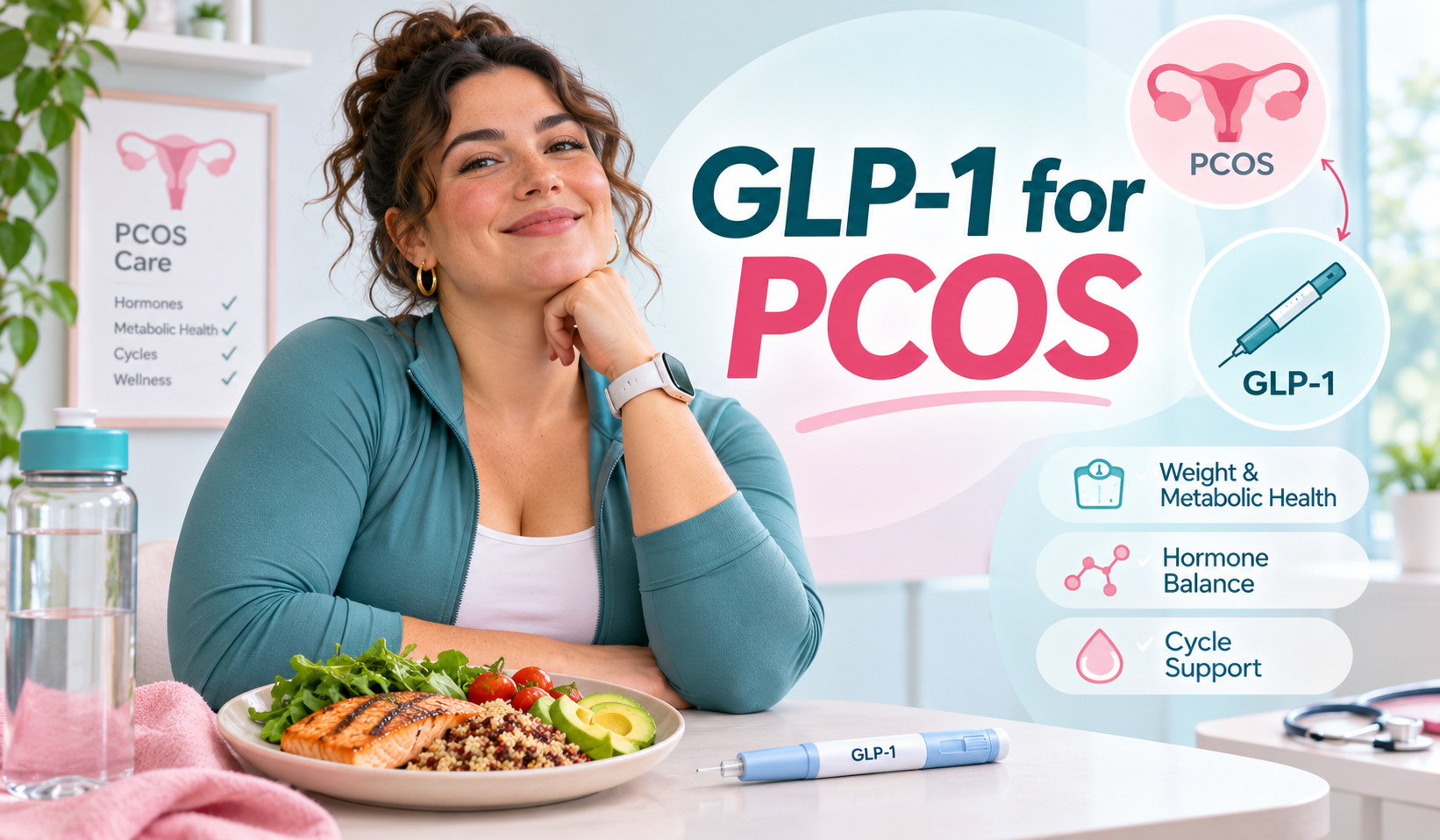
GLP-1 for PCOS has become an increasingly important topic in women’s health. Medications such as semaglutide and liraglutide are being studied for their ability to support weight management, improve blood sugar regulation, and potentially address certain metabolic and reproductive complications associated with PCOS.
These treatments do more than simply reduce appetite. By influencing hunger signals, insulin activity, and metabolic function, GLP-1 medications may help address several interconnected problems that make PCOS difficult to manage.
But can GLP-1 medications actually improve PCOS symptoms? Can they help regulate menstrual cycles, reduce abdominal fat, or support fertility?
Understanding how these medications work, who may benefit, and what the research currently shows can help women make informed decisions about their PCOS treatment options.
 GLP-1 Starting at $59 Per Month – 100% Online
What Is GLP-1 for PCOS?
GLP-1 for PCOS refers to the use of glucagon-like peptide-1 receptor agonist medications to manage certain metabolic complications associated with polycystic ovary syndrome. These medications mimic a naturally occurring intestinal hormone called GLP-1, which helps regulate appetite, blood glucose levels, and feelings of fullness.
PCOS is a hormonal and metabolic disorder that can affect menstrual cycles, ovulation, androgen levels, and insulin sensitivity. Many women with PCOS experience insulin resistance, which means their bodies require more insulin to maintain normal blood sugar levels.
Elevated insulin levels can stimulate the ovaries to produce more androgens, contributing to irregular periods, acne, unwanted facial hair, and difficulty ovulating.
GLP-1 medications may help women with PCOS by promoting weight loss, improving glucose regulation, and supporting insulin sensitivity. Improvements in these metabolic factors may also benefit certain reproductive symptoms.
GLP-1 medications are not specifically FDA-approved to treat PCOS itself. Their use for PCOS-related concerns is generally considered off-label unless prescribed for another approved indication, such as obesity or type 2 diabetes.
How Does GLP-1 Work for PCOS?
GLP-1 medications work by activating receptors involved in appetite regulation, insulin secretion, and digestion. These actions can be particularly relevant for women with PCOS who experience insulin resistance, excess weight, or difficulties managing hunger.
One of their primary effects is increasing feelings of fullness. GLP-1 medications influence appetite-regulating pathways in the brain, helping reduce hunger and making it easier to maintain a calorie deficit.
They also stimulate insulin secretion when blood glucose levels are elevated and reduce inappropriate glucagon release. These effects help regulate blood sugar and may improve metabolic health over time.
Another important action is slowing gastric emptying, particularly during the early stages of treatment. Food moves more slowly from the stomach into the small intestine, which can contribute to longer-lasting fullness.
For women with PCOS, weight loss may help reduce insulin resistance and improve hormonal regulation. As insulin levels become better controlled, some women may experience improvements in ovulatory function and menstrual regularity.
These benefits are not guaranteed, and GLP-1 medications do not directly correct every hormonal abnormality associated with PCOS. Their most established effects involve weight management and metabolic regulation.
GLP-1 Starting at $59 Per Month – 100% Online
Benefits of GLP-1 for PCOS
GLP-1 medications may offer several advantages for women with PCOS, especially when insulin resistance and excess body weight contribute to their symptoms.
1. Supports Weight Loss
Weight management is one of the most widely recognized benefits of GLP-1 treatment.
Women with PCOS sometimes experience increased hunger, insulin resistance, and metabolic challenges that make weight loss difficult. GLP-1 medications help regulate appetite and promote fullness, which may support gradual, sustained weight reduction.
Even modest weight loss can improve certain metabolic and reproductive outcomes in some women with PCOS. Individual results depend on medication, dosage, lifestyle, and underlying health conditions.
2. Improves Insulin Resistance
Insulin resistance is a major contributor to metabolic complications in PCOS.
GLP-1 medications improve blood glucose control, and weight reduction during treatment may increase insulin sensitivity. This can be especially useful for women who have prediabetes, obesity, or other metabolic risk factors.
Better insulin regulation may also reduce some of the hormonal effects associated with elevated insulin levels.
3. May Improve Menstrual Regularity
Irregular menstrual cycles are among the most common symptoms of PCOS.
Some studies suggest that GLP-1 treatment, particularly when accompanied by weight loss, may improve menstrual frequency and ovulatory function in certain women.
Improved insulin sensitivity may help create a hormonal environment more supportive of regular ovulation.
Research is still developing, and menstrual improvements vary between individuals.
4. May Reduce Elevated Androgen Levels
Women with PCOS may experience elevated testosterone and other androgen hormones, contributing to acne, excess facial hair, and scalp hair thinning.
Weight loss and improved insulin sensitivity may help lower androgen levels in some women.
However, GLP-1 medications are not established treatments for androgen-related symptoms themselves, and improvements in acne or unwanted hair growth are less predictable.
5. Supports Cardiometabolic Health
PCOS is associated with an increased risk of metabolic complications, including impaired glucose tolerance, type 2 diabetes, abnormal cholesterol levels, and cardiovascular risk factors.
GLP-1 medications may improve several of these factors, particularly through weight reduction and blood sugar regulation.
Certain GLP-1 medications also have demonstrated cardiovascular benefits in specific populations, although those findings should not automatically be applied to every woman with PCOS.
Best GLP-1 Medications for PCOS
Several medications that act on the GLP-1 pathway have been investigated or used in women with PCOS. The appropriate option depends on weight-related health needs, blood glucose status, medication tolerance, pregnancy plans, and medical history.
Semaglutide for PCOS
Semaglutide is an active ingredient found in medications such as Ozempic and Wegovy.
It works by activating GLP-1 receptors, reducing appetite, improving glucose-dependent insulin activity, and supporting weight loss.
Semaglutide has attracted interest as a potential treatment for women with PCOS who experience obesity and insulin resistance.
Small studies have reported improvements in body weight, insulin-related measurements, and menstrual regularity in some participants. However, larger PCOS-specific trials are needed to establish its long-term reproductive benefits.
Liraglutide for PCOS
Liraglutide is another GLP-1 receptor agonist and is found in medications such as Saxenda and Victoza.
Unlike once-weekly semaglutide formulations, liraglutide is generally administered as a daily injection.
Liraglutide has been studied in women with PCOS, with research showing potential improvements in body weight, insulin resistance, and certain hormonal or menstrual outcomes.
It may be considered when clinically appropriate, particularly for women who meet established criteria for weight-management medication.
Tirzepatide for PCOS
Tirzepatide, found in Mounjaro and Zepbound, activates both GIP and GLP-1 receptors.
This dual action helps regulate blood glucose and appetite and can produce substantial weight loss in eligible patients.
Because excess weight and insulin resistance are common PCOS-related concerns, tirzepatide has generated interest as a possible treatment option.
However, direct research on tirzepatide specifically for PCOS remains less established than its evidence for obesity and type 2 diabetes. Its effects on PCOS-specific reproductive outcomes require further investigation.
GLP-1 Starting at $59 Per Month – 100% Online
GLP-1 for PCOS Weight Loss: What Results Can You Expect?
Weight loss is often one of the most noticeable outcomes of GLP-1 treatment. Yet the amount and speed of weight reduction vary considerably.
Women with PCOS may experience weight-management difficulties because of insulin resistance, appetite changes, sleep disturbances, and other metabolic or lifestyle factors.
GLP-1 medications can help address appetite regulation and energy intake, making it easier to follow a sustainable eating plan.
Some women notice reduced hunger during the first few weeks, while meaningful changes in body weight usually develop over several months.
Results depend on multiple factors, including the medication prescribed, dose adjustments, baseline weight, dietary habits, physical activity, and individual response.
Large obesity trials have demonstrated substantial average weight loss with certain GLP-1-based treatments, but these findings cannot be assumed to represent identical results in women with PCOS.
Importantly, GLP-1 treatment is not a replacement for nutrition, physical activity, sleep, and long-term metabolic care.
Women with PCOS can benefit from sustainable lifestyle changes regardless of whether they use medication or experience significant weight loss.
Can GLP-1 Help Balance Hormones in Women With PCOS?
Hormonal imbalance is central to PCOS, but it involves several interacting systems rather than a single hormone.
Many women with PCOS experience increased androgen activity, abnormal insulin signaling, and disrupted ovulation. These changes can affect menstruation, skin health, fertility, and metabolism.
GLP-1 medications do not directly replace reproductive hormones or restore a specific hormonal balance.
Instead, their potential hormonal benefits are largely indirect.
When weight decreases and insulin sensitivity improves, elevated insulin levels may decline. This can reduce stimulation of ovarian androgen production in some women.
These metabolic improvements may contribute to more regular ovulation and menstrual cycles.
However, women with PCOS who have a normal body weight may experience different treatment outcomes. Not everyone with PCOS has significant insulin resistance, and weight loss is not necessary or appropriate for every patient.
Treatment should therefore focus on individual symptoms and health priorities rather than assuming that one medication can address every aspect of PCOS.
GLP-1 for PCOS and Fertility: Can It Improve Ovulation?
Fertility is an important concern for many women with PCOS, especially those who experience irregular ovulation.
PCOS is a leading cause of anovulatory infertility, meaning ovulation occurs infrequently or not at all.
Insulin resistance and elevated androgen levels can interfere with normal follicle development and ovulation.
For some women, weight reduction and improved metabolic health can help restore more regular ovulatory cycles. This has led researchers to investigate whether GLP-1 medications could support reproductive outcomes.
Some small studies have reported improved menstrual or ovulatory measures following GLP-1 treatment. Nevertheless, evidence that these medications directly improve live birth rates remains insufficient.
GLP-1 medications should not be used as fertility drugs or continued during pregnancy.
Women planning pregnancy should discuss medication discontinuation and appropriate contraception with their healthcare professional. For example, prescribing information for semaglutide recommends stopping treatment at least two months before a planned pregnancy.
Women with PCOS who are actively trying to conceive may benefit from established fertility treatments, such as letrozole for ovulation induction, depending on their circumstances.
GLP-1 Starting at $59 Per Month – 100% Online
GLP-1 vs. Metformin for PCOS: Which Is Better?
Metformin and GLP-1 medications are both used to address metabolic concerns associated with PCOS, but they work differently.
Metformin primarily reduces glucose production by the liver and improves insulin sensitivity. It has been used extensively in PCOS management, particularly for metabolic abnormalities and certain menstrual concerns.
GLP-1 medications primarily influence appetite, glucose-dependent insulin secretion, and other metabolic pathways. They generally produce greater weight loss than metformin in comparative studies involving people with overweight or obesity.
For women whose main concern is substantial excess weight, an appropriate GLP-1-based treatment may offer additional benefits.
Metformin may be suitable for other situations, including certain metabolic indications where weight-loss medication is not needed.
Some research has explored combining metformin with GLP-1 therapy in women with PCOS. Combination treatment may improve selected metabolic outcomes, but it is not necessary or appropriate for everyone.
The decision depends on treatment goals, potential side effects, medication costs, access, and pregnancy intentions.
Neither medication should automatically be considered the best choice for every woman with PCOS.
Side Effects and Safety of GLP-1 Medications for PCOS
Although GLP-1 medications can provide meaningful metabolic benefits, they may cause side effects.
Digestive symptoms are particularly common when treatment begins or the dosage increases.
Potential side effects include:
- Nausea and occasional vomiting
- Constipation or diarrhea
- Abdominal discomfort and bloating
- Reduced appetite
- Acid reflux or indigestion
- Dehydration associated with persistent gastrointestinal symptoms
Many digestive side effects improve as the body adjusts to medication. Gradual dose increases, smaller meals, and adequate fluid intake may help improve tolerability.
More serious complications can occur, including gallbladder problems, pancreatitis, and dehydration-related kidney injury.
Certain GLP-1 medications carry warnings against use in people with a personal or family history of medullary thyroid carcinoma or multiple endocrine neoplasia syndrome type 2.
Women who are pregnant or planning pregnancy should discuss safer alternatives and appropriate medication discontinuation with their clinician.
Anyone experiencing severe or persistent abdominal pain, repeated vomiting, or signs of dehydration should seek medical evaluation.
Who Should Consider GLP-1 for PCOS?
GLP-1 treatment may be worth discussing with a healthcare professional when PCOS occurs alongside metabolic conditions that qualify for these medications.
Women who may benefit from evaluation include those who have PCOS with obesity, significant weight-related health complications, type 2 diabetes, or persistent metabolic risk factors.
A doctor may also consider previous treatment responses, difficulties with long-term weight management, and the potential benefits of additional metabolic support.
Not every woman with PCOS needs GLP-1 medication.
Women who do not meet established treatment criteria, those who are pregnant or planning pregnancy, and individuals with certain contraindications may require different approaches.
PCOS can also occur in women who are not overweight. For these individuals, managing menstrual irregularities, androgen-related symptoms, and fertility concerns may take priority over weight reduction.
A personalized treatment plan should address the symptoms that matter most to the individual while considering long-term health risks.
GLP-1 Starting at $59 Per Month – 100% Online
How to Get the Best Results From GLP-1 Treatment for PCOS
Medication can be one part of a broader PCOS management strategy. Long-term results often depend on consistent habits that support nutrition, metabolic health, and overall well-being.
Focus on balanced meals. Include adequate protein, fiber-rich vegetables, fruits, whole grains, and healthy fats. These foods support nutritional needs and may improve fullness throughout the day.
Make physical activity sustainable. Walking, cycling, swimming, and resistance training can help improve insulin sensitivity, cardiovascular fitness, and body composition.
Protect muscle mass. When losing weight, adequate protein intake and strength training can help preserve lean body mass.
Prioritize consistent sleep. Poor sleep may worsen appetite regulation and metabolic health. Women with PCOS should also be assessed for sleep apnea when symptoms suggest it.
Monitor more than body weight. Improvements in menstrual patterns, blood glucose, cholesterol, blood pressure, strength, and energy may be meaningful indicators of progress.
Regular medical follow-up is important for assessing treatment response, managing side effects, and deciding whether medication adjustments are necessary.
How Long Does It Take for GLP-1 to Work for PCOS?
The timeline for results depends on the medication, treatment dose, metabolic health, and individual response.
Some effects on appetite and fullness may develop during the first several weeks of treatment.
Changes in blood glucose can also occur relatively early, particularly in women with elevated glucose levels.
Weight loss generally develops gradually over several months, with the full response often requiring longer treatment.
Improvements in menstrual regularity, insulin resistance, or androgen-related symptoms may take additional time, and some women may not experience noticeable reproductive changes.
Because PCOS is a chronic condition, treatment progress should be evaluated over time rather than judged solely by short-term weight changes.
Another important consideration is what happens after medication is discontinued.
Weight regain is common following discontinuation of GLP-1-based weight-management treatment. Continued attention to nutrition, physical activity, and long-term medical care is therefore important.
Women should discuss realistic expectations, ongoing treatment costs, and maintenance strategies before starting therapy.
Final Verdict:
GLP-1 medications may be beneficial for women with PCOS who also experience obesity, insulin resistance, or related metabolic complications. Their established effects on appetite, weight management, and blood glucose regulation make them promising options within individualized PCOS care.
Research also suggests that some women may experience improvements in menstrual regularity, ovulation, and androgen-related metabolic measurements as their metabolic health improves.
Nevertheless, GLP-1 medications are not a cure for PCOS, and evidence for their long-term effects on fertility and other reproductive outcomes is still developing.
The best treatment depends on each woman’s health profile, symptoms, weight-related needs, reproductive goals, and medication tolerance.
For women who meet appropriate prescribing criteria, GLP-1 therapy may become a valuable part of a comprehensive approach to PCOS management.
Ultimately, successful PCOS treatment is about more than losing weight. It involves improving metabolic health, managing hormonal symptoms, protecting future health, and choosing a sustainable care plan that supports long-term well-being.
GLP-1 Starting at $59 Per Month – 100% Online
References
https://www.mayoclinic.org/diseases-conditions/pcos/diagnosis-treatment/drc-20353443
https://en.wikipedia.org/wiki/Polyendocrine_metabolic_ovarian_syndrome
