GLP-1 Constipation Relief: 12 Best Ways to Get Relief
You started taking a GLP-1 medication, and things were going well. Your appetite became easier to manage, you felt satisfied with smaller meals, and your weight-management journey seemed to be moving in the right direction. Then something unexpected happened: your bowel movements became less frequent, your stomach started feeling heavy, and going to the bathroom became uncomfortable.
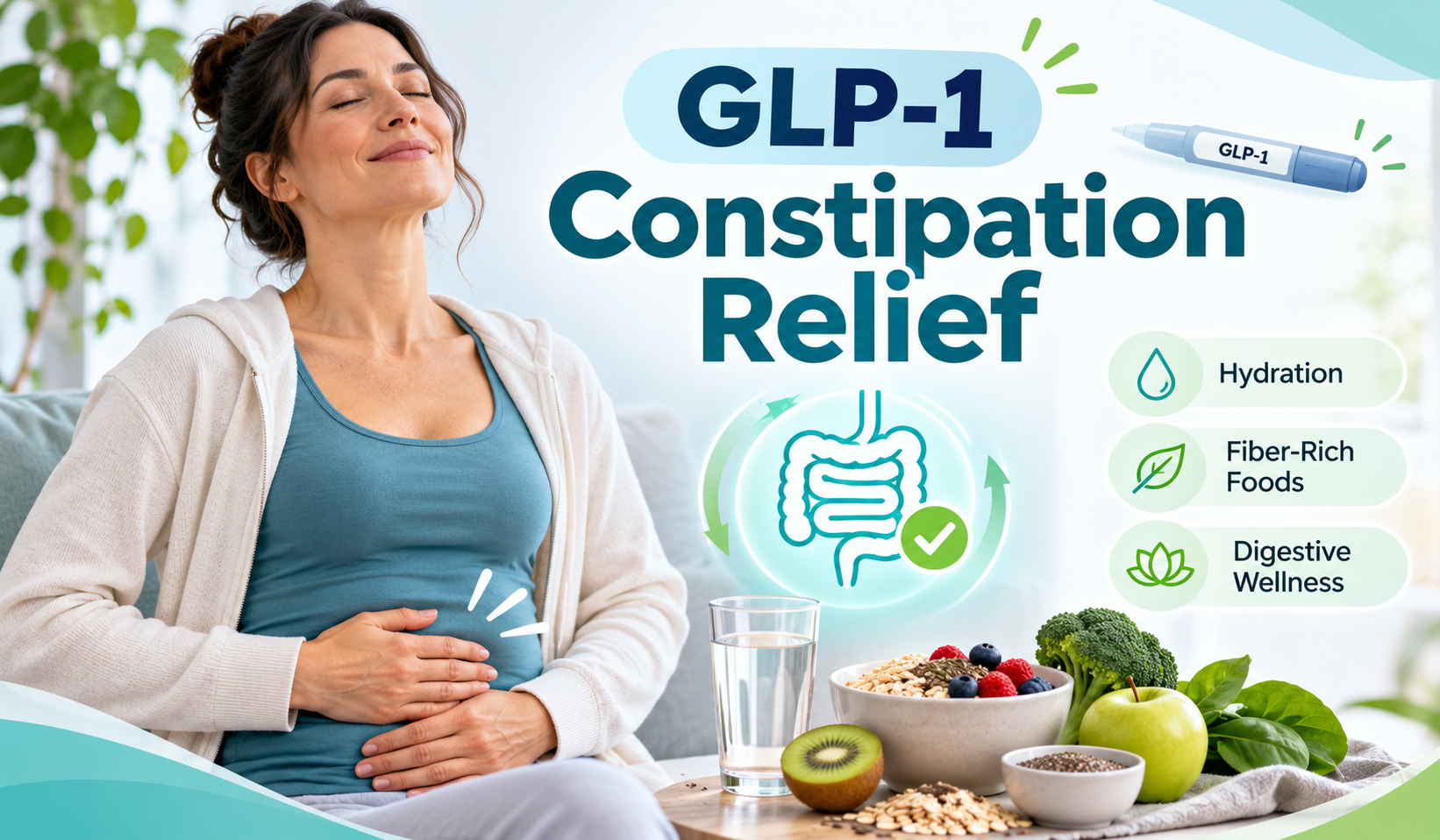
GLP-1 constipation relief is often possible through simple adjustments to hydration, food choices, physical activity, and bathroom habits.
Constipation is a common digestive side effect of GLP-1 medications, including semaglutide (Ozempic and Wegovy) and tirzepatide (Mounjaro and Zepbound). While these medications can be effective for managing blood sugar and supporting weight loss, they also change how food moves through your digestive system.
Understanding what causes constipation, which remedies actually help, and when to seek medical guidance can make your experience with GLP-1 treatment considerably more comfortable.
 GLP-1 Starting at $59 Per Month – 100% Online
Why Do GLP-1 Medications Cause Constipation?
GLP-1 medications work by mimicking the action of glucagon-like peptide-1, a hormone involved in blood sugar regulation, appetite control, and digestion.
One of their important effects is slowing stomach emptying. This helps people feel satisfied longer after eating and can reduce the urge to consume large meals.
Yet this change can also contribute to digestive discomfort.
When food moves more slowly through the gastrointestinal system, bowel habits may change. Reduced food intake, lower fluid consumption, and changes in intestinal movement can further increase the likelihood of constipation.
Several factors explain why constipation may develop during GLP-1 treatment.
Slower digestive movement: GLP-1 medications influence gastrointestinal motility, which can affect how quickly food and waste travel through the digestive tract.
Reduced food consumption: Smaller meals produce less stool, potentially making bowel movements less frequent.
Lower fluid intake: Some people drink less water because they feel full throughout the day or experience nausea.
Changes in dietary fiber: Eating smaller portions can unintentionally reduce the amount of fiber consumed.
Reduced physical activity: Fatigue, nausea, or digestive discomfort may lead to less movement, potentially affecting bowel regularity.
Constipation does not affect everyone taking GLP-1 medications. Its severity varies depending on the medication, dosage, dietary habits, individual digestive function, and other health factors.
GLP-1 Starting at $59 Per Month – 100% Online
12 Effective Ways to Relieve GLP-1 Constipation
Finding the right constipation remedy often involves combining several strategies rather than relying on one solution.
The following approaches can help improve bowel regularity and reduce digestive discomfort.
1. Drink More Water Throughout the Day
Hydration is one of the simplest and most important steps for relieving constipation during GLP-1 treatment.
Water helps maintain stool moisture, making bowel movements easier and more comfortable. When your body does not receive enough fluids, your colon absorbs additional water from waste, potentially producing harder stools.
People taking GLP-1 medications may unintentionally drink less because of reduced appetite or persistent fullness.
Instead of consuming large amounts of water at once, try spreading your fluid intake throughout the day.
Begin your morning with a glass of water, drink regularly between meals, and keep a reusable water bottle nearby.
A common general target is around eight cups of fluids daily, but individual needs vary with body size, activity, climate, medical conditions, and other factors.
You may require more fluids during hot weather or when exercising.
Helpful tip: Pale-yellow urine is often a practical indicator of adequate hydration. People with heart or kidney conditions requiring fluid restrictions should follow their clinician’s guidance.
2. Increase Fiber Intake Gradually
Dietary fiber plays an essential role in maintaining healthy bowel movements.
Soluble fiber absorbs water and forms a gel-like substance that can help soften stool. Insoluble fiber contributes bulk and supports the movement of waste through the digestive tract.
Both types can benefit people experiencing GLP-1-related constipation.
Fiber-rich foods include oatmeal, lentils, beans, berries, pears, chia seeds, vegetables, and whole grains.
Adults generally need approximately 22–34 grams of fiber daily, depending on age and sex.
If your current diet contains very little fiber, increasing your intake too quickly may cause bloating, gas, or abdominal discomfort.
Introduce fiber-rich foods gradually and drink adequate fluids.
For example, start by adding oatmeal to breakfast or including a small portion of cooked vegetables with lunch.
When tolerated, you can slowly incorporate additional fiber sources.
If you already have substantial bloating, abdominal pain, or a feeling that food is not moving through your stomach, speak with your healthcare professional before significantly increasing fiber intake.
3. Try Prunes or Kiwi for Natural Constipation Relief
Certain fruits contain nutrients and natural compounds that may support bowel regularity.
Prunes are particularly popular because they provide dietary fiber and sorbitol, a naturally occurring sugar alcohol that draws water into the intestine.
This combination may help soften stool and encourage bowel movements.
Start with a small serving, such as three or four prunes, and adjust based on your digestive tolerance.
Kiwi is another useful option.
Research suggests that eating two green kiwifruits daily can improve bowel movement frequency and stool consistency in some people with constipation.
Both fruits can fit into a balanced GLP-1 meal plan.
Because GLP-1 medications may increase feelings of fullness, smaller portions are often easier to tolerate than large servings.
If fruit causes excessive bloating, reduce the serving size and gradually adjust your intake.
4. Take a Short Walk After Meals
Physical movement supports digestive health by encouraging normal intestinal activity.
You do not need an intense workout to experience potential benefits.
A comfortable 10–15-minute walk after meals may help support digestion while contributing to overall physical activity.
Walking can be especially helpful for people who spend long periods sitting at a desk.
Other activities that may support regular bowel habits include gentle cycling, swimming, yoga, and stretching.
The key is consistency.
Aim for daily movement that matches your fitness level and physical condition.
If you experience nausea or abdominal discomfort after taking your GLP-1 medication, choose a gentle activity rather than strenuous exercise.
Physical activity is most effective when combined with adequate hydration, suitable fiber intake, and consistent eating habits.
5. Eat Smaller, Balanced Meals Regularly
GLP-1 medications often make large meals less appealing.
While reduced appetite is an expected effect, eating very little throughout the day can sometimes contribute to reduced stool production.
Try maintaining regular, nutritious meals even when your appetite is smaller.
Each meal should ideally include a combination of protein, fiber-rich carbohydrates, vegetables, and healthy fats.
For example, breakfast might include oatmeal with berries and yogurt. Lunch could feature chicken, cooked vegetables, and a small serving of brown rice.
Dinner might include fish, roasted vegetables, and a modest portion of sweet potato.
These balanced meals provide nutrients while supporting digestive function.
Avoid forcing yourself to eat large portions.
Instead, focus on nutrient-dense foods that are comfortable to digest.
If persistent nausea prevents adequate eating or drinking, discuss this with your prescribing clinician.
6. Establish a Consistent Bathroom Routine
Your digestive system naturally responds to regular eating and daily habits.
Establishing a consistent bathroom schedule can help you take advantage of these normal digestive responses.
One useful approach is to sit on the toilet approximately 15–30 minutes after breakfast.
Eating stimulates the gastrocolic reflex, which encourages movement in the colon.
Allow yourself a few relaxed minutes without rushing.
Using a small footstool to elevate your feet may improve your position and make passing stool easier.
Avoid excessive straining or remaining on the toilet for extended periods.
Most importantly, respond when you feel the urge to have a bowel movement.
Repeatedly ignoring that signal can make constipation more difficult to manage.
A predictable morning routine may be particularly helpful for people whose bowel habits have changed since starting GLP-1 treatment.
7. Consider a Fiber Supplement When Appropriate
If meeting your daily fiber needs through food is challenging, a fiber supplement may be useful.
Psyllium husk is a commonly used soluble fiber supplement that absorbs water and helps form softer, bulkier stools.
It can be effective for some people with mild constipation.
Start with a low dose following the product instructions and increase gradually if needed.
Always take psyllium with the recommended amount of water.
Fiber supplements are not suitable for every type of constipation.
For example, if you are experiencing significant abdominal bloating, severe discomfort, suspected intestinal obstruction, or markedly delayed stomach emptying, additional bulk-forming fiber may worsen symptoms.
In those situations, seek medical advice before using a supplement.
Fiber supplements may also affect how certain oral medications are absorbed, so ask your pharmacist about appropriate timing.
8. Ask About Polyethylene Glycol for Persistent Constipation
When dietary and lifestyle adjustments are insufficient, an osmotic laxative may provide additional relief.
Polyethylene glycol 3350, commonly called PEG 3350, is an over-the-counter option frequently used for constipation.
It works by retaining water in the stool, making bowel movements easier.
PEG generally produces an effect within one to three days, rather than immediately.
It may be an appropriate option for some people experiencing GLP-1-related constipation.
Other osmotic laxatives include lactulose and magnesium-based products, although these have different precautions and side-effect profiles.
People with kidney disease should be particularly cautious about magnesium-containing laxatives.
Consult your healthcare professional or pharmacist about which treatment is appropriate, especially if constipation is persistent or you take other medications.
Important: Do not use laxatives to treat severe abdominal pain, vomiting, or suspected bowel obstruction. These symptoms require prompt medical evaluation.
9. Be Careful With Stimulant Laxatives
Stimulant laxatives, including senna and bisacodyl, work by stimulating contractions in the intestines.
They may help when stool-softening approaches are not sufficient.
These medications can sometimes cause cramping, diarrhea, or urgency.
Because GLP-1 medications already affect gastrointestinal function, selecting the appropriate laxative matters.
Stimulant laxatives may be useful for occasional short-term relief, but they should not become a substitute for evaluating persistent or worsening constipation.
Follow package instructions and seek professional guidance if you repeatedly need laxatives to have a bowel movement.
An individualized treatment plan is particularly important when you have a history of digestive disorders or take medications that also cause constipation.
10. Review Your GLP-1 Dosage With Your Prescriber
Constipation may become more noticeable when starting a GLP-1 medication or increasing its dose.
These medications are commonly introduced at lower doses and increased gradually to help the body adjust.
If constipation develops shortly after a dosage increase, the timing may be relevant.
Keep a record of when symptoms began, your bowel movement frequency, and whether you have additional symptoms such as nausea, bloating, or abdominal pain.
Share these details with your prescribing healthcare professional.
Depending on your situation, they may recommend staying at the current dose longer, adjusting treatment, or considering another approach.
Never increase, decrease, or stop your prescribed GLP-1 medication without discussing the change with your prescriber.
Dose decisions should consider both treatment benefits and digestive tolerability.
11. Limit Foods That Make Constipation Worse
There is no single food that causes constipation in everyone, but certain dietary patterns may make it more likely.
Meals containing very little fiber, particularly when they replace fruits, vegetables, and whole grains, can contribute to harder stools.
Examples include diets dominated by refined grains, processed snacks, and low-fiber convenience foods.
Large, high-fat meals may also aggravate nausea, fullness, and digestive discomfort during GLP-1 treatment.
Instead of removing entire food groups unnecessarily, focus on improving the overall balance of your diet.
Replace some refined foods with tolerated whole grains, add vegetables to meals, and include fruit as a snack.
Cooked vegetables may be easier to tolerate than large raw salads when you are feeling bloated.
Pay attention to which foods worsen your symptoms and make gradual adjustments.
12. Support Your Gut Health With Consistent Habits
Healthy digestion depends on more than one food, supplement, or medication.
Your gastrointestinal system responds to hydration, eating patterns, movement, sleep, and daily routines.
A consistent schedule can help maintain more predictable bowel habits.
Try eating at similar times each day, moving regularly, and prioritizing sufficient sleep.
Fermented foods such as yogurt and kefir may also fit into a healthy diet.
Some probiotics have shown benefits for particular constipation symptoms, but results vary by bacterial strain, and they are not established as a universal treatment for GLP-1-related constipation.
Rather than purchasing multiple digestive supplements at once, start with foundational strategies and evaluate your response.
Gradual, sustainable changes are often easier to maintain throughout long-term GLP-1 treatment.
GLP-1 Starting at $59 Per Month – 100% Online
How Long Does GLP-1 Constipation Last?
The duration of constipation varies considerably between individuals.
Some people notice symptoms during their first few weeks of treatment, particularly when beginning medication or increasing the dosage.
For others, constipation may develop later as appetite, fluid consumption, and dietary patterns change.
Mild symptoms sometimes improve as the body adapts to treatment and daily habits become more consistent.
Other individuals experience recurring constipation that requires ongoing management.
There is no reliable timeline that applies to everyone.
If constipation continues for several days despite self-care, especially if it is unusual for you, contact a healthcare professional for advice.
Persistent symptoms should not simply be dismissed as a normal part of weight loss treatment.
What Is the Fastest Way to Relieve GLP-1 Constipation?
The fastest appropriate treatment depends on the severity of your symptoms and whether the stool is hard, difficult to pass, or accumulating in the rectum.
For mild constipation, drinking adequate fluids, walking, and trying to use the bathroom after breakfast may help support a bowel movement.
Prunes or kiwi can also be useful dietary additions, although their effects are not necessarily immediate.
When constipation is more persistent, a healthcare professional may recommend an osmotic laxative such as PEG 3350.
Other treatments, including glycerin suppositories, may act more quickly in selected circumstances, but they are not suitable for every situation.
Avoid combining several laxatives or repeatedly taking additional doses in an attempt to obtain immediate relief.
If you have severe abdominal pain, persistent vomiting, pronounced swelling, or an inability to pass gas, seek urgent medical care rather than trying home remedies.
GLP-1 Starting at $59 Per Month – 100% Online
Can GLP-1 Constipation Cause Bloating and Stomach Pain?
Yes. Constipation can contribute to bloating, abdominal pressure, cramping, and a feeling of incomplete bowel emptying.
When stool remains in the colon longer, it may become harder and more difficult to pass.
Gas accumulation can add to abdominal discomfort.
GLP-1 medications can also independently cause nausea, fullness, and other gastrointestinal symptoms.
This means abdominal discomfort may have more than one cause.
Mild bloating may improve with gradual dietary adjustments, appropriate constipation treatment, and regular physical movement.
Severe or progressive pain should not be attributed to constipation without medical assessment.
GLP-1 medications can sometimes be associated with serious gastrointestinal complications, and symptoms such as persistent severe abdominal pain, especially with vomiting, require prompt evaluation.
When Should You Seek Medical Help for GLP-1 Constipation?
Occasional mild constipation can often be managed with practical lifestyle changes.
Certain symptoms, though, warrant medical attention.
Contact your healthcare professional if constipation persists despite appropriate treatment, repeatedly returns, or significantly interferes with daily activities.
You should also seek medical advice if you experience blood in your stool, unexplained worsening abdominal discomfort, or a major change in bowel habits.
Seek urgent medical care if you develop:
- Severe or persistent abdominal pain
- Repeated vomiting
- Significant abdominal swelling
- Inability to pass gas or stool accompanied by pain or vomiting
- Signs of severe dehydration, such as fainting or very little urine
These symptoms may indicate a problem requiring treatment beyond ordinary constipation remedies.
Early assessment can help identify the underlying cause and prevent complications.
GLP-1 Starting at $59 Per Month – 100% Online
Can You Prevent Constipation While Taking GLP-1?
Prevention is often easier than managing established constipation.
If you are beginning GLP-1 treatment, building supportive digestive habits from the start may reduce your risk of developing uncomfortable symptoms.
Focus on drinking adequate fluids, maintaining a reasonable fiber intake, eating balanced meals, and staying physically active.
Avoid abruptly increasing fiber consumption, particularly if you already experience nausea or bloating.
It can also be helpful to monitor your bowel movements.
You do not necessarily need to have a bowel movement every day. Normal frequency varies, and some people naturally have fewer bowel movements than others.
The more important factors are stool consistency, ease of passing stool, and changes from your usual pattern.
Hard stools, repeated straining, or a persistent sense of incomplete emptying may indicate constipation even when bowel movements occur regularly.
Discuss developing symptoms with your prescriber before they become severe.
Does Constipation Mean Your GLP-1 Medication Is Working?
Constipation does not indicate that a GLP-1 medication is more effective.
Although changes in digestive function can occur because of how these medications work, experiencing constipation is not a measure of blood sugar improvement or weight-loss success.
Some people achieve substantial treatment benefits without experiencing constipation.
Others develop digestive side effects even at lower doses.
The goal of GLP-1 treatment is to achieve the intended medical benefits while maintaining acceptable tolerability.
There is no need to endure significant constipation to obtain results.
If side effects interfere with your nutrition, hydration, or daily comfort, discuss treatment adjustments with your healthcare professional.
GLP-1 Starting at $59 Per Month – 100% Online
Best Daily Routine for GLP-1 Constipation Relief
A consistent routine can make constipation management more practical.
Morning: Begin with a glass of water and a fiber-containing breakfast, such as oatmeal with berries or kiwi. Allow yourself time to use the bathroom after eating.
Midday: Choose a balanced lunch that includes protein, vegetables, and a tolerated whole-grain food. Take a brief walk if your schedule allows.
Afternoon: Continue drinking fluids regularly. Consider fruit or yogurt as a light snack if you are hungry.
Evening: Eat a smaller, balanced dinner rather than a large, heavy meal. Include cooked vegetables and take a gentle walk afterward.
Before bed: Reflect on your fluid intake and bowel habits. If constipation persists, consider whether you need guidance about an appropriate treatment rather than adding multiple remedies.
This routine is flexible and can be adapted to individual schedules, food preferences, and medical needs.
The most important factor is maintaining habits consistently while monitoring your digestive comfort.
Final Verdict:
GLP-1 constipation can be frustrating, especially when a medication is otherwise helping you achieve your health goals. Fortunately, many people can improve their digestive comfort without making major changes to their treatment.
The most useful starting points include adequate hydration, gradual fiber intake, regular physical activity, smaller balanced meals, and consistent bathroom habits.
Prunes and kiwi may offer additional dietary support, while medications such as polyethylene glycol can be helpful when recommended appropriately.
Persistent symptoms deserve medical attention, particularly when constipation develops after a dose increase or does not respond to simple measures.
The best GLP-1 constipation relief strategy combines everyday digestive habits with individualized medical guidance when necessary. By recognizing symptoms early and choosing suitable treatments, you can support more comfortable bowel movements while continuing to focus on your broader health and weight-management goals.
GLP-1 Starting at $59 Per Month – 100% Online
References
https://pmc.ncbi.nlm.nih.gov/articles/PMC10213739/
https://www.webmd.com/diet/magnesium-constipation-how-use-it
