Detroit is one of the most established healthcare markets in the Midwest — anchored by Henry Ford Health (a large non-profit health system with the flagship Henry Ford Hospital on West Grand Boulevard), plus Michigan Medicine (the University of Michigan's academic medical center, 45 minutes west in Ann Arbor), Corewell Health (formed in 2022 from the merger of Beaumont Health and Spectrum Health, with the flagship Royal Oak hospital), the Detroit Medical Center (DMC, Tenet's downtown academic teaching hospital network), Trinity Health Michigan, the Detroit Health Department, and a fast-growing telehealth market. Detroit residents seeking GLP-1 weight loss care therefore have three practical paths: book an appointment at one of the major Southeast Michigan hospital systems, see a private endocrinologist or obesity medicine specialist somewhere between downtown Detroit and Royal Oak, or use a licensed online telehealth platform that prescribes and ships GLP-1 medication directly to your home. This guide covers all three, with a clear-eyed recommendation for the path most Detroiters will find genuinely convenient.
Key takeaways for Detroit residents
- Multiple major systems, long wait times. Detroit hosts respected GLP-1 prescribing programs at Henry Ford Health, Michigan Medicine, Corewell Health (Beaumont), and DMC — but new patient appointments at top endocrinology practices can mean a 4-8 week wait, often paired with limited evening or weekend availability.
- Online GLP-1 is fully legal in Michigan. Telehealth prescribing of GLP-1 medications by Michigan-licensed physicians is permitted under Michigan and federal law — no in-person visit required.
- The medication is identical. Compounded semaglutide and tirzepatide from licensed telehealth providers use the same active ingredients as the brand-name products dispensed at Henry Ford, Michigan Medicine, Corewell, or DMC clinics.
- Editor's pick: TrimRx — flat-rate $179-$349/month compounded GLP-1, guaranteed not to increase as your dose escalates, HSA/FSA accepted, free 2-day shipping to any Detroit address. Check eligibility (free).
- 3-step process: 2-minute quiz → Michigan-licensed clinician review → medication shipped to your door. No I-75 or I-94 commute. No waiting room. No upfront payment.
About Detroit, MI — and what it means for GLP-1 access
The City of Detroit is home to roughly 633,000 residents — and the broader Detroit-Warren-Dearborn metropolitan area (Wayne, Oakland, Macomb, Livingston, Lapeer, and St. Clair counties) to nearly 4.3 million — making it the largest healthcare market in Michigan. The region's medical infrastructure is anchored by Henry Ford Health (a large non-profit health system with the flagship Henry Ford Hospital on West Grand Boulevard, plus Henry Ford West Bloomfield, Wyandotte, Macomb, and others), Michigan Medicine (the University of Michigan's academic medical center in Ann Arbor, 45 minutes west of Detroit, consistently ranked among the top hospitals in the U.S.), Corewell Health (formed in 2022 from the merger of Beaumont Health and Spectrum Health, with the flagship Beaumont Royal Oak in Oakland County), the Detroit Medical Center (DMC, Tenet's downtown academic teaching hospital network with Detroit Receiving, Harper, Sinai-Grace, and Hutzel hospitals), Trinity Health Michigan (with St. Joseph Mercy Oakland, Trinity Health Livonia, and others), the Detroit Health Department, and hundreds of private practices spread from downtown and Midtown through Corktown, Eastern Market, Mexicantown, Greektown, Indian Village, Palmer Woods, Dearborn, Royal Oak, Birmingham, Bloomfield Hills, Grosse Pointe, Troy, and the surrounding Oakland and Macomb County suburbs — many of which prescribe FDA-approved GLP-1 medications for clinically appropriate patients.
For GLP-1 weight loss care specifically, the abundance of options is both an advantage and a logistics problem. New patient wait times at top endocrinology and obesity medicine practices at Henry Ford, Michigan Medicine, and Corewell typically run 4-8 weeks. Specialist co-pays for cash-pay or out-of-network visits can run $300-$600+ per appointment. And for working professionals commuting in on I-75, I-94, I-96, I-696, M-10 (the Lodge), M-39 (Southfield Freeway), or M-1 (Woodward Avenue) between downtown, Royal Oak, Dearborn, and the broader metro, getting to a specialist office can mean an hour each way in traffic and a meaningful slice of the workday lost to every refill or titration check-in.
Notable GLP-1 prescribing clinics in Detroit
Southeast Michigan is anchored by Henry Ford Health and Michigan Medicine (the University of Michigan's academic medical center in Ann Arbor) along with Corewell Health (formerly Beaumont), the DMC, Trinity Health Michigan, and the Detroit Health Department — all of which operate endocrinology, bariatric, and obesity medicine practices that prescribe GLP-1 medications. Below is a curated, editorially independent list of well-known prescribing programs across the Detroit metro. Each rating reflects our editorial assessment based on clinical reputation, GLP-1 program access, and publicly available patient-experience signals — out of 5 stars. Inclusion is informational only: Bartley Weight Loss has no commercial relationship with any of the institutions listed, and they have not paid or sponsored their placement on this page.
Academic Medical Center
Michigan Medicine — University of Michigan Health
1500 E. Medical Center Dr., Ann Arbor · 45 min west of downtown Detroit
The University of Michigan's academic medical center in Ann Arbor (an extension of the Detroit metro area), with the Adult Weight Management Program, MEND (Metabolism, Endocrinology, and Diabetes) faculty practice, and a top-ranked bariatric surgery program. The academic anchor of Southeast Michigan and one of the largest GLP-1 prescribing programs in the country.
Hospital Network
Henry Ford Health — Henry Ford Hospital & Henry Ford Center for Weight Management
2799 W. Grand Blvd., New Center · plus Henry Ford West Bloomfield, Wyandotte, Macomb
Detroit's flagship academic medical center on West Grand Boulevard, with the Henry Ford Center for Weight Management offering endocrinology, obesity medicine, and bariatric surgery. Broad Southeast Michigan footprint with system-wide endocrinology specialists across West Bloomfield, Wyandotte, and Macomb campuses.
Hospital Network
Corewell Health — Beaumont Hospital Royal Oak (Weight Control Center)
3601 W. 13 Mile Rd., Royal Oak · Oakland County · formerly Beaumont Health
Corewell Health East's flagship hospital (formed from the 2022 merger of Beaumont Health and Spectrum Health), with the Weight Control Center offering endocrinology, obesity-medicine, and bariatric surgery. Broad Oakland and Macomb County footprint for routine GLP-1 follow-up.
Hospital Network
Trinity Health Michigan — St. Joseph Mercy Oakland & Livonia
44405 Woodward Ave., Pontiac (St. Joseph Mercy Oakland) · plus Livonia & Ann Arbor
Part of Trinity Health (a national Catholic non-profit), with endocrinology, obesity-medicine, and bariatric programs across St. Joseph Mercy Oakland, Trinity Health Livonia, and St. Joseph Mercy Ann Arbor. Convenient option for residents of northern Oakland and Livingston County suburbs.
Academic Teaching Hospital
Detroit Medical Center (DMC) — Detroit Receiving / Harper / Sinai-Grace
Multiple downtown locations · Tenet Healthcare · Wayne State University academic affiliate
Tenet's downtown Detroit academic teaching hospital network, academically affiliated with Wayne State University School of Medicine, with endocrinology, bariatric, and obesity-medicine programs. Convenient option for downtown Detroit residents seeking academic-affiliated care closer to home.
Public Health System
Detroit Health Department
100 Mack Ave., Eastern Market · Detroit's public health department
Detroit's public health department, with primary care, diabetes-management, and chronic disease clinics that prescribe GLP-1 medications for clinically eligible patients. Sliding-scale fees available for uninsured and underinsured Detroit residents.
Wait times, scheduling availability, and insurance acceptance change frequently — always call the clinic directly to confirm new-patient availability and GLP-1 prescribing policy before booking. The clinics listed above are presented for informational reference only and are not paid placements.
How to get GLP-1 in Detroit without the commute — 3 simple steps
The fastest, most convenient path to clinician-supervised GLP-1 therapy for Detroiters skips the freeway, the specialist wait list, and the waiting room entirely. TrimRx is the U.S. telehealth provider we recommend for this exact use case — Michigan-licensed clinicians, free clinical assessment, and direct shipping to any Detroit address in temperature-controlled packaging. Here's how it works:

Take the 2-minute eligibility quiz
Complete a quick, secure online questionnaire covering your health goals, medical history, current medications, and basic biometrics. No appointment, no video call, no waiting room — and no upfront payment to be evaluated. The quiz takes about two minutes from your phone or laptop.

A Michigan-licensed clinician reviews your information
One of TrimRx's licensed medical providers reviews your full intake against current clinical criteria for GLP-1 therapy. If you're a candidate, they prescribe the appropriate medication (compounded semaglutide or tirzepatide) and starting dose. If they have clarifying questions, they reach out via secure messaging before prescribing.
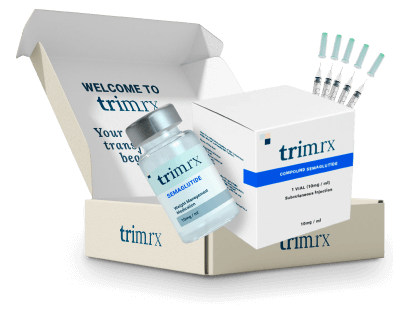
Free 2-day shipping directly to your Detroit address
Approved prescriptions are dispatched by a licensed U.S. compounding pharmacy with temperature-controlled packaging. Your medication arrives at your Detroit address — from downtown and Midtown through Corktown, Eastern Market, Mexicantown, Greektown, Indian Village, Palmer Woods, Dearborn, Royal Oak, Birmingham, Bloomfield Hills, Grosse Pointe, Troy, and the surrounding Oakland and Macomb County suburbs — within 2 business days, complete with everything you need to administer and ongoing clinical support throughout titration. Refills ship monthly on your schedule.
Why TrimRx specifically — our editor's pick for Detroit residents
Several U.S. telehealth providers prescribe compounded GLP-1 medications and ship to Michigan. Among the platforms we've independently reviewed, TrimRx is the cleanest fit for Detroit residents specifically, for three structural reasons:
- Flat-rate pricing across all doses. Most competitors charge more as your dose escalates, so the $179 "starting at" price you see on the homepage may balloon to $300+ at maintenance dose. TrimRx guarantees the rate doesn't change as you titrate up — meaningful budget protection over a 6-12 month course of treatment.
- HSA and FSA explicitly accepted. If you have tax-advantaged healthcare dollars from a Southeast Michigan employer plan sitting in an account, applying them to GLP-1 treatment can meaningfully reduce your effective monthly cost.
- Michigan-licensed clinical network. TrimRx's prescribing physicians are licensed in Michigan (along with all 50 states), satisfying Michigan Board of Medicine telehealth requirements for a valid patient-physician relationship.
TrimRx — Flat-rate GLP-1, shipped to any Detroit address
TrimRx offers compounded semaglutide and tirzepatide on a guaranteed flat-rate pricing model: your monthly cost does not increase as your dose escalates. That's structurally unusual in the U.S. compounded GLP-1 market and protects you against the cost creep most competitors charge as you titrate up over a 6-12 month course of treatment.
The eligibility quiz takes about two minutes, a Michigan-licensed clinician reviews your responses, and if you're a candidate the medication ships to your Detroit address via UPS or FedEx with temperature-controlled packaging. There's no freeway commute, no specialist wait list, and no per-visit fees layered on top of the medication cost. Read our full independent TrimRx review for the complete breakdown of pricing, supported medications, and how the program compares to alternatives.
Why telehealth makes particular sense for Detroit residents
Three structural reasons telehealth is unusually well-suited to Detroit:
- Southeast Michigan commute and scheduling friction are real. New patient appointments at top Henry Ford, Michigan Medicine, and Corewell endocrinology practices commonly run 4-8 weeks. Add the realities of metro Detroit commuting — I-75, I-94, I-96, I-696, M-10 (the Lodge), M-39 (Southfield), or M-1 (Woodward) between downtown, Royal Oak, Dearborn, Ann Arbor, and the broader metro — and a routine GLP-1 check-in can easily cost a half day in traffic. Telehealth eliminates the entire logistics overhead.
- Direct-to-door shipping is seamless across the Detroit metro. UPS and FedEx deliver to homes and apartments from downtown and Midtown through Corktown, Eastern Market, Indian Village, Palmer Woods, Dearborn, Royal Oak, Birmingham, Bloomfield Hills, Grosse Pointe, Troy, Sterling Heights, Ann Arbor, and the surrounding Oakland, Macomb, and Washtenaw County suburbs. Temperature-controlled GLP-1 shipping arrives in 2 business days from TrimRx.
- Michigan telehealth law is favorable. Michigan explicitly permits state-licensed physicians to prescribe GLP-1 medications via telehealth after a valid online clinical evaluation. GLP-1 receptor agonists are not DEA-scheduled, so no in-person visit is legally required.
GLP-1 medications commonly prescribed in Detroit
Whether you choose a Henry Ford endocrinologist, a Michigan Medicine bariatric specialist, or a licensed telehealth provider, the medications themselves are the same active molecules. The most commonly prescribed in the Detroit market in 2026:
- Semaglutide — branded as Wegovy (for chronic weight management) and Ozempic (for type 2 diabetes). A once-weekly GLP-1 receptor agonist with substantial clinical evidence behind it (~15% average body weight reduction in the STEP trials).
- Tirzepatide — branded as Zepbound (for chronic weight management) and Mounjaro (for type 2 diabetes). A once-weekly dual GLP-1/GIP receptor agonist with even higher published efficacy (~22% average body weight reduction in the SURMOUNT-1 trial).
- Compounded semaglutide and tirzepatide — same active ingredients as the branded products, prepared by state-licensed compounding pharmacies. Not FDA-approved as finished drug products, but legal to dispense by prescription. Significantly lower cost than branded options.
- Liraglutide (Saxenda) — an older daily injectable GLP-1, with somewhat lower efficacy than weekly options. Used less frequently in 2026 as semaglutide and tirzepatide have become standard.
Detroit GLP-1 FAQs
Are there GLP-1 weight loss clinics in Detroit, MI?
Yes — Detroit has one of the largest concentrations of GLP-1 prescribing clinics in the Midwest, anchored by Henry Ford Health (flagship Henry Ford Hospital + West Bloomfield, Wyandotte, Macomb), Michigan Medicine (the University of Michigan's academic medical center in Ann Arbor), Corewell Health (formerly Beaumont, with the Royal Oak flagship), the Detroit Medical Center (DMC), Trinity Health Michigan (St. Joseph Mercy Oakland + Livonia), the Detroit Health Department, and hundreds of private endocrinology, bariatric, and obesity medicine practices from downtown and Midtown to Dearborn, Royal Oak, Birmingham, Troy, and Grosse Pointe. Wait times for new patient appointments vary widely, and many residents pair an in-person consultation with a licensed telehealth provider for ongoing refills and titration support.
How does TrimRx work for Detroit residents?
TrimRx uses a 3-step process: (1) Take a 2-minute online eligibility quiz from your phone or computer, (2) a Michigan-licensed clinician reviews your medical history and prescribes the appropriate GLP-1 medication if you qualify, (3) medication is shipped via temperature-controlled packaging directly to your Detroit address in 2 business days. No I-75 or I-94 commute, no taking time off work, no waiting room. The eligibility quiz is free and there's no upfront payment.
Can Detroit residents get GLP-1 medications without seeing an in-person doctor?
Yes. Licensed online telehealth platforms can evaluate eligibility, prescribe FDA-approved or compounded GLP-1 medications (semaglutide, tirzepatide), and ship medication directly to any address across the Detroit metro — from downtown and Midtown to Dearborn, Royal Oak, Birmingham, Troy, Grosse Pointe, and the surrounding suburbs — via UPS or FedEx. This eliminates appointment scheduling, freeway driving, and time off work — while providing the same active medication available at in-person Henry Ford or Corewell clinics.
What GLP-1 medications are commonly prescribed in Detroit?
The most commonly prescribed GLP-1 medications in Detroit are semaglutide (branded as Wegovy for weight management and Ozempic for type 2 diabetes) and tirzepatide (branded as Zepbound and Mounjaro). Compounded versions of both are also available through licensed telehealth providers at significantly lower cost than the branded products.
How much do GLP-1 medications cost in Detroit?
Branded GLP-1 medications typically cost $1,000-$1,400/month cash-pay in Detroit, with insurance coverage varying significantly by plan. Compounded GLP-1 from licensed telehealth providers ranges from approximately $179-$449/month depending on the medication and provider. TrimRx offers compounded semaglutide from $179/month with guaranteed flat-rate pricing that doesn't change as your dose escalates.
Is telehealth GLP-1 legal in Michigan?
Yes. Telehealth prescribing of GLP-1 medications is fully legal in Michigan when conducted by a Michigan-licensed physician through a HIPAA-compliant platform. GLP-1 receptor agonists are not DEA-scheduled controlled substances, so no in-person visit is required under federal or Michigan state law.
Does insurance cover GLP-1 medications in Michigan?
Coverage varies dramatically by plan. Many commercial Michigan insurers (Blue Cross Blue Shield of Michigan, Priority Health, HAP, Aetna, United, Cigna) cover branded GLP-1 medications for type 2 diabetes; coverage for chronic weight management is far less consistent. Telehealth compounded GLP-1 is typically cash-pay only and not billed to insurance. Call your pharmacy benefit manager and ask specifically: 'Do you cover [exact brand name] for [exact indication]?' before assuming coverage.
Bottom line for Detroit residents
If you prefer in-person care and have an existing relationship with a Henry Ford Health, Michigan Medicine, Corewell Health, or DMC physician, the local clinic path is a reasonable choice — particularly if your insurance covers branded GLP-1 medications for your indication. If you're paying cash-pay either way (which is the typical reality for chronic weight management in 2026), licensed telehealth makes more sense for almost everyone in your situation: same active medication, no specialist wait list, no I-75 commute, lower monthly cost, predictable flat-rate pricing.
Our editor's pick for Detroit residents specifically is TrimRx — Michigan-licensed clinicians, flat-rate pricing across all doses, HSA/FSA accepted, free temperature-controlled shipping to any Detroit address. The eligibility quiz takes two minutes and there's no upfront payment to be evaluated. Read our full independent TrimRx review for the complete editorial breakdown.
Start with TrimRx — free 2-minute eligibility check
A Michigan-licensed clinician reviews your information at no charge. No upfront payment, no commitment, no obligation. If you qualify, medication ships to your Detroit address in temperature-controlled packaging within 2 business days.
Take the Eligibility Quiz → FREE CLINICIAN REVIEW · FLAT-RATE PRICING · NO SPECIALIST WAIT LISTThis city guide reflects publicly available information about Detroit telehealth GLP-1 access as of May 2026. The clinics listed above are well-known prescribing programs in the Detroit area, included for informational reference — Bartley Weight Loss has no commercial relationship with any of them, and inclusion is not an endorsement. We earn a commission only when readers sign up with TrimRx through the affiliate links on this page; commissions do not influence our analysis or editorial conclusions. See our editorial policy for the complete standards and our independent TrimRx review for the full editorial breakdown.
Published: May 30, 2026 · Last updated: May 30, 2026 · Spot a factual issue with this guide? Tell our editors.