Juice Cleanses Recipes for Weight Loss: Healthy Juice Ideas
Juice Cleanse Recipes for Weight Loss: (Healthy Homemade Juices, Benefits, Recipes, and Tips!) Discover easy homemade juice cleanse recipes for weight loss with nutritious ingredients, potential benefits, and healthy tips to support your wellness journey
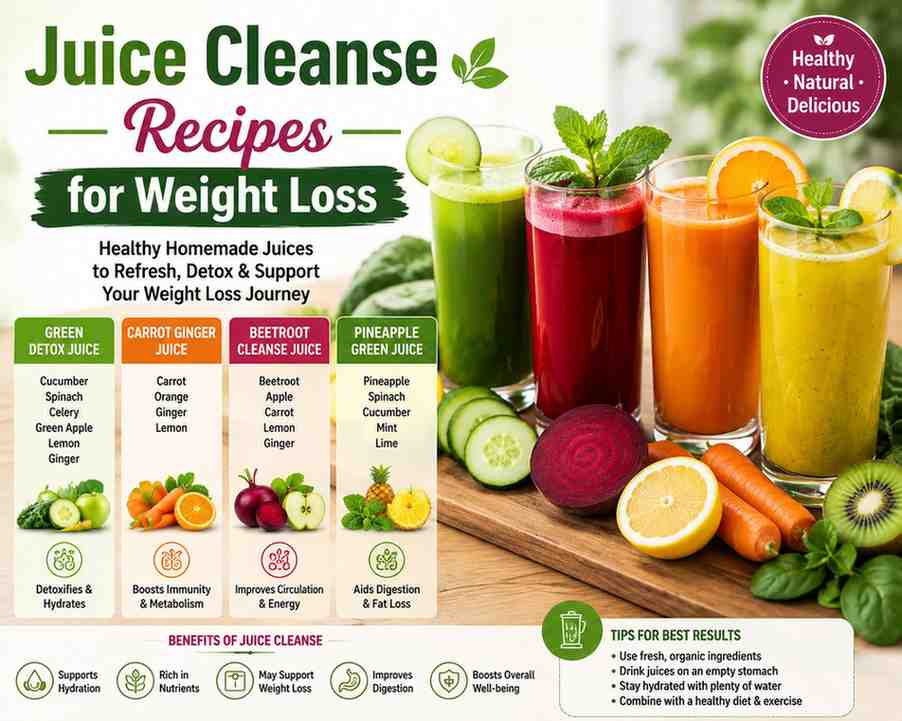
Discover the best juice cleanse recipes for weight loss with healthy ingredients, easy homemade juice ideas, benefits, and tips for a balanced routine.
Introduction: Can Juice Cleanse Recipes Help With Weight Loss?
Juice cleanse recipes for weight loss have become increasingly popular among people looking for a simple way to increase their intake of fruits and vegetables while supporting healthier lifestyle habits.
A juice cleanse usually involves consuming freshly prepared vegetable and fruit juices for a specific period while reducing processed foods, added sugars, and heavy meals.
Many people choose juice cleanses as a short-term reset to improve hydration, increase nutrient intake, and encourage mindful eating.
While juice cleanses are often promoted as a quick weight loss solution, it is important to understand that sustainable weight management depends on long-term habits, including a balanced diet, regular physical activity, quality sleep, and healthy calorie choices.
Juice recipes can be a helpful addition to a wellness routine because they provide vitamins, minerals, antioxidants, and plant compounds that support overall health.
The best juice cleanse recipes for weight loss typically focus on low-sugar vegetables, leafy greens, fiber-rich ingredients, and nutrient-dense fruits.
Homemade juices allow you to control ingredients and avoid unnecessary additives commonly found in some store-bought beverages.
In this guide, we will explore how juice cleanses work, their potential benefits, the best weight-loss juice recipes, a simple cleanse plan, ingredients to include, mistakes to avoid, and how to use juice recipes as part of a balanced approach to healthy weight management.
What Is a Juice Cleanse?
A juice cleanse is a short-term dietary approach where a person consumes fresh fruit and vegetable juices instead of traditional meals or snacks.
These juices are usually made using a blender or juicer and contain combinations of vegetables, fruits, herbs, and natural flavor enhancers.
The main purpose of a juice cleanse is to increase consumption of plant-based nutrients while temporarily reducing foods that may contribute to excess calorie intake, such as processed snacks, sugary beverages, fried foods, and refined carbohydrates.
A typical juice cleanse may last anywhere from one day to several days. Some people follow a full juice-only plan, while others include healthy meals alongside juices. The approach varies depending on personal goals, preferences, and nutritional needs.
Unlike extreme dieting methods, a well-planned juice routine can focus on adding more nutrient-rich foods rather than simply restricting calories.
Vegetable-based juices made with ingredients like spinach, cucumber, celery, and ginger can provide hydration and antioxidants while keeping sugar levels lower than fruit-only juices.
How Do Juice Cleanse Recipes Support Weight Loss?
Juice cleanse recipes may support weight loss when they are used as part of an overall healthy eating pattern. The main factor behind weight loss is maintaining an appropriate caloric balance, in which the body uses more energy than it receives from food and beverages.
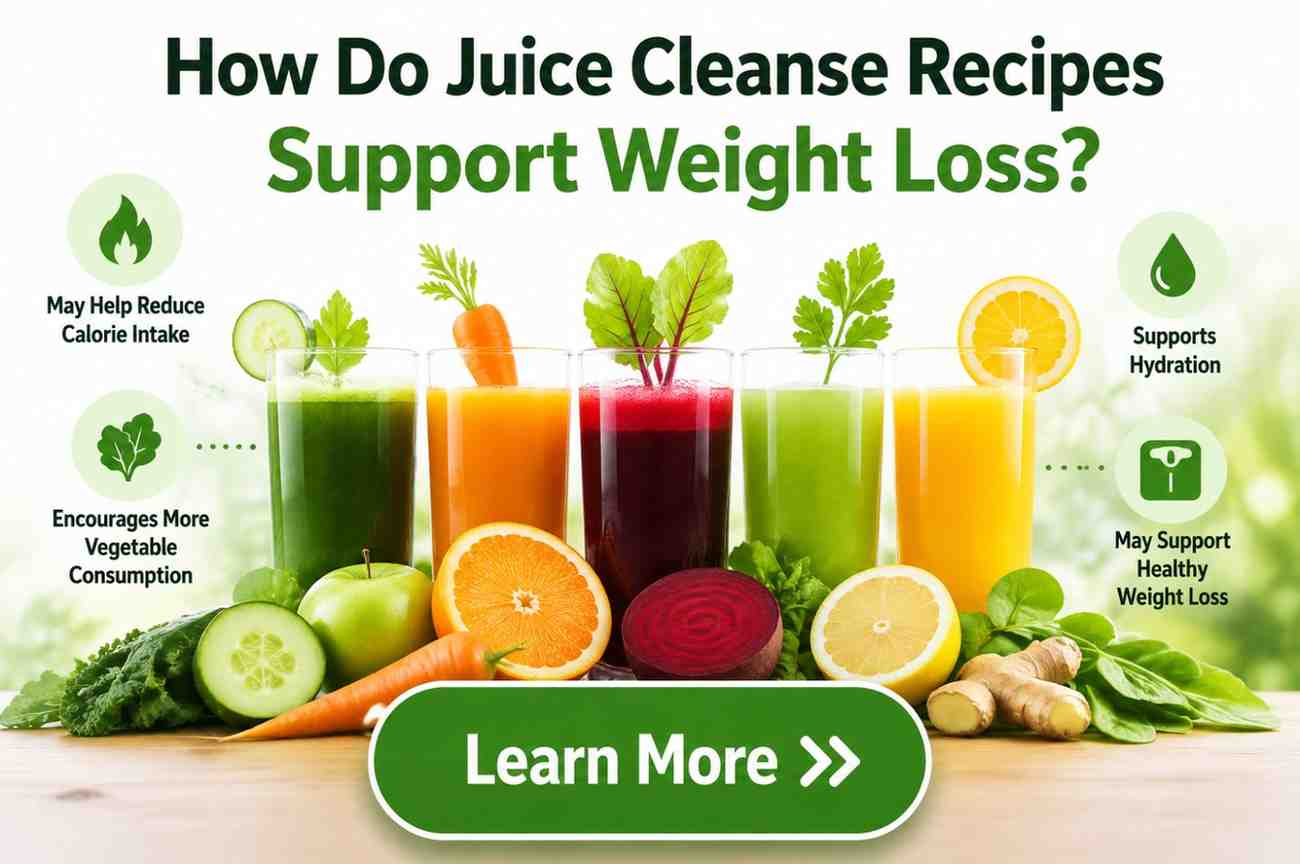
1. May Help Reduce Calorie Intake
Replacing high-calorie snacks and sugary drinks with homemade vegetable juices may help reduce daily calorie consumption. A nutrient-rich juice can provide flavor and hydration while being lower in calories than many processed beverages.
For example, replacing soda, sweetened coffee drinks, or packaged juices with a cucumber-green juice may help reduce unnecessary added sugars.
2. Encourages More Vegetable Consumption
Many people do not consume enough vegetables daily. Juice recipes can make it easier to include ingredients such as leafy greens, carrots, cucumbers, and celery.
Vegetables contain important nutrients, including vitamins, minerals, and antioxidants, which support overall wellness.
3. Supports Hydration
Proper hydration is important for healthy metabolism and normal body functions. Many juice recipes contain high-water ingredients such as cucumber, watermelon, celery, and leafy greens.
Staying hydrated may also help reduce confusion between thirst and hunger, which can support better eating choices.
4. May Reduce Processed Food Intake
Following a short juice cleanse often encourages people to avoid processed foods, sugary snacks, and fast food. This temporary change may help individuals become more aware of their eating habits.
However, long-term weight management requires continuing healthy habits after the cleanse period ends.
Benefits of Juice Cleanse Recipes for Weight Loss
Provides Essential Vitamins and Minerals
Fresh vegetable and fruit juices can provide nutrients such as vitamin C, vitamin A, potassium, folate, and plant antioxidants.
Ingredients like spinach, kale, citrus fruits, and carrots contribute valuable nutrients that support general health.
Supports Antioxidant Intake
Many fruits and vegetables contain antioxidants that help protect cells from oxidative stress. Ingredients like berries, ginger, turmeric, and leafy greens are commonly used in wellness-focused juice recipes.
Helps Increase Fruit and Vegetable Variety
Juicing allows people to combine fruits and vegetables they might not normally eat. This can encourage greater variety in daily nutrition.
May Support Healthy Digestion Habits
Some juice ingredients, such as ginger, lemon, cucumber, and leafy greens, are commonly included in recipes designed to support digestive comfort.
Encourages Healthier Lifestyle Choices
Starting a juice routine may motivate some individuals to make additional healthy changes, such as exercising more, drinking more water, and choosing whole foods.
Important Things to Know Before Starting a Juice Cleanse
Although juice cleanse recipes can be a convenient way to increase nutrient intake, they are not a magic solution for weight loss.
Juice Cleanses Are Usually Short-Term
A juice cleanse should not permanently replace a balanced diet. The body needs protein, healthy fats, fiber, and other nutrients that may be limited in some juice-only plans.
Juicing Removes Much of the Fiber
Whole fruits and vegetables contain fiber that helps support fullness and digestion. Many juicing methods remove much of this fiber.
Adding smoothies made with whole ingredients can be an alternative way to preserve more fiber.
Weight Loss Results May Vary
Any weight changes during a cleanse may depend on calorie intake, water balance, and overall lifestyle habits. Maintaining results requires consistent healthy choices.
Best Juice Cleanse Recipes for Weight Loss
1. Green Detox Weight Loss Juice
This classic green juice combines vegetables and refreshing flavors while keeping calories relatively low.
Ingredients:
- 1 cucumber
- 2 celery stalks
- 1 cup spinach
- 1 green apple
- ½ lemon
- Small piece of ginger
- 1 cup water
Preparation:
Wash all ingredients thoroughly. Add them to a juicer and blend until smooth. Serve fresh with ice if desired.
Why It May Help:
Cucumber and celery provide hydration, while spinach offers nutrients like folate and antioxidants. Ginger adds flavor and is commonly used in health and wellness recipes.
2. Carrot Ginger Weight Loss Juice
This bright orange juice combines naturally sweet carrots with ginger for a refreshing drink.
Ingredients:
- 4 carrots
- 1 small orange
- Small piece of ginger
- ½ lemon
- ½ cup water
Preparation:
Juice carrots, orange, and ginger together. Add lemon juice before serving.
Benefits:
Carrots contain beta-carotene, while citrus fruits provide vitamin C. This recipe can be a flavorful alternative to sugary beverages.
3. Cucumber Lemon Fat-Burning Juice
This simple recipe is light, refreshing, and hydrating.
Ingredients:
- 1 cucumber
- ½ lemon
- A few mint leaves
- 1 cup water
- Small ginger piece
Preparation:
Blend all ingredients together and strain if desired.
Why People Like It:
Cucumber-based juices are popular because they are refreshing and high in water.
4. Beetroot Weight Management Juice
Beetroot juice is a popular choice among fitness enthusiasts because of its naturally occurring plant compounds.
Ingredients:
- 1 medium beetroot
- 2 carrots
- 1 apple
- Small ginger piece
- ½ lemon
Preparation:
Wash ingredients and juice them together. Drink immediately for the freshest taste.
Benefits:
Beets provide antioxidants and naturally occurring nitrates, while carrots and apples add flavor.
5. Pineapple Green Juice
This recipe combines tropical flavor with nutrient-rich greens.
Ingredients:
- 1 cup pineapple chunks
- 1 cup spinach
- ½ cucumber
- ½ lemon
- Ginger
Preparation:
Blend ingredients with water until smooth.
Benefits:
Pineapple provides natural sweetness, while spinach adds minerals and plant nutrients.
6. Apple Celery Weight Loss Juice
This recipe offers a balance of sweetness and freshness.
Ingredients:
- 2 green apples
- 3 celery stalks
- ½ cucumber
- Lemon juice
Preparation:
Juice all ingredients together and serve chilled.
Benefits:
Celery and cucumber add hydration, while green apples provide flavor.
7. Berry Antioxidant Juice
Berry juices are popular because berries contain naturally occurring antioxidants.
Ingredients:
- 1 cup strawberries
- ½ cup blueberries
- ½ lemon
- 1 cup water
- Mint leaves
Preparation:
Blend ingredients until smooth.
Benefits:
Berries provide plant compounds and a naturally sweet taste without relying on added sugars.
8. Turmeric Ginger Wellness Juice
This golden juice combines traditional wellness ingredients.
Ingredients:
- 1 orange
- Small turmeric piece
- Ginger piece
- ½ lemon
- 1 carrot
Preparation:
Juice ingredients together and serve fresh.
Benefits:
Turmeric and ginger are commonly used ingredients in wellness drinks because of their antioxidant properties.
3-Day Juice Cleanse Plan for Beginners
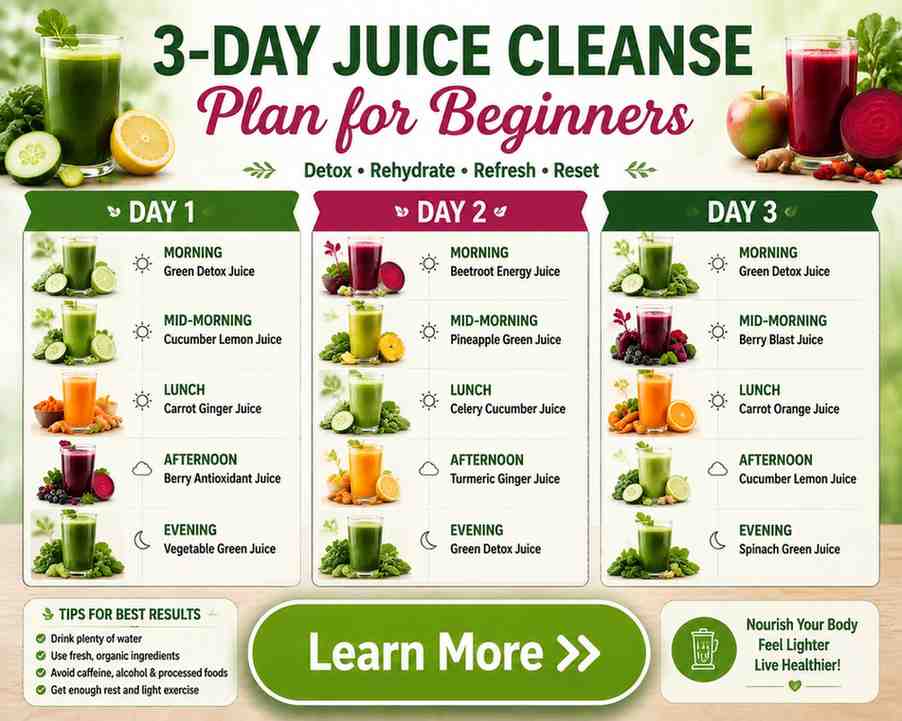
Day 1
Morning:
Green detox juice
Mid-Morning:
Cucumber lemon juice
Lunch:
Carrot ginger juice
Afternoon:
Berry antioxidant juice
Evening:
Vegetable-based juice with greens
Day 2
Morning:
Beetroot juice
Mid-Morning:
Pineapple green juice
Lunch:
Celery cucumber juice
Afternoon:
Turmeric ginger juice
Evening:
Green vegetable juice
Day 3
Morning:
Green detox juice
Mid-Morning:
Berry juice
Lunch:
Carrot orange juice
Afternoon:
Cucumber lemon juice
Evening:
Spinach-based vegetable juice
Best Ingredients to Add to Weight Loss Juice Recipes
Leafy Greens
Spinach, kale, and other greens add nutrients while keeping calories low.
Cucumber
Cucumber provides hydration and a refreshing flavor.
Celery
Celery is commonly used in juice recipes because of its light taste and water content.
Ginger
Ginger adds natural spice and is commonly included in wellness beverages.
Lemon
Lemon enhances flavor and adds vitamin C.
Berries
Berries provide natural sweetness and antioxidants.
Carrots
Carrots add color, flavor, and nutrients.
Turmeric
Turmeric is often included in wellness recipes because of its traditional use.
Common Mistakes When Following Juice Cleanse Recipes
Using Too Much Fruit
Fruit provides nutrients but can increase natural sugar content. Balance fruit with vegetables.
Ignoring Protein Intake
Protein supports muscle maintenance and fullness. Include healthy protein sources outside the cleanse if needed.
Drinking Only Juice for Long Periods
Extended juice-only diets may not provide complete nutrition.
Buying Sugary Store-Bought Juices
Many packaged juices contain added sugars. Homemade recipes provide better ingredient control.
Expecting Immediate Fat Loss
Healthy weight loss usually happens gradually through consistent lifestyle changes.
Juice Cleanse vs Healthy Balanced Diet
| Juice Cleanse | Balanced Diet |
| Short-term approach | Long-term lifestyle |
| Focuses on liquid nutrition | Includes whole foods |
| May reduce calories temporarily | Supports sustainable habits |
| Often lower in fiber and protein | Provides complete nutrients |
| Useful as an occasional reset | Better for ongoing weight management |
A juice cleanse can complement healthy habits, but a balanced diet remains the foundation of sustainable weight management.
Tips to Make Juice Recipes More Effective for Weight Loss
Combine Juices With Healthy Meals
Instead of relying only on juice, pair recipes with protein-rich foods, vegetables, and healthy fats.
Exercise Regularly
Physical activity supports calorie balance and overall wellness.
Drink Enough Water
Juices should complement water intake rather than replace it.
Prioritize Sleep
Poor sleep may affect hunger signals and food choices.
Avoid Added Sugars
Use natural ingredients instead of sweeteners.
Who Should Be Careful With Juice Cleanses?
Some individuals should speak with a healthcare professional before starting restrictive diets, including those who:
- Have diabetes or blood sugar concerns
- Are pregnant or breastfeeding
- Have kidney problems
- Take medications affected by diet changes
- Have a history of eating disorders
Personal nutrition needs vary, so choosing an approach that fits your health goals is important.
Final Thoughts: Are Juice Cleanse Recipes Good for Weight Loss?
Juice cleanse recipes for weight loss can be a refreshing way to increase fruit and vegetable intake while encouraging healthier choices.
Homemade juices made with ingredients like leafy greens, cucumber, celery, ginger, lemon, and berries can provide important nutrients and support hydration.
However, juice cleanses should be viewed as a short-term wellness tool rather than a guaranteed weight loss solution.
Sustainable results come from combining nutrient-rich foods, regular exercise, proper hydration, and healthy daily habits.
The best approach is to use juice recipes as part of a balanced lifestyle. When combined with mindful eating and consistent healthy choices, these colorful drinks can become a valuable addition to your overall wellness routine.
Frequently Asked Questions About Juice Cleanse Recipes for Weight Loss
Can juice cleanse recipes help you lose weight?
Juice cleanse recipes may support weight loss by reducing calorie intake and increasing vegetable consumption. However, lasting weight loss depends on overall lifestyle habits.
How long should a juice cleanse last?
Many people follow short cleanses lasting one to three days. Longer cleanses should be approached carefully and should provide adequate nutrition.
What is the best juice for weight loss?
Vegetable-based juices containing cucumber, spinach, celery, and lemon are popular choices because they are nutrient-rich and generally lower in calories.
Can I drink juice every day for weight loss?
Fresh juice can be included as part of a healthy diet, but it should not replace all meals in the long term because the body needs protein, fiber, and other nutrients.
Is homemade juice better than store-bought juice?
Homemade juice allows better control over ingredients and helps avoid unnecessary added sugars and preservatives.
Does a juice cleanse burn belly fat?
No food or drink specifically burns belly fat. Fat loss occurs when overall calorie balance and healthy lifestyle habits support weight reduction.
.
