Supplements That Increase GLP-1: What Really Works?
Interest in supplements that increase GLP-1 has grown rapidly as more people look for natural ways to manage appetite, support healthy blood sugar levels, and maintain a healthy weight. With medications like Ozempic and Wegovy bringing attention to GLP-1, many people are now wondering whether certain vitamins, minerals, herbs, and dietary supplements can encourage the body to produce more of this important hormone.
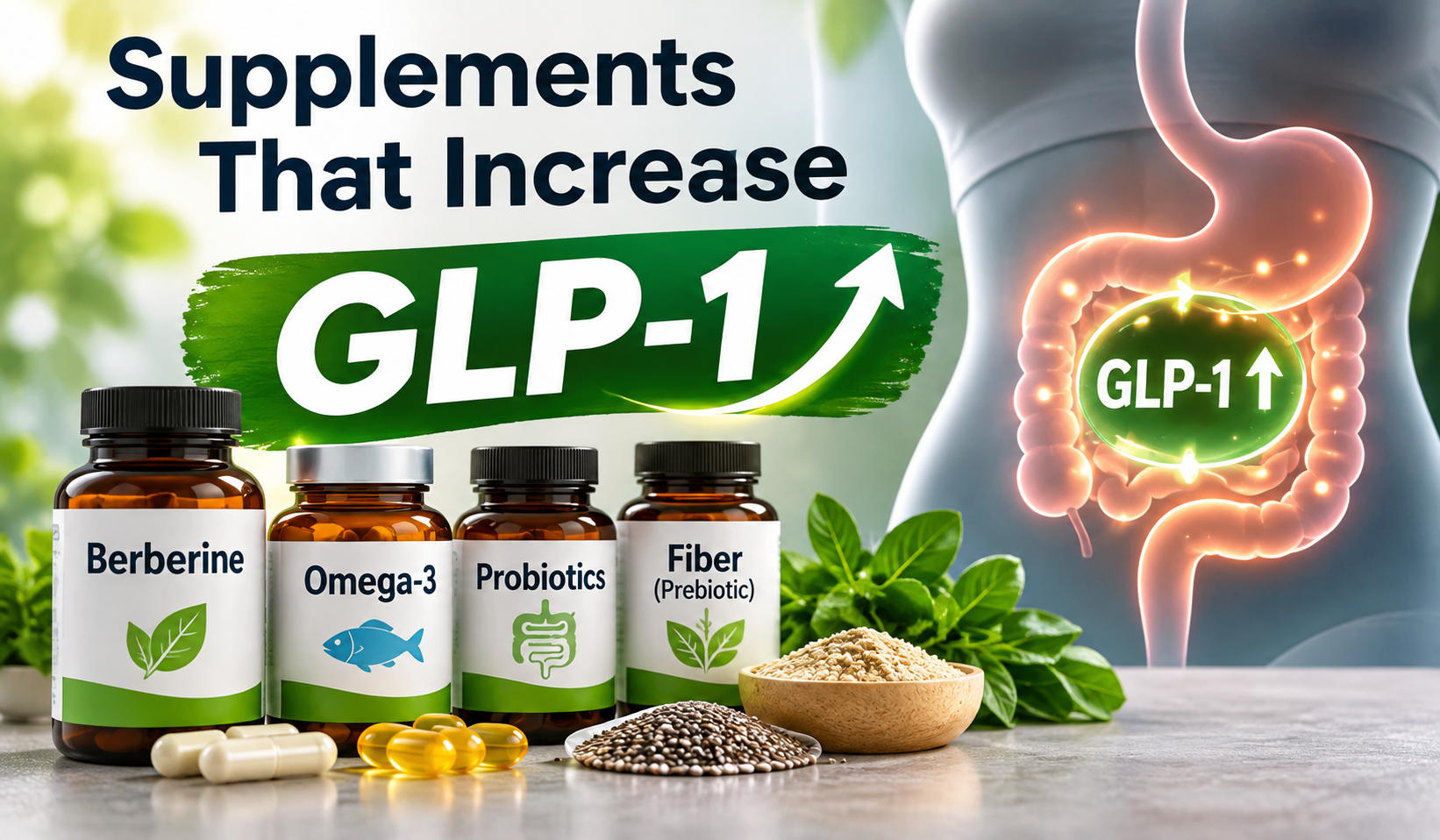
GLP-1, short for glucagon-like peptide-1, plays a significant role in digestion, insulin secretion, and feelings of fullness.
Your body naturally produces it after eating, and certain nutrients may influence how much is released.
Some supplements, particularly specific dietary fibers, have shown promising effects on GLP-1 secretion in human studies. Others, including berberine, probiotics, and plant extracts, are being investigated for their potential influence on metabolic health.
But there is an important difference between supporting natural GLP-1 production and using prescription medications that directly activate GLP-1 receptors.
In this guide, we’ll explore 10 supplements that may increase GLP-1 or support related metabolic pathways, how they work, what research reveals, and how to choose the right option for your health goals.
 GLP-1 Starting at $59 Per Month – 100% Online
What Is GLP-1 and Why Is It Important?
GLP-1 is a hormone released primarily by specialized cells in the intestines after you eat. It belongs to a group of hormones called incretins, which help coordinate the body’s response to food.
One of GLP-1’s main responsibilities is helping regulate blood sugar. When glucose levels rise, GLP-1 encourages the pancreas to release insulin. It also reduces glucagon secretion when appropriate, helping the body maintain balanced glucose levels.
GLP-1 influences appetite and digestion through several mechanisms.
-
Appetite regulation: Sends fullness signals to the brain and helps regulate hunger.
-
Blood sugar support: Encourages glucose-dependent insulin secretion.
-
Digestive function: Slows stomach emptying, helping food remain in the stomach longer.
-
Satiety: Helps people feel satisfied after eating.
-
Metabolic regulation: Participates in communication between the gut, pancreas, and brain.
Naturally produced GLP-1 is broken down quickly by an enzyme called DPP-4. Prescription GLP-1 receptor agonists are designed to produce longer-lasting effects.
Dietary supplements work differently. Rather than acting like prescription medications, they may influence natural hormone secretion, gut bacteria, nutrient absorption, or appetite through other pathways.
10 Supplements That May Increase GLP-1 Naturally
The supplements below have different levels of scientific support. Some have been investigated directly for their influence on GLP-1 levels, while others primarily support digestive health, blood sugar management, or appetite control.
1. Berberine
Berberine is a naturally occurring plant compound found in barberry, goldenseal, and Oregon grape. It has gained considerable attention for its potential effects on glucose metabolism and metabolic health.
Researchers have investigated berberine’s influence on insulin sensitivity, gut bacteria, and cellular energy regulation.
One proposed mechanism involves AMPK, an enzyme involved in energy metabolism. Berberine may influence AMPK activity, potentially supporting how the body processes glucose.
Preclinical research also suggests that berberine may affect GLP-1 secretion and related intestinal signaling pathways. Direct evidence of a meaningful GLP-1 increase in humans is less established.
Potential benefits:
-
May support healthy blood glucose regulation.
-
May influence insulin sensitivity.
-
Could support certain cholesterol and metabolic markers.
-
May affect gut microbiome composition.
Berberine is sometimes called “nature’s Ozempic” on social media, but this comparison is misleading. It does not reproduce the effects of prescription semaglutide.
The National Center for Complementary and Integrative Health notes that evidence for berberine-related weight loss remains inconclusive. It can also cause digestive side effects and interact with medications.
2. Inulin and Prebiotic Fiber
Inulin is a soluble, fermentable fiber found naturally in foods such as chicory root, garlic, onions, asparagus, and Jerusalem artichokes.
It is also available as a powdered dietary supplement.
Inulin works primarily by feeding beneficial intestinal bacteria. When these bacteria ferment fiber, they produce compounds known as short-chain fatty acids, including acetate, propionate, and butyrate.
These compounds can interact with intestinal cells involved in producing GLP-1.
This connection makes prebiotic fiber an interesting area of research for appetite regulation and metabolic health.
Potential benefits:
-
Supports beneficial intestinal bacteria.
-
Encourages short-chain fatty acid production.
-
May influence GLP-1 secretion.
-
Supports digestive regularity.
-
Can contribute to daily fiber intake.
Human research has produced mixed findings. Some studies suggest benefits for GLP-1 regulation, while a clinical trial involving people with type 2 diabetes did not find an improvement in incretin responses after inulin-type fructan supplementation.
Inulin is a reasonable choice for people looking to improve overall fiber intake, but it should not be viewed as a reliable GLP-1 booster.
3. Psyllium Husk
Psyllium husk is a soluble fiber obtained from the seeds of the Plantago ovata plant.
It is widely used to support digestive regularity and healthy cholesterol levels.
When mixed with water, psyllium forms a gel-like substance that slows the movement and absorption of nutrients through the digestive tract.
This process can help moderate the rise in blood sugar after meals and support feelings of fullness.
Psyllium’s direct effects on GLP-1 secretion are less consistent than its established benefits for bowel regularity and cholesterol management.
Potential benefits:
-
Promotes bowel regularity.
-
Helps maintain healthy cholesterol levels.
-
Supports post-meal blood sugar management.
-
May help people feel full after eating.
-
Provides additional soluble fiber.
Psyllium is a practical option for people whose diets contain insufficient fiber. It should always be taken with adequate liquid, and certain medications may need to be taken at a separate time.
4. Resistant Dextrin
Resistant dextrin is a type of soluble dietary fiber that resists digestion in the small intestine and can be fermented by bacteria in the large intestine.
It has attracted particular attention in research examining the relationship between dietary fiber, natural GLP-1 secretion, and appetite.
A 2026 scoping review examined 52 randomized studies involving 1,085 participants. Among the fiber categories reviewed, dextrins showed some of the more promising results for both GLP-1 secretion and reported fullness.
Researchers emphasized that larger, longer-term studies are still needed to understand whether these hormonal changes translate into meaningful weight-management benefits.
Potential benefits:
-
May stimulate natural GLP-1 secretion.
-
Supports beneficial intestinal fermentation.
-
Could contribute to feelings of fullness.
-
Helps increase daily dietary fiber intake.
-
May support digestive and metabolic health.
Resistant dextrin is one of the more interesting supplement categories for readers specifically researching endogenous GLP-1 production.
5. Beta-Glucan
Beta-glucan is a soluble fiber naturally present in oats, barley, and certain mushrooms.
Its benefits depend partly on its source, molecular structure, and the amount consumed.
Oat and barley beta-glucans form viscous solutions in the digestive tract, slowing nutrient absorption and contributing to metabolic benefits.
Some studies have also examined whether beta-glucan influences intestinal hormone release, including GLP-1.
The results are mixed, but beta-glucan has comparatively strong support for lowering LDL cholesterol when consumed in appropriate amounts.
Potential benefits:
-
Helps support healthy cholesterol levels.
-
Promotes fullness after meals.
-
Slows carbohydrate absorption.
-
May influence GLP-1 signaling.
-
Supports overall dietary fiber intake.
People can obtain beta-glucan through oatmeal, barley, and fiber-enriched products without necessarily needing a standalone supplement.
6. Probiotics
Probiotics are live microorganisms that can provide health benefits when consumed in appropriate amounts.
Common probiotic groups include Lactobacillus and Bifidobacterium, although their effects depend on the specific strain.
The gut microbiome participates in metabolic regulation by processing dietary nutrients and producing compounds that communicate with intestinal cells.
Because certain microbial metabolites can influence GLP-1-producing cells, researchers are exploring whether probiotic supplementation could modify natural hormone release.
Potential benefits:
-
Supports certain aspects of digestive health.
-
May improve gut microbiome balance.
-
Could influence metabolic signaling.
-
May support bowel regularity.
-
May complement a fiber-rich diet.
Research connecting probiotic supplements to increased GLP-1 secretion is still developing. Findings vary across probiotic strains, study populations, and treatment durations.
Probiotics are therefore better considered digestive-health supplements than proven GLP-1 boosters.
7. Green Tea Extract
Green tea contains natural plant compounds called catechins, including epigallocatechin gallate (EGCG).
These compounds have been studied for their antioxidant properties and possible roles in metabolic regulation.
Experimental studies suggest that catechins may influence intestinal hormone signaling, including pathways associated with GLP-1 secretion.
Green tea may also contribute to modest changes in energy expenditure, particularly when caffeine is present.
Potential benefits:
-
Provides antioxidant compounds.
-
May influence glucose metabolism.
-
Could support metabolic function.
-
May affect intestinal hormone signaling.
-
Offers a convenient source of plant polyphenols.
Research has not demonstrated that green tea extract reliably produces meaningful GLP-1-related weight loss in humans.
Regular brewed green tea is generally a lower-risk option than concentrated extracts, which have been associated with liver injury in some cases.
8. Curcumin
Curcumin is the principal bioactive compound found in turmeric, a spice commonly used in cooking and traditional wellness practices.
Researchers are interested in curcumin because of its antioxidant and anti-inflammatory properties.
Experimental investigations suggest that curcumin may influence insulin signaling, intestinal hormone activity, and metabolic regulation.
Its potential effects on GLP-1 are still being studied, particularly in relation to gut signaling and glucose metabolism.
Potential benefits:
-
Provides antioxidant activity.
-
May influence inflammatory pathways.
-
Supports research into metabolic health.
-
Could affect insulin-related signaling.
-
May influence intestinal hormone regulation.
One challenge with curcumin supplements is that ordinary curcumin is poorly absorbed. Enhanced-absorption products are available, but some formulations have been associated with liver problems.
Curcumin is an interesting research candidate rather than an established way to increase GLP-1 levels.
9. Omega-3 Fatty Acids
Omega-3 fatty acids are beneficial dietary fats found in fatty fish, algae, and fish oil supplements.
The two major marine omega-3 fatty acids are EPA and DHA.
Omega-3s are best known for supporting cardiovascular health, particularly through their effects on triglyceride levels.
Research also suggests that dietary fats interact with intestinal nutrient-sensing receptors involved in GLP-1 secretion.
Some experimental studies have explored whether omega-3 fatty acids can influence these signaling pathways.
Potential benefits:
-
Supports cardiovascular health.
-
Can help lower elevated triglycerides.
-
May influence metabolic signaling.
-
Provides essential fatty acids.
-
May contribute to overall nutritional quality.
While omega-3s have recognized nutritional benefits, direct evidence that fish oil supplements consistently increase GLP-1 levels in humans remains insufficient.
They are better selected for established cardiovascular or nutritional reasons than specifically for GLP-1 enhancement.
10. Protein Supplements
Protein is an essential nutrient involved in muscle maintenance, tissue repair, and numerous metabolic functions.
Protein-containing meals naturally stimulate digestive hormones, including GLP-1, through interactions between amino acids and intestinal cells.
Whey protein has received research attention because it is rapidly digested and contains amino acids that can influence insulin and incretin responses.
Some clinical studies suggest that whey protein consumed before or with meals can affect post-meal glucose responses and GLP-1 secretion.
Potential benefits:
-
Supports muscle maintenance.
-
Promotes fullness after meals.
-
Helps people meet daily protein requirements.
-
May influence post-meal digestive hormones.
-
Can support nutritional needs during weight management.
Protein supplements are particularly useful when a person struggles to obtain enough protein through regular meals.
They are not equivalent to GLP-1 medications, and their effects depend on the amount consumed, overall diet, and individual metabolic health.
GLP-1 Starting at $59 Per Month – 100% Online
Which Supplements Have the Most Promising GLP-1 Research?
Not every supplement marketed for GLP-1 support has the same level of scientific evidence.
The following comparison distinguishes direct research on natural GLP-1 secretion from broader metabolic benefits.
| Supplement | GLP-1 Research | Main Area of Interest |
|---|---|---|
| Resistant dextrin | Promising early human evidence | GLP-1 secretion and satiety |
| Inulin | Mixed human findings | Gut fermentation and metabolic signaling |
| Beta-glucan | Mixed human findings | Fullness and cholesterol |
| Psyllium husk | Inconsistent direct evidence | Fullness and glucose absorption |
| Berberine | Primarily preliminary for GLP-1 | Glucose metabolism |
| Probiotics | Early, strain-dependent research | Gut microbiome |
| Green tea extract | Mainly experimental | Polyphenols and metabolism |
| Curcumin | Mainly experimental | Metabolic signaling |
| Omega-3 fatty acids | Preliminary for supplemental GLP-1 effects | Cardiovascular health |
| Protein supplements | Human evidence of meal-related responses | Satiety and protein intake |
A 2026 review of dietary fiber research identified resistant dextrins as a particularly promising category, while emphasizing that short-term hormonal changes do not necessarily predict long-term weight loss.
How Do Natural GLP-1 Supplements Work?
Supplements may influence natural GLP-1 regulation through several different biological pathways.
Supporting Gut Bacteria
Prebiotic fibers provide nutrients for certain beneficial intestinal bacteria.
As these bacteria ferment fiber, they produce short-chain fatty acids that can activate receptors on GLP-1-producing intestinal cells.
Influencing Digestive Hormones
Protein, carbohydrates, and fats stimulate specialized intestinal cells after eating.
This nutrient-sensing process contributes to the natural release of GLP-1 and other hormones involved in digestion.
Slowing Nutrient Absorption
Viscous fibers such as psyllium and beta-glucan can slow nutrient absorption.
This may help moderate post-meal glucose responses and contribute to fullness, even without substantially increasing GLP-1 secretion.
Supporting Metabolic Regulation
Compounds such as berberine and certain plant polyphenols are being investigated for their influence on glucose metabolism and cellular signaling.
These effects do not necessarily depend on increasing GLP-1.
The interaction between nutrition, intestinal bacteria, and GLP-1 release is an active area of scientific research.
GLP-1 Starting at $59 Per Month – 100% Online
Can GLP-1 Supplements Help With Weight Loss?
Some supplements may support weight-management efforts by helping people feel fuller, improving dietary fiber intake, or influencing certain metabolic markers.
For example, soluble fiber can make meals more satisfying, potentially helping people manage portions and reduce frequent snacking.
Protein supplements can help preserve lean muscle during a reduced-calorie diet, especially when paired with resistance exercise.
Berberine has also been studied for its possible effects on body weight, but research quality and study results vary.
The key distinction is that a supplement increasing natural GLP-1 levels does not automatically mean it will produce clinically meaningful weight loss.
Prescription medications such as semaglutide and tirzepatide directly target hormone receptors and have demonstrated substantial weight-loss effects in large clinical trials.
No over-the-counter supplement has demonstrated comparable benefits.
Natural Ways to Support GLP-1 Production Without Supplements
A balanced diet may provide many of the nutrients associated with natural GLP-1 secretion.
Instead of relying entirely on capsules or powders, consider incorporating more whole foods into everyday meals.
-
High-fiber foods: Oats, lentils, beans, barley, and vegetables support gut health and fermentation.
-
Protein-rich foods: Eggs, fish, Greek yogurt, tofu, and legumes stimulate normal post-meal hormone responses.
-
Healthy fats: Olive oil, nuts, seeds, and avocados provide unsaturated fats.
-
Prebiotic foods: Garlic, onions, asparagus, and chicory root feed beneficial gut bacteria.
-
Resistant starch foods: Beans, lentils, and cooked-and-cooled potatoes provide fermentable carbohydrates.
Physical activity, adequate sleep, and regular eating patterns also support overall metabolic health.
Combining nutritious foods with consistent lifestyle habits generally offers broader health benefits than focusing on a single hormone.
GLP-1 Starting at $59 Per Month – 100% Online
Are Supplements That Increase GLP-1 Safe?
Many commonly used dietary fibers and protein products can fit safely into a balanced nutrition plan when used appropriately.
Other supplements require additional consideration.
Fiber supplements may cause bloating, gas, abdominal discomfort, or constipation, particularly when introduced too quickly or consumed without sufficient water.
Berberine may interact with prescription medications and should be avoided during pregnancy and breastfeeding. Concentrated green tea extracts and certain turmeric formulations may pose liver-related risks.
People taking diabetes medications should speak with a healthcare professional before adding products that may affect blood glucose levels.
It is also important to choose products with clear ingredient labels, appropriate dosing instructions, and reputable third-party quality testing.
Supplements should not replace prescribed diabetes or weight-management treatments.
How to Choose the Best GLP-1 Support Supplement
The most appropriate choice depends on your specific nutritional needs rather than a product’s marketing claims.
For someone who consumes little dietary fiber, a well-tolerated fiber supplement may offer practical digestive and metabolic benefits.
Someone who struggles to meet protein requirements might benefit more from a protein powder.
People interested in berberine or concentrated botanical extracts should first review medication interactions, medical conditions, and possible adverse effects with a qualified clinician.
When comparing products, prioritize transparent ingredients, clearly disclosed amounts, credible human research, and independent quality testing.
Avoid products promising prescription-level results or rapid weight loss through natural GLP-1 stimulation alone.
Final Thoughts:
Supplements that increase GLP-1 are attracting attention because of the hormone’s important role in appetite control, blood sugar regulation, and digestion.
Among the available options, certain dietary fibers offer some of the most promising human research for influencing natural GLP-1 secretion. Protein supplements can also support fullness and nutritional needs, while compounds such as berberine, probiotics, and plant polyphenols remain active areas of investigation.
For most adults, the best starting point is a balanced diet rich in fiber, adequate protein, and minimally processed foods. Supplements may provide additional support when they address specific nutritional gaps.
The bottom line: Natural supplements may support pathways involved in GLP-1 regulation, but they should be viewed as tools for broader metabolic wellness rather than replacements for prescription weight-loss medications.
GLP-1 Starting at $59 Per Month – 100% Online
References
https://www.webmd.com/obesity/features/natural-glp1-boosters
https://www.healthline.com/health/supplements-that-increase-glp-1
https://en.wikipedia.org/wiki/Glucagon-like_peptide-1
