GLP-1 for Sleep Apnea: How It Works, Benefits & Results
Sleep apnea affects millions of adults, often leaving them exhausted even after spending an entire night in bed. Loud snoring, interrupted breathing, morning headaches, and persistent daytime fatigue can make everyday activities more challenging. For years, treatments such as CPAP machines, oral appliances, and lifestyle changes have helped people manage this condition.
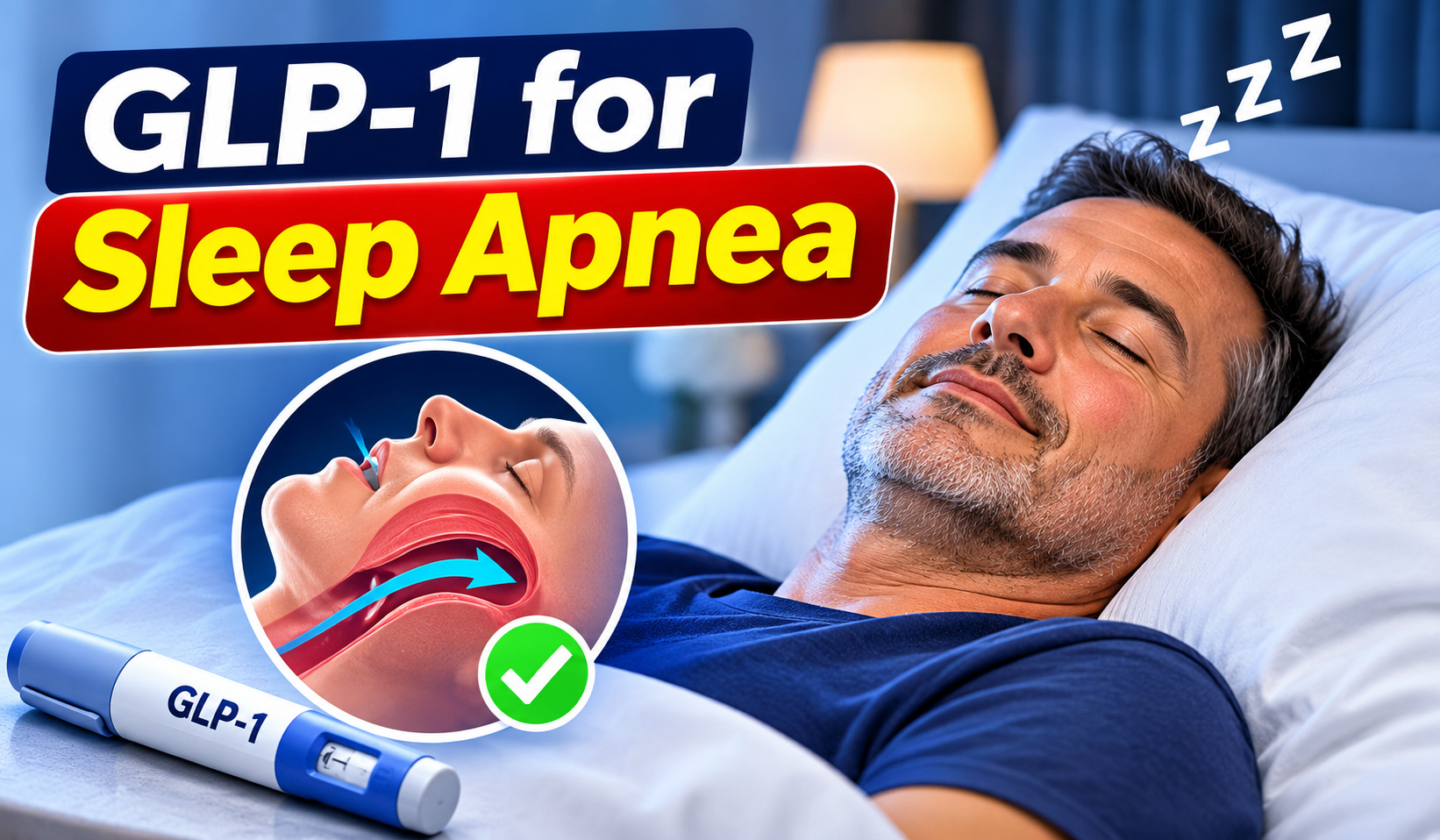
GLP-1 for sleep apnea has emerged as an important development in sleep medicine. Certain medications originally developed for diabetes and weight management are being studied for their ability to reduce sleep apnea severity, particularly in people living with obesity.
In December 2024, the U.S. Food and Drug Administration (FDA) approved Zepbound (tirzepatide) for adults with obesity and moderate-to-severe obstructive sleep apnea. This marked a significant milestone because it introduced the first FDA-approved medication specifically intended to treat obstructive sleep apnea in this population.
But how does GLP-1 treatment improve breathing during sleep? Can medications such as Zepbound and Ozempic replace CPAP machines? And who might benefit most?
This guide explores the science behind GLP-1 medications, their potential benefits, clinical research, safety considerations, and what patients should know before considering treatment.
 GLP-1 Starting at $59 Per Month – 100% Online
What Is GLP-1 for Sleep Apnea?
GLP-1 for sleep apnea refers to using medications that act on glucagon-like peptide-1 receptors to help manage factors contributing to obstructive sleep apnea, especially excess body weight.
GLP-1 is a naturally occurring hormone released by the intestines after eating. It helps regulate blood sugar, slows stomach emptying, and communicates with the brain to promote fullness.
Medications that activate GLP-1 receptors can reduce appetite and support significant weight loss in eligible patients.
This is particularly relevant because obesity is an important risk factor for obstructive sleep apnea.
Excess fatty tissue around the neck, tongue, and upper airway can contribute to airway narrowing during sleep. Fat accumulation around the abdomen may also affect breathing mechanics.
As body weight decreases, some of these physical pressures may improve, allowing air to move more freely during sleep.
Zepbound (tirzepatide) is especially noteworthy because it activates both GLP-1 and glucose-dependent insulinotropic polypeptide (GIP) receptors.
It is FDA-approved for treating moderate-to-severe obstructive sleep apnea in adults with obesity, alongside dietary changes and physical activity.
GLP-1 Starting at $59 Per Month – 100% Online
Understanding Sleep Apnea and Its Symptoms
Obstructive sleep apnea (OSA) is a sleep-related breathing disorder in which the upper airway repeatedly narrows or becomes blocked during sleep.
When the airway closes partially or completely, breathing becomes shallow or temporarily stops.
The brain responds to these interruptions by briefly increasing alertness so breathing can resume. These disruptions may happen repeatedly throughout the night, often without the person remembering them.
Common Symptoms of Sleep Apnea
-
Loud, persistent snoring.
-
Gasping, choking, or snorting during sleep.
-
Repeated pauses in breathing noticed by a partner.
-
Excessive daytime sleepiness.
-
Morning headaches or dry mouth.
-
Difficulty concentrating or remembering information.
-
Irritability and mood changes.
-
Waking frequently during the night.
Not everyone with sleep apnea snores, and symptoms alone cannot establish a diagnosis.
Different Levels of Sleep Apnea
Doctors commonly measure obstructive sleep apnea severity using the apnea-hypopnea index (AHI).
AHI represents the average number of apnea and hypopnea events per hour of sleep.
| Sleep Apnea Severity | AHI Score |
|---|---|
| Normal range | Fewer than 5 events per hour |
| Mild OSA | 5–14.9 events per hour |
| Moderate OSA | 15–29.9 events per hour |
| Severe OSA | 30 or more events per hour |
Untreated obstructive sleep apnea is associated with several health concerns, including high blood pressure, cardiovascular disease, impaired concentration, and increased accident risk from daytime sleepiness.
Recognizing symptoms and obtaining an appropriate sleep assessment are important first steps toward effective treatment.
How Does GLP-1 Work for Sleep Apnea?
GLP-1-based medications do not function like sleeping pills or devices that mechanically keep the airway open.
Instead, their demonstrated benefits for sleep apnea are closely connected to metabolic changes and weight reduction.
Reducing Excess Body Weight
One of the main ways GLP-1-based treatment may improve obstructive sleep apnea is through weight loss.
Excess weight can increase pressure around the upper airway, making it more likely to collapse when the muscles relax during sleep.
Significant weight reduction can decrease this burden and improve breathing patterns in some patients.
Improving Upper Airway Function
Excess fat around the tongue and surrounding tissues may contribute to airway narrowing.
As weight decreases, changes in these tissues may help improve airway openness.
The extent of improvement varies because airway anatomy, age, muscle function, and other characteristics also affect sleep apnea.
Supporting Better Breathing Mechanics
Abdominal obesity can restrict lung expansion and affect respiratory mechanics.
Reducing abdominal fat may improve breathing efficiency, particularly when lying down.
This can support better nighttime respiratory function.
Improving Metabolic Health
GLP-1-based medications can improve several metabolic measurements, including blood glucose regulation and body weight.
In clinical studies of tirzepatide for sleep apnea, researchers also observed improvements in blood pressure and certain inflammation-related markers.
These findings suggest broader health benefits in some patients, though weight loss remains a major explanation for the observed reduction in sleep apnea severity.
Is GLP-1 FDA-Approved for Sleep Apnea?
Yes, Zepbound (tirzepatide) is FDA-approved for treating moderate-to-severe obstructive sleep apnea in adults with obesity. But this approval does not apply to every medication in the GLP-1 category.
On December 20, 2024, the FDA approved Zepbound as the first medication specifically indicated for this condition.
The treatment is intended to be used alongside a reduced-calorie diet and increased physical activity.
Importantly, Zepbound is not approved specifically for treating central sleep apnea, which involves problems with the brain’s breathing signals rather than repeated physical airway obstruction.
GLP-1 Medications and Sleep Apnea
| Medication | Active Ingredient | FDA-Approved Specifically for OSA? |
|---|---|---|
| Zepbound | Tirzepatide | Yes, for eligible adults with obesity |
| Mounjaro | Tirzepatide | No |
| Ozempic | Semaglutide | No |
| Wegovy | Semaglutide | No |
| Rybelsus | Semaglutide | No |
| Saxenda | Liraglutide | No |
Although medications containing semaglutide or liraglutide can support weight loss, they do not share Zepbound’s specific FDA indication for obstructive sleep apnea.
This distinction matters when considering treatment eligibility, prescribing decisions, and insurance coverage.
GLP-1 Starting at $59 Per Month – 100% Online
What Does Research Say About GLP-1 for Sleep Apnea?
Scientific research offers encouraging evidence that tirzepatide can reduce obstructive sleep apnea severity in adults with obesity.
One of the most important investigations is the SURMOUNT-OSA clinical trial program, published in The New England Journal of Medicine in 2024.
The program included two randomized trials involving 469 adults with obesity and moderate-to-severe obstructive sleep apnea.
One trial included people who were not using positive airway pressure therapy, while the second included people who were using it.
Participants received tirzepatide or placebo over 52 weeks.
Benefits of GLP-1 for Sleep Apnea
GLP-1-based treatment may offer several advantages for people with obesity-related obstructive sleep apnea.
1. Reduced Breathing Interruptions
Tirzepatide has demonstrated meaningful reductions in apnea and hypopnea events in clinical trials. Fewer interruptions can support more consistent breathing throughout the night.
2. Significant Weight Management Support
GLP-1-based medications can help eligible patients manage appetite and achieve sustained weight reduction, addressing a major contributing factor in obesity-related sleep apnea.
3. Improved Sleep-Related Symptoms
Research suggests that some patients experience improvements in sleep disturbance and sleep-related functioning as obstructive sleep apnea becomes less severe.
4. Better Cardiometabolic Health
Weight loss and metabolic improvements may support healthier blood pressure and other cardiovascular risk markers, providing benefits beyond changes in nighttime breathing.
5. An Additional Treatment Option
For eligible adults, Zepbound offers a medication-based approach that can be incorporated into a comprehensive sleep apnea treatment plan.
These benefits should be considered alongside individual treatment needs, side effects, and the importance of continued sleep apnea monitoring.
GLP-1 Starting at $59 Per Month – 100% Online
GLP-1 vs. CPAP: Which Is Better for Sleep Apnea?
Continuous positive airway pressure, commonly called CPAP, remains an established and highly effective treatment for obstructive sleep apnea.
A CPAP machine delivers pressurized air through a mask, helping prevent the airway from collapsing during sleep.
GLP-1-based medication works differently by targeting underlying contributors such as excess body weight.
| Features | GLP-1-Based Treatment | CPAP Therapy |
|---|---|---|
| Treatment approach | Medication and weight management | Mechanical airway support |
| Main action | Reduces factors contributing to OSA | Helps keep the airway open |
| Weight-loss benefits | Yes, with appropriate medication | Not a primary effect |
| How it is used | Prescription medication | Mask and airflow device |
| Speed of improvement | Develops over weeks to months | Can improve breathing immediately when properly used |
| FDA-approved OSA option | Zepbound for eligible adults | CPAP devices are established treatments |
| Main limitations | Side effects, suitability, cost | Mask comfort, adherence, equipment maintenance |
Can GLP-1 Replace CPAP?
Not automatically. Some people experience substantial improvement in sleep apnea severity after losing weight, but others continue to have clinically important breathing interruptions.
CPAP provides direct airway support while it is being used, whereas medication-related improvements generally develop gradually.
Patients should never discontinue CPAP solely because they have started GLP-1 medication or lost weight.
A sleep specialist may recommend repeat testing before changing an existing treatment plan.
For some patients, combining weight management with positive airway pressure therapy may be particularly useful.
GLP-1 Starting at $59 Per Month – 100% Online
Who Can Benefit From GLP-1 Treatment for Sleep Apnea?
GLP-1-based treatment may be most relevant for adults whose obstructive sleep apnea is associated with obesity.
Potential candidates include adults who have a confirmed diagnosis of moderate-to-severe OSA, meet the relevant obesity criteria, and are medically suitable for tirzepatide treatment.
People who experience difficulty managing their weight through lifestyle changes alone may also benefit from discussing medical weight-management options with a healthcare professional.
Nevertheless, medication is not appropriate for everyone.
Patients who have sleep apnea primarily related to structural airway abnormalities may require alternative or additional treatment.
People with central sleep apnea need a different diagnostic and treatment approach.
A clinician should review medical history, current medications, other health conditions, and potential risks before prescribing treatment.
Side Effects and Safety of GLP-1 for Sleep Apnea
Although tirzepatide can provide important benefits, patients should understand its potential adverse effects before starting treatment.
Common Side Effects
-
Nausea and vomiting.
-
Diarrhea or constipation.
-
Abdominal discomfort.
-
Indigestion or acid reflux.
-
Reduced appetite.
-
Injection-site reactions.
-
Fatigue.
Many gastrointestinal symptoms occur during treatment initiation or dosage increases.
Important Safety Considerations
Zepbound carries an FDA boxed warning concerning thyroid C-cell tumors observed in rats. Whether this risk applies to humans is unknown.
The medication must not be used by people with a personal or family history of medullary thyroid carcinoma or multiple endocrine neoplasia syndrome type 2.
Other important risks include pancreatitis, gallbladder problems, dehydration-related kidney injury, and serious allergic reactions.
Zepbound is not recommended for patients with severe gastroparesis. It may also cause fetal harm during pregnancy.
Patients using insulin or certain diabetes medicines may require additional monitoring for low blood sugar.
People using oral hormonal contraceptives should discuss additional contraception precautions when starting tirzepatide or increasing its dose.
The FDA-approved prescribing information provides further details on contraindications, drug interactions, and appropriate monitoring.
GLP-1 Starting at $59 Per Month – 100% Online
GLP-1 for Sleep Apnea: What to Expect During Treatment
Starting GLP-1-based medication for sleep apnea involves more than receiving a prescription.
Effective treatment generally requires several coordinated steps.
Step 1: Confirm the Diagnosis
A healthcare provider evaluates symptoms and may recommend an overnight sleep study or a suitable home sleep apnea test.
Testing helps establish whether obstructive sleep apnea is present and how severe it is.
Step 2: Review Medical Eligibility
The clinician evaluates body weight, medical history, existing treatments, other medications, and potential contraindications.
For patients considering Zepbound specifically for OSA, eligibility must align with its approved indication.
Step 3: Begin Treatment Gradually
Zepbound is administered as a once-weekly injection.
Treatment typically begins with a low dose that is gradually increased according to the prescribing information and individual tolerability.
Patients should follow their clinician’s dosing instructions rather than adjusting medication independently.
Step 4: Maintain Healthy Lifestyle Habits
Nutritionally balanced meals, adequate protein intake, physical activity, and consistent sleep habits are important components of treatment.
These practices can help support weight management and overall metabolic health.
Step 5: Monitor Sleep Apnea Progress
Follow-up appointments allow clinicians to assess weight changes, sleep-related symptoms, medication tolerability, and ongoing treatment needs.
Repeat sleep testing may be necessary to determine whether breathing interruptions have improved sufficiently to reconsider CPAP settings or other therapies.
Can GLP-1 Cure Sleep Apnea Permanently?
GLP-1-based treatment can substantially reduce obstructive sleep apnea severity in some individuals, but it should not be described as a guaranteed permanent cure.
Sleep apnea develops through several interacting factors, including body weight, airway anatomy, muscle function, age, and sleep position.
Weight loss can improve some of these factors without eliminating every cause.
Clinical trials have shown that certain participants achieved remission or reached a mild disease category with resolution of daytime symptoms.
For others, clinically significant obstructive sleep apnea persisted despite substantial improvements.
Another consideration is that body weight may increase after discontinuing weight-management medication, potentially affecting sleep apnea severity again.
Therefore, long-term monitoring remains important.
The goal is not simply to reduce snoring or lose weight. It is to achieve safer, more consistent breathing during sleep and improve long-term health.
GLP-1 Starting at $59 Per Month – 100% Online
Other Effective Treatments for Sleep Apnea
While GLP-1 medications have created a promising new treatment option, comprehensive sleep apnea management may involve several approaches.
CPAP and other positive airway pressure devices: These provide mechanical airway support and are particularly important for many patients with moderate-to-severe OSA.
Oral appliances: Custom dental devices can reposition the lower jaw to help keep the airway open. They may be appropriate for selected patients.
Positional therapy: Sleeping on the side can help some people whose airway obstruction becomes worse when sleeping on their back.
Weight management: Nutrition, exercise, behavioral support, and appropriate medical treatments can improve obesity-related sleep apnea.
Surgical procedures: Certain patients may benefit from treatments targeting anatomical airway obstruction or from other specialist procedures.
Hypoglossal nerve stimulation: Selected patients may qualify for an implanted device that stimulates muscles involved in maintaining airway openness.
Treatment selection depends on disease severity, anatomy, individual preferences, medical history, and response to previous therapies.
Final Verdict
Yes, GLP-1-based treatment can be effective for obstructive sleep apnea, especially in adults with obesity. Clinical research has demonstrated that tirzepatide can substantially reduce breathing interruptions during sleep, improve body weight, and support better sleep-related outcomes.
The FDA approval of Zepbound represents an important advance because it provides an additional treatment approach for patients with moderate-to-severe OSA and obesity.
Still, medication is not a universal solution. CPAP therapy, lifestyle management, and other established treatments remain essential components of personalized sleep apnea care.
For eligible patients, GLP-1-based treatment may address both excess body weight and sleep apnea severity, offering an opportunity to improve nighttime breathing and overall metabolic health.
The best results come from choosing the right treatment, maintaining consistent follow-up, and working with healthcare professionals who understand both sleep medicine and weight management.
GLP-1 Starting at $59 Per Month – 100% Online
References
https://www.healthline.com/health/weight-loss/glp1-for-weight-loss
https://www.webmd.com/obesity/listicle-what-to-know-about-glps-1s-for-weight-loss
