GLP-1 Recipes: Easy, Healthy Meals for Weight Loss
Eating healthy while taking GLP-1 medications doesn’t have to mean giving up delicious food or spending hours preparing complicated meals.
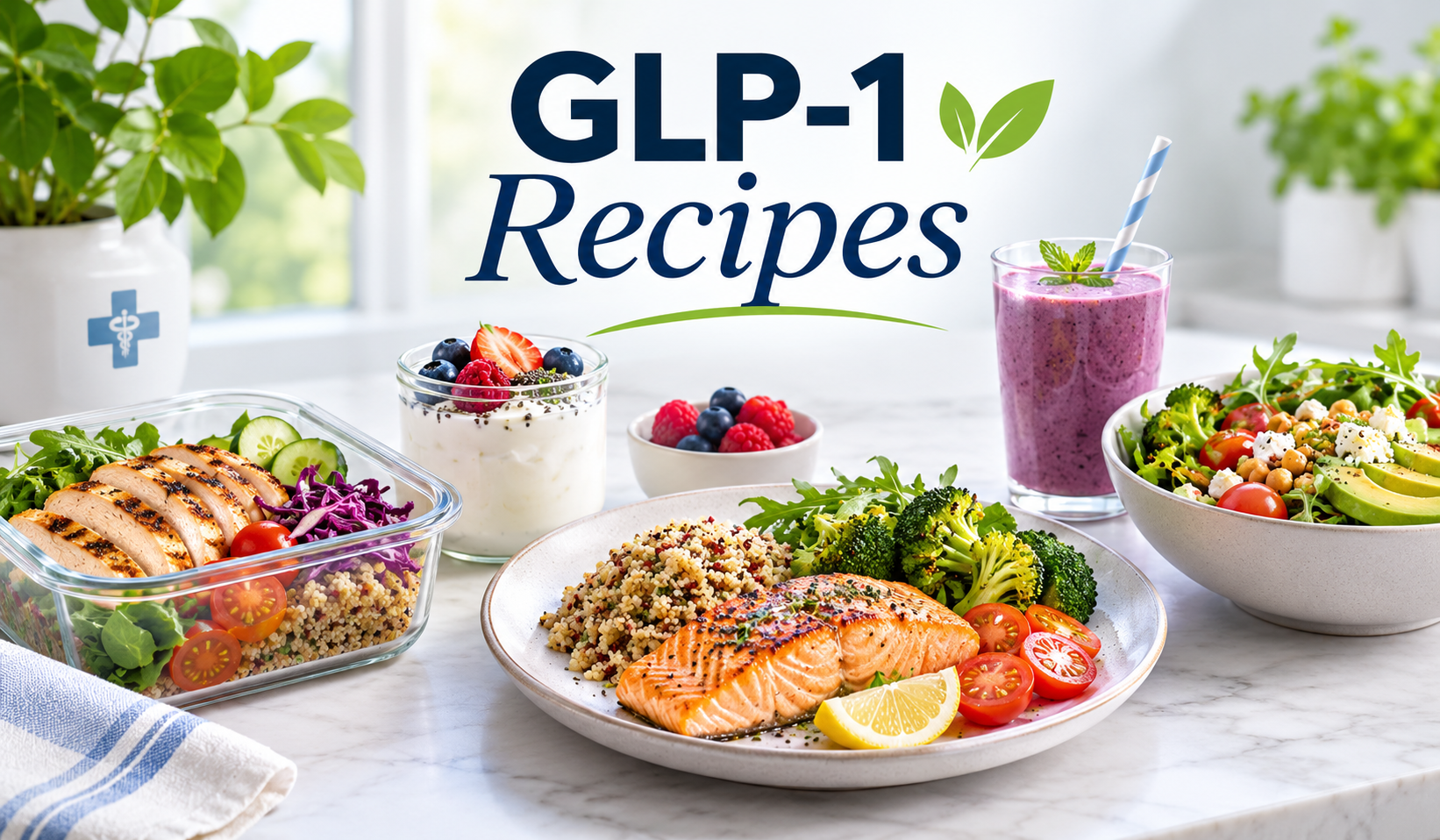
The right GLP-1 recipes can make everyday eating easier, support your nutritional needs, and help you stay satisfied with smaller portions.
Medications such as Ozempic, Wegovy, Mounjaro, and Zepbound can reduce appetite and increase feelings of fullness. While these changes may support weight management, they can also make it challenging to eat enough protein, fiber, vitamins, and other essential nutrients.
That’s where a thoughtful GLP-1 meal plan becomes useful.
Instead of relying on large meals or restrictive diets, you can enjoy smaller, nutrient-dense dishes featuring lean proteins, colorful vegetables, whole grains, and healthy fats.
In this guide, you’ll discover 15 delicious GLP-1-friendly recipes for breakfast, lunch, dinner, and snacks. You’ll also learn which ingredients work well, how to prepare balanced meals, and practical ways to make eating more comfortable while taking GLP-1 medications.
 GLP-1 Starting at $59 Per Month – 100% Online
What Are GLP-1 Recipes?
GLP-1 recipes are balanced, nutrient-rich meals designed to support people taking glucagon-like peptide-1 (GLP-1) medications for weight management or type 2 diabetes.
Unlike traditional weight-loss recipes that primarily focus on reducing calories, GLP-1-friendly meals prioritize protein, fiber, hydration, balanced nutrition, and manageable portion sizes.
These recipes commonly include lean proteins such as chicken, eggs, fish, tofu, and Greek yogurt, along with vegetables, fruits, whole grains, and moderate amounts of healthy fats.
Because GLP-1 medications slow gastric emptying and influence appetite regulation, some people feel full after eating relatively small amounts of food.
Smaller, balanced meals may therefore be more comfortable than large servings.
A practical GLP-1 meal should provide enough nutrients without requiring you to eat beyond comfortable fullness.
Why Choosing the Right GLP-1 Recipes Matters
Food quality becomes particularly important when your appetite decreases. Eating less overall can mean consuming fewer essential nutrients unless meals are planned thoughtfully.
Well-balanced GLP-1 recipes can help support several important aspects of health.
-
Muscle maintenance: Protein-rich meals help preserve lean muscle during weight loss, especially when combined with resistance exercise.
-
Digestive health: Fiber-containing foods support bowel regularity, although fiber should be increased gradually.
-
Steady energy: Balanced meals containing protein, complex carbohydrates, and healthy fats provide sustained nourishment.
-
Appetite satisfaction: Nutrient-dense foods help make smaller servings more satisfying.
-
Long-term healthy habits: Simple, enjoyable recipes make nutritious eating easier to maintain.
The goal isn’t to eat as little as possible. It’s to make every meal nutritionally valuable while respecting your changing appetite.
GLP-1 Starting at $59 Per Month – 100% Online
15 Best GLP-1 Recipes for Breakfast, Lunch, Dinner, and Snacks
The following recipes use familiar ingredients and straightforward preparation methods. Each recipe includes practical serving ideas, making it suitable for home cooking, weekly meal preparation, or busy schedules.
1. High-Protein Greek Yogurt Berry Bowl
BREAKFAST • 5 MINUTES • 1 SERVING
Greek yogurt is a convenient breakfast option because it provides substantial protein without requiring a large meal. Fresh berries add natural sweetness, fiber, and antioxidants.
Ingredients:
-
¾ cup plain nonfat Greek yogurt
-
½ cup mixed blueberries and strawberries
-
1 teaspoon chia seeds
-
1 tablespoon chopped almonds
-
Cinnamon to taste
Instructions:
-
Add Greek yogurt to a small serving bowl.
-
Wash and slice the berries.
-
Arrange the berries over the yogurt.
-
Sprinkle chia seeds, almonds, and cinnamon on top.
-
Serve immediately or refrigerate until breakfast.
Why it’s GLP-1-friendly: This breakfast combines protein, fiber, and healthy fats in a modest portion. Use smaller servings of nuts and seeds if higher-fat foods cause discomfort.
2. Spinach and Egg Breakfast Scramble
BREAKFAST • 10 MINUTES • 1 SERVING
Eggs provide high-quality protein, while spinach contributes folate, vitamin K, and other useful nutrients.
Ingredients:
-
1 large egg
-
2 egg whites
-
½ cup fresh spinach
-
¼ cup diced tomatoes
-
1 teaspoon olive oil
-
Black pepper
Instructions:
-
Heat olive oil in a nonstick skillet.
-
Add tomatoes and spinach, cooking until softened.
-
Whisk the egg and egg whites together.
-
Pour into the skillet and stir gently until fully cooked.
-
Season lightly and serve warm.
GLP-1 tip: Pair with a small slice of whole-grain toast if your appetite allows.
3. Overnight Oats With Chia and Protein
BREAKFAST • 5 MINUTES + CHILLING • 1 SERVING
Overnight oats are ideal for busy mornings because everything can be prepared the previous evening.
Ingredients:
-
⅓ cup rolled oats
-
½ cup unsweetened milk or fortified soy milk
-
¼ cup plain Greek yogurt
-
1 teaspoon chia seeds
-
¼ cup blueberries
-
Cinnamon
Instructions:
-
Combine oats, milk, yogurt, and chia seeds in a jar.
-
Stir thoroughly.
-
Refrigerate overnight.
-
Top with blueberries and cinnamon before eating.
Oats contain soluble fiber, while Greek yogurt increases the protein content. Start with a smaller serving if fiber-rich breakfasts cause bloating.
4. Cottage Cheese and Avocado Toast
BREAKFAST • 7 MINUTES • 1 SERVING
This recipe combines creamy cottage cheese with whole-grain toast and a small amount of avocado.
Ingredients:
-
1 slice whole-grain bread
-
⅓ cup low-fat cottage cheese
-
¼ small avocado
-
Lemon juice
-
Black pepper
Instructions:
-
Toast the bread until golden.
-
Mash avocado with a little lemon juice.
-
Spread avocado over the toast.
-
Add cottage cheese and black pepper.
The combination provides protein, carbohydrates, and unsaturated fats in a convenient breakfast.
5. Grilled Chicken and Quinoa Bowl
LUNCH • 25 MINUTES • 1 SERVING
A chicken and quinoa bowl is a balanced lunch that’s easy to customize with whatever vegetables are available.
Ingredients:
-
3 oz cooked skinless chicken breast
-
⅓ cup cooked quinoa
-
½ cup steamed broccoli
-
¼ cup diced cucumber
-
¼ cup chopped tomatoes
-
1 teaspoon olive oil
-
Lemon juice
Instructions:
-
Cook quinoa following the package directions.
-
Grill or bake chicken until it reaches 165°F internally.
-
Steam broccoli until tender.
-
Arrange quinoa, chicken, and vegetables in a bowl.
-
Add olive oil and lemon juice.
Why it’s GLP-1-friendly: Chicken supplies lean protein, quinoa offers complex carbohydrates, and vegetables provide micronutrients. Portions can be adjusted to your tolerance.
6. Turkey and Hummus Lettuce Wraps
LUNCH • 10 MINUTES • 1 SERVING
Lettuce wraps offer a lighter alternative to oversized sandwiches while maintaining flavor and variety.
Ingredients:
-
3 oz cooked turkey breast
-
2 large romaine lettuce leaves
-
2 tablespoons hummus
-
Sliced cucumber
-
Shredded carrots
-
Lemon juice
Instructions:
-
Wash and dry lettuce leaves.
-
Spread hummus across the center.
-
Add turkey, cucumber, and carrots.
-
Finish with lemon juice.
-
Roll gently and serve.
Choose freshly cooked turkey or a lower-sodium deli version when convenient.
GLP-1 Starting at $59 Per Month – 100% Online
7. Mediterranean Chickpea and Tuna Salad
LUNCH • 10 MINUTES • 1 SERVING
This refreshing salad requires no cooking and works well as a make-ahead lunch.
Ingredients:
-
3 oz canned light tuna in water, drained
-
⅓ cup cooked chickpeas
-
¼ cup diced cucumber
-
¼ cup cherry tomatoes
-
Fresh parsley
-
1 teaspoon olive oil
-
Lemon juice
Instructions:
-
Drain the tuna and rinse the chickpeas.
-
Combine with cucumber and tomatoes.
-
Add chopped parsley.
-
Toss with olive oil and lemon juice.
-
Refrigerate until ready to eat.
Tuna provides protein, while chickpeas contribute fiber. Rotating seafood choices helps provide dietary variety.
8. Creamy Chicken and Vegetable Soup
LUNCH • 30 MINUTES • 2 SERVINGS
Warm soup may feel easier to eat when you have a reduced appetite. This recipe uses blended vegetables for creaminess without heavy cream.
Ingredients:
-
6 oz cooked shredded chicken
-
2 cups low-sodium chicken broth
-
1 medium carrot, diced
-
½ zucchini, chopped
-
½ cup cauliflower florets
-
¼ cup plain Greek yogurt
-
Dried herbs
Instructions:
-
Simmer carrot, zucchini, and cauliflower in broth until tender.
-
Blend part of the vegetables with a little broth.
-
Return the mixture to the saucepan.
-
Add shredded chicken and herbs.
-
Remove from heat, allow to cool slightly, and stir in Greek yogurt.
This recipe offers protein and vegetables in a soft, comforting meal. If nausea is present, a simpler broth-based version may be preferable.
9. Baked Salmon With Sweet Potato and Broccoli
DINNER • 30 MINUTES • 1 SERVING
Salmon is a nutritious source of protein and omega-3 fatty acids, while sweet potatoes provide fiber, potassium, and beta-carotene.
Ingredients:
-
3–4 oz salmon fillet
-
½ small sweet potato
-
½ cup broccoli
-
1 teaspoon olive oil
-
Lemon juice
-
Garlic powder
Instructions:
-
Preheat the oven to 400°F.
-
Cut sweet potato into small pieces and start roasting.
-
Add the salmon to a separate baking dish after approximately 10 minutes.
-
Season with garlic powder and lemon.
-
Cook salmon until it reaches 145°F internally and the potato is tender.
-
Steam broccoli and serve together.
Because salmon contains fat, begin with a modest serving if fatty meals worsen nausea or fullness.
10. Lean Turkey Meatballs With Zucchini Noodles
DINNER • 30 MINUTES • 2 SERVINGS
Turkey meatballs are a protein-rich dinner option that pairs naturally with vegetables.
Ingredients:
-
8 oz lean ground turkey
-
1 egg white
-
2 tablespoons whole-wheat breadcrumbs
-
1 cup zucchini noodles
-
½ cup low-sodium tomato sauce
-
Italian seasoning
Instructions:
-
Combine turkey, egg white, breadcrumbs, and seasoning.
-
Shape into small meatballs.
-
Bake at 400°F until the centers reach 165°F.
-
Warm tomato sauce in a skillet.
-
Lightly sauté zucchini noodles.
-
Divide into two servings and top with meatballs and sauce.
Small meatballs are convenient for portion control and meal preparation.
11. Ginger Chicken and Vegetable Stir-Fry
DINNER • 20 MINUTES • 2 SERVINGS
This colorful stir-fry features lean chicken, vegetables, and fresh ginger for flavor.
Ingredients:
-
6 oz skinless chicken breast, sliced
-
1 cup chopped mixed vegetables
-
½ cup cooked brown rice
-
1 teaspoon olive oil
-
1 teaspoon freshly grated ginger
-
2 teaspoons reduced-sodium soy sauce
Instructions:
-
Heat oil in a skillet.
-
Add chicken and cook thoroughly to 165°F.
-
Add vegetables and ginger.
-
Stir-fry until vegetables become tender.
-
Mix in soy sauce.
-
Serve as two portions over brown rice.
Fresh ginger adds flavor without relying on heavy sauces. Some people also find ginger-containing foods soothing during mild nausea.
12. High-Protein Tofu and Vegetable Bowl
DINNER • 20 MINUTES • 1 SERVING
For people who prefer plant-based meals, tofu provides a versatile protein source.
Ingredients:
-
4 oz firm tofu
-
½ cup cooked quinoa
-
½ cup steamed green beans
-
¼ cup shredded carrots
-
1 teaspoon sesame oil
-
Fresh ginger
-
Low-sodium soy sauce
Instructions:
-
Drain tofu and cut into cubes.
-
Heat sesame oil in a skillet.
-
Cook tofu until lightly golden.
-
Add ginger and a small amount of soy sauce.
-
Serve with quinoa, green beans, and carrots.
This vegetarian meal combines plant protein with vegetables and whole grains.
13. Strawberry Greek Yogurt Protein Smoothie
SNACK • 5 MINUTES • 1 SERVING
Smoothies can be useful when chewing a full meal feels difficult, provided they are consumed slowly and comfortably.
Ingredients:
-
¾ cup plain Greek yogurt
-
½ cup strawberries
-
½ small banana
-
½ cup unsweetened milk
-
Ice cubes, optional
Instructions:
-
Add ingredients to a blender.
-
Blend until smooth.
-
Adjust thickness with additional milk.
-
Pour into a glass and sip slowly.
This smoothie supplies protein and fruit without requiring a large solid meal. Avoid drinking it quickly if that increases fullness.
14. Apple Slices With Greek Yogurt Dip
SNACK • 5 MINUTES • 1 SERVING
A simple fruit snack becomes more satisfying when paired with a protein-rich dip.
Ingredients:
-
½ medium apple
-
⅓ cup plain Greek yogurt
-
¼ teaspoon cinnamon
-
A few drops of vanilla extract
Instructions:
-
Slice the apple.
-
Combine Greek yogurt, cinnamon, and vanilla.
-
Serve apple slices with the yogurt dip.
For people who struggle with raw fruit, peeled or softly cooked apple may be easier to tolerate.
15. Mini Egg and Vegetable Muffins
SNACK OR BREAKFAST • 25 MINUTES • 6 MUFFINS
Egg muffins are convenient for meal preparation and provide an easy way to incorporate vegetables into small portions.
Ingredients:
-
3 large eggs
-
3 egg whites
-
½ cup chopped spinach
-
¼ cup finely diced bell pepper
-
2 tablespoons low-fat shredded cheese
-
Black pepper
Instructions:
-
Preheat the oven to 350°F.
-
Whisk eggs and egg whites.
-
Stir in vegetables, cheese, and pepper.
-
Pour into six greased muffin cups.
-
Bake for approximately 15–20 minutes, until fully set.
Refrigerate promptly and consume within 3–4 days, or freeze portions for later.
These muffins make practical protein-rich snacks, particularly when appetite fluctuates.
GLP-1 Starting at $59 Per Month – 100% Online
Best Ingredients to Include in GLP-1 Recipes
Choosing ingredients thoughtfully can make meal planning simpler and more nutritious.
| Food Category | GLP-1-Friendly Options | Nutritional Benefits |
|---|---|---|
| Lean protein | Chicken, turkey, fish, eggs | Supports muscle maintenance |
| Dairy and alternatives | Greek yogurt, cottage cheese, tofu | Protein and essential nutrients |
| Whole grains | Oats, quinoa, brown rice | Fiber and complex carbohydrates |
| Vegetables | Spinach, broccoli, carrots, zucchini | Vitamins, minerals, and fiber |
| Fruits | Berries, apples, bananas | Fiber and micronutrients |
| Healthy fats | Olive oil, avocado, nuts | Essential fats and nutrient absorption |
| Legumes | Lentils, chickpeas, beans | Plant protein and fiber |
| Hydrating foods | Soups, melon, cucumber | Contributes to fluid intake |
Individual tolerances differ. Foods that are nutritious may still cause discomfort when consumed in large portions, particularly during medication dose increases.
GLP-1 Recipes for Weight Loss: How to Build a Balanced Plate
A successful GLP-1 meal plan does not require eliminating entire food groups.
Instead, focus on nutritional balance and comfortable portions.
A simple starting point is to include a protein source, vegetables, and a moderate portion of whole grains or another carbohydrate.
For example, a small serving of grilled chicken with cooked broccoli and quinoa offers protein, fiber, and carbohydrates.
If your appetite is very low, prioritize protein and nutrient-rich foods rather than forcing yourself to finish an oversized plate. A registered dietitian can help determine whether your intake meets your needs.
GLP-1 Starting at $59 Per Month – 100% Online
7-Day GLP-1 Meal Plan Using These Recipes
This sample weekly menu combines the recipes above into a convenient routine.
| Day | Breakfast | Lunch | Dinner |
|---|---|---|---|
| Monday | Greek Yogurt Berry Bowl | Chicken Quinoa Bowl | Baked Salmon |
| Tuesday | Spinach Egg Scramble | Turkey Lettuce Wraps | Turkey Meatballs |
| Wednesday | Overnight Oats | Tuna Chickpea Salad | Ginger Chicken |
| Thursday | Cottage Cheese Toast | Chicken Vegetable Soup | Tofu Vegetable Bowl |
| Friday | Greek Yogurt Berry Bowl | Turkey Lettuce Wraps | Baked Salmon |
| Saturday | Egg Vegetable Muffins | Chicken Quinoa Bowl | Ginger Chicken |
| Sunday | Overnight Oats | Chicken Vegetable Soup | Turkey Meatballs |
You can include the strawberry smoothie, apple yogurt dip, or egg muffins as snacks when needed.
This is a flexible meal idea, not a complete individualized nutrition prescription. Portion sizes and additional snacks should reflect your appetite, protein needs, activity level, and health goals.
Foods to Limit When Preparing GLP-1 Meals
Some foods may worsen common GLP-1 digestive symptoms, especially when eaten in large amounts.
These include:
-
Deep-fried foods: High-fat meals may intensify nausea or uncomfortable fullness.
-
Very greasy meals: Rich sauces and heavy cream-based dishes may be difficult to tolerate.
-
Large sugary beverages: Sweetened drinks can add substantial sugar without much nutritional value.
-
Highly spicy foods: Spicy meals may aggravate reflux or nausea in sensitive individuals.
-
Alcohol: Alcohol can worsen dehydration or digestive discomfort and may affect blood glucose.
These foods do not necessarily need to be eliminated completely. Personal tolerance and overall dietary patterns matter more than rigid restrictions.
GLP-1 Starting at $59 Per Month – 100% Online
How to Meal Prep GLP-1 Recipes for the Week
Meal preparation can reduce daily cooking time and help you access nutritious food even when your appetite is unpredictable.
Begin by preparing two protein sources, such as grilled chicken and hard-boiled eggs. Next, cook a small batch of quinoa or brown rice and wash your preferred vegetables.
Divide ingredients into individual containers instead of preparing oversized meals.
For food safety, refrigerate perishable cooked meals promptly, generally within two hours, and use most refrigerated leftovers within three to four days. Freeze portions that you won’t eat within that period.
Keeping Greek yogurt, fruit, canned fish, and frozen vegetables available also makes it easier to prepare simple meals without extensive planning.
Tips for Eating Comfortably While Taking GLP-1 Medications
Eating habits can influence digestive comfort just as much as recipe selection.
Eat slowly: Take small bites, chew thoroughly, and stop when comfortably satisfied.
Try smaller meals: If large meals cause discomfort, divide your daily intake into several smaller eating occasions.
Prioritize protein: Include protein at meals to support muscle maintenance during weight loss.
Increase fiber gradually: Sudden increases in high-fiber foods can worsen bloating or gas.
Stay hydrated: Drink fluids regularly throughout the day, especially if nausea or constipation occurs.
Adjust food textures: Soups, yogurt, soft cooked vegetables, and smoothies may be easier to tolerate during periods of reduced appetite.
Persistent vomiting, severe abdominal pain, or inability to keep fluids down requires prompt medical assessment.
Final Verdict
GLP-1 recipes can make healthy eating easier, more enjoyable, and more sustainable while using medications such as Ozempic, Wegovy, Mounjaro, or Zepbound.
The most useful approach involves choosing nutrient-dense foods, prioritizing protein, including fiber-rich ingredients, and eating portions that feel comfortable.
From Greek yogurt breakfast bowls and chicken quinoa lunches to baked salmon dinners and simple protein snacks, the 15 recipes in this guide provide practical inspiration for everyday meals.
Remember that successful weight management is not simply about eating less. It’s about getting sufficient nutrition, maintaining muscle, staying hydrated, and developing healthy habits that can continue long-term.
By combining satisfying recipes with appropriate medical care, regular physical activity, and consistent meal planning, you can build an eating routine that supports your health goals without sacrificing flavor or enjoyment.
GLP-1 Starting at $59 Per Month – 100% Online
References
https://www.webmd.com/obesity/features/natural-glp1-boosters
