GLP-1 Food List: Best Foods to Eat and Avoid for Weight Loss
Starting a GLP-1 medication can change more than your appetite. It can also change how much food you comfortably eat, how quickly you feel full, and which meals leave you feeling your best. That is why following a well-balanced GLP-1 food list is an important part of maintaining good nutrition throughout your weight-loss journey.
GLP-1 medications, including semaglutide (Ozempic and Wegovy) and tirzepatide (Mounjaro and Zepbound), help regulate appetite and blood sugar. They can make smaller meals feel more satisfying, but your food choices still matter for supporting muscle health, digestion, energy, and long-term weight management.
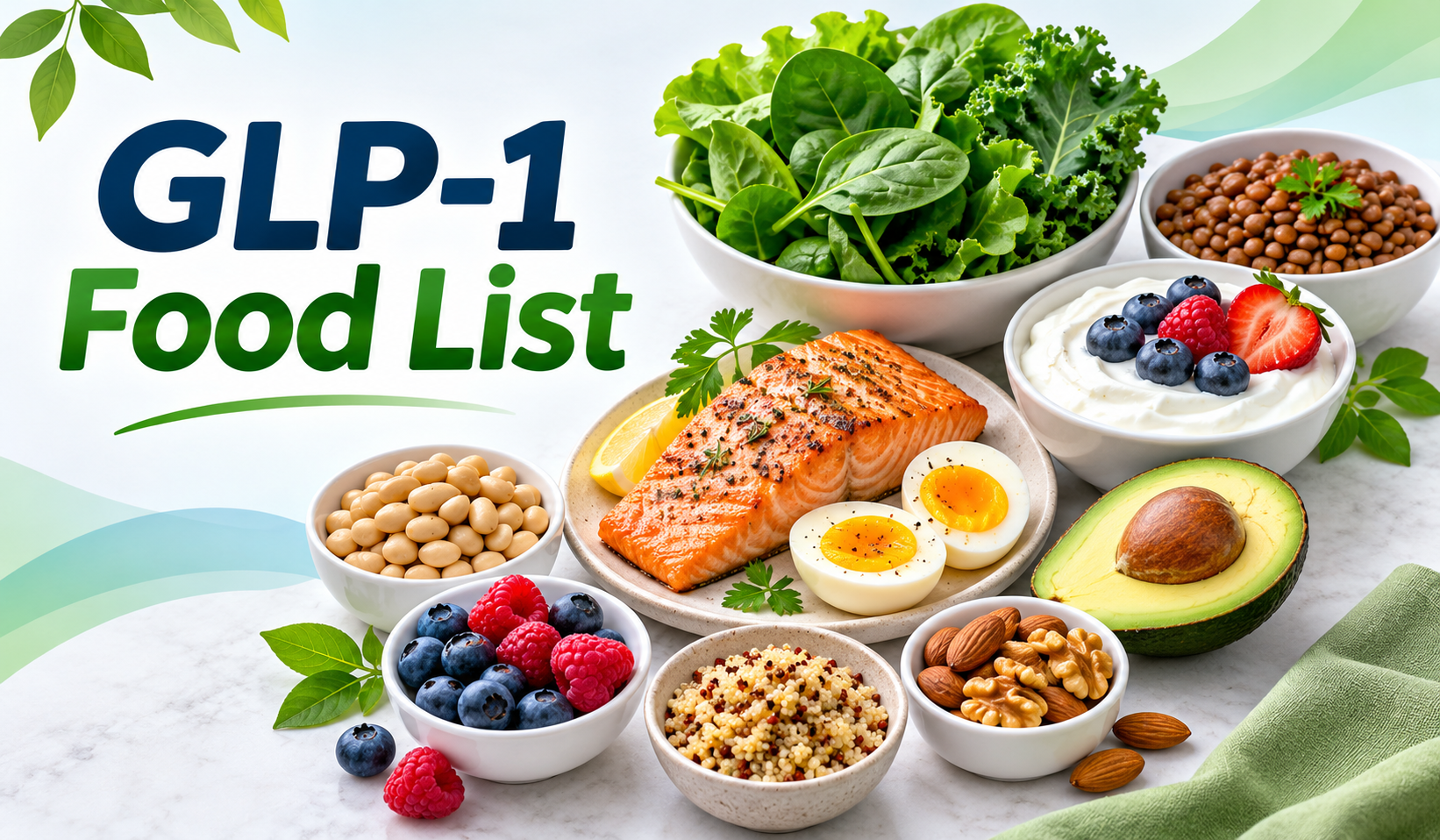
The best GLP-1 diet focuses on nutrient-rich foods such as lean proteins, vegetables, fruits, whole grains, and healthy fats. These foods provide essential nutrients without requiring large portions.
In this guide, you will discover the best foods to eat on GLP-1, foods to limit, grocery shopping essentials, healthy snacks, and a practical 7-day meal plan to help you build sustainable eating habits.
 GLP-1 Starting at $59 Per Month – 100% Online
What Is a GLP-1 Food List?
A GLP-1 food list is a practical guide to choosing foods that support nutrition, digestion, and weight management while taking GLP-1 medications. It emphasizes protein-rich meals, fiber-containing carbohydrates, healthy fats, and adequate hydration.
GLP-1 medications work partly by slowing stomach emptying and increasing feelings of fullness. As appetite decreases, eating enough protein, vitamins, minerals, and other essential nutrients becomes especially important.
A good GLP-1 food list includes foods that are satisfying, easy to digest, and nutritionally balanced.
The main goals of a GLP-1-friendly diet include:
-
Supporting gradual, sustainable weight loss.
-
Maintaining muscle mass during weight reduction.
-
Providing essential vitamins and minerals.
-
Supporting comfortable digestion.
-
Helping maintain steady blood sugar levels.
-
Reducing discomfort associated with large meals.
-
Encouraging healthy long-term eating habits.
There is no single diet that works perfectly for everyone using GLP-1 medications. Individual tolerance, medical conditions, activity levels, and nutritional requirements should guide food choices.
Best Foods to Eat on GLP-1
Choosing nutrient-dense foods helps your body receive adequate nutrition even when your appetite is smaller.
The following GLP-1 food list highlights major food groups and their nutritional benefits.
| Food Category | Best GLP-1 Foods | Main Benefits |
|---|---|---|
| Lean Proteins | Chicken breast, turkey, fish, eggs | Muscle maintenance and fullness |
| Vegetables | Spinach, broccoli, carrots, zucchini | Fiber, vitamins, and minerals |
| Fruits | Berries, apples, kiwi, oranges | Antioxidants and digestive support |
| Whole Grains | Oats, quinoa, brown rice | Fiber and sustained energy |
| Healthy Fats | Avocado, olive oil, nuts | Heart health and nutrient absorption |
| Legumes | Lentils, chickpeas, black beans | Plant protein and fiber |
| Dairy Foods | Greek yogurt, cottage cheese, kefir | Protein and calcium |
| Hydrating Foods | Cucumber, watermelon, soups | Fluid intake and hydration |
The best approach is to include several food groups throughout the day rather than relying heavily on one particular food.
GLP-1 Starting at $59 Per Month – 100% Online
High-Protein Foods for GLP-1 Weight Loss
Protein is one of the most important nutrients to prioritize when taking GLP-1 medications.
During weight loss, the body can lose both fat and lean muscle. Consuming adequate protein, combined with resistance exercise, can help maintain muscle mass.
Protein also contributes to fullness, which may make smaller meals more satisfying.
Best high-protein foods
| Protein Food | Approximate Protein |
|---|---|
| Chicken breast, cooked (3 oz) | 26 g |
| Salmon, cooked (3 oz) | 22 g |
| Greek yogurt, plain (170 g) | 15–18 g |
| Cottage cheese (½ cup) | 12–14 g |
| Eggs (2 large) | 13 g |
| Firm tofu (½ cup) | 10–12 g |
| Lentils, cooked (1 cup) | 18 g |
| Tuna, canned (3 oz) | 20 g |
Try including a protein source in every main meal. If you struggle with large portions, consider smaller protein-rich meals or snacks throughout the day.
For example, Greek yogurt with berries makes a convenient breakfast, while grilled chicken and cooked vegetables can provide a balanced lunch.
Your ideal daily protein intake depends on your body weight, kidney health, activity level, and medical needs.
Best Vegetables to Eat on GLP-1
Vegetables are valuable additions to a GLP-1 diet because they provide essential nutrients, fiber, and water.
Fiber supports bowel regularity and helps maintain digestive health. This is particularly useful because constipation can occur with GLP-1 medications.
Recommended vegetables
-
Spinach: Provides folate, magnesium, and vitamin K.
-
Broccoli: Contains fiber, vitamin C, and beneficial plant compounds.
-
Carrots: Supply beta-carotene and dietary fiber.
-
Zucchini: Offers a mild, water-rich vegetable option.
-
Cucumber: Adds hydration and freshness to meals.
-
Green beans: Provide fiber and several micronutrients.
-
Bell peppers: Contain vitamin C and antioxidants.
-
Sweet potatoes: Supply complex carbohydrates and potassium.
Cooked vegetables may be easier to tolerate than large raw salads, particularly during periods of nausea or bloating.
Steaming, roasting, and light sautéing are practical preparation methods.
If you are experiencing significant digestive discomfort, begin with smaller vegetable portions and gradually increase your fiber intake.
GLP-1 Starting at $59 Per Month – 100% Online
Best Fruits to Eat While Taking GLP-1
Fruit can be an excellent part of a GLP-1 food list because it offers natural sweetness alongside vitamins, minerals, and beneficial plant compounds.
Whole fruits are generally preferable to fruit juice because they contain more fiber and can be more satisfying.
GLP-1-friendly fruits
| Fruit | Nutritional Benefits |
|---|---|
| Blueberries | Antioxidants and fiber |
| Strawberries | Vitamin C and hydration |
| Apples | Pectin fiber and fullness |
| Pears | Dietary fiber |
| Kiwi | Vitamin C and digestive support |
| Oranges | Vitamin C and fluid |
| Bananas | Potassium and carbohydrates |
| Watermelon | High water content |
| Raspberries | Fiber and antioxidants |
Berries are particularly useful because they provide fiber and nutrients in relatively small servings.
Bananas, applesauce, and other mild fruits may also be easier to eat when nausea makes heavier meals unappealing.
Pairing fruit with protein, such as Greek yogurt or cottage cheese, creates a more balanced snack.
Best Carbohydrates and Whole Grains for GLP-1
Carbohydrates are an important source of energy. They do not need to be eliminated while taking GLP-1 medications.
The key is choosing portions and carbohydrate sources that fit your nutritional needs and blood sugar goals.
Whole grains, legumes, and starchy vegetables provide complex carbohydrates alongside fiber and essential minerals.
Healthy carbohydrate choices include:
-
Oatmeal
-
Brown rice
-
Quinoa
-
Whole-wheat bread
-
Barley
-
Sweet potatoes
-
Beans and lentils
-
Whole-grain pasta
Oatmeal is a convenient breakfast option because it contains soluble fiber. Quinoa supplies carbohydrates and some protein, while brown rice works well with vegetables and lean proteins.
People experiencing nausea may temporarily find plain toast, rice, or crackers easier to tolerate than high-fiber meals.
If you have diabetes, carbohydrate portions should also reflect your glucose readings and treatment plan.
GLP-1 Starting at $59 Per Month – 100% Online
Healthy Fats to Include in a GLP-1 Diet
Healthy fats support hormone production, cell function, and the absorption of fat-soluble vitamins.
They are also an important part of a balanced diet, even during weight loss.
However, very high-fat meals may worsen nausea, reflux, or stomach discomfort in some people taking GLP-1 medications.
Choose moderate portions of unsaturated fats such as:
-
Avocados
-
Extra virgin olive oil
-
Almonds
-
Walnuts
-
Chia seeds
-
Ground flaxseeds
-
Pumpkin seeds
-
Salmon and sardines
For example, adding a small amount of olive oil to roasted vegetables can improve flavor and provide healthy fats.
A few avocado slices can complement eggs or whole-grain toast, while chia seeds can be mixed into yogurt.
Portion size matters because fats are calorie-dense and large servings may feel uncomfortable when stomach emptying is slower.
Foods to Avoid or Limit on GLP-1
No universal list of foods is strictly prohibited while using GLP-1 medications. However, certain foods may make nausea, bloating, reflux, diarrhea, or excess calorie consumption more likely.
The following table highlights common foods to limit and practical alternatives.
| Foods to Limit | Why They May Cause Problems | Better Alternatives |
|---|---|---|
| Deep-fried foods | High fat content may worsen nausea | Grilled or baked foods |
| Greasy fast food | May increase digestive discomfort | Lean protein meals |
| Sugary sodas | High added sugar, little nutrition | Water or unsweetened drinks |
| Candy and sweets | Low nutrient density | Fruit with yogurt |
| Large fatty meals | Can aggravate fullness and reflux | Smaller balanced meals |
| Excess alcohol | May worsen dehydration and nausea | Water or unsweetened beverages |
| Very spicy foods | May trigger reflux in sensitive people | Mildly seasoned meals |
| Highly processed snacks | Often high in sodium and low in nutrients | Nuts, fruit, or yogurt |
Carbonated beverages can also worsen bloating for some people.
The goal is not to establish unnecessary food restrictions. Instead, pay attention to how your body responds and prioritize foods that provide useful nutrition.
GLP-1 Starting at $59 Per Month – 100% Online
GLP-1 Food List for Nausea, Constipation, and Digestive Comfort
Digestive side effects are common when starting GLP-1 therapy or increasing the dose.
Nausea, constipation, diarrhea, and uncomfortable fullness can influence which foods feel tolerable.
Adjusting meal size and food preparation may help.
Foods that may help during nausea
Try smaller servings of bland, lower-fat foods such as crackers, plain toast, rice, bananas, applesauce, and clear broth.
Eating slowly and avoiding large meals may improve comfort. Ginger tea may also help some people manage mild nausea.
Foods that support constipation management
Oats, kiwi, berries, prunes, beans, and vegetables provide dietary fiber that supports regular bowel movements.
Increase fiber gradually and drink enough fluids. Adding too much fiber without adequate hydration can worsen discomfort.
Foods that may be easier during bloating
Cooked carrots, zucchini, peeled potatoes, rice, and smaller servings of lean protein can be easier for some people to tolerate.
Temporarily reducing very large salads, greasy meals, and fizzy beverages may also help.
Persistent vomiting, severe abdominal pain, or an inability to keep fluids down requires prompt medical attention.
GLP-1 Food List: 7-Day Healthy Meal Plan
A structured meal plan can make GLP-1 eating habits easier to follow without requiring complicated recipes.
The following seven-day plan includes lean proteins, vegetables, whole grains, fruits, and healthy fats.
| Day | Breakfast | Lunch | Dinner | Snack |
|---|---|---|---|---|
| Monday | Greek yogurt with blueberries | Grilled chicken quinoa bowl | Salmon with sweet potatoes | Apple slices |
| Tuesday | Scrambled eggs and whole-grain toast | Turkey and avocado wrap | Baked chicken with broccoli | Cottage cheese |
| Wednesday | Oatmeal with strawberries | Lentil and vegetable soup | Grilled fish with brown rice | Banana |
| Thursday | Greek yogurt with chia seeds | Chicken and spinach salad | Tofu with cooked vegetables | Kiwi |
| Friday | Eggs with whole-wheat toast | Tuna and quinoa salad | Turkey meatballs with vegetables | Almonds |
| Saturday | Cottage cheese with berries | Chickpea and vegetable bowl | Baked salmon with quinoa | Plain yogurt |
| Sunday | Oatmeal with banana | Chicken and vegetable soup | Grilled turkey with sweet potatoes | Orange |
This meal plan is a flexible example rather than a fixed-calorie prescription.
Adjust portions to your appetite while ensuring you receive enough protein, fluids, and essential nutrients. Some people may benefit from eating three smaller meals plus snacks rather than three large meals.
GLP-1 Starting at $59 Per Month – 100% Online
GLP-1 Grocery Shopping List
Keeping the right foods available makes healthy choices simpler during busy weekdays.
Use this shopping checklist to prepare balanced meals and snacks.
Best Snacks for People Taking GLP-1
Snacks can help fill nutritional gaps when your appetite is too small for larger meals.
Protein-rich snacks are particularly helpful because they contribute to daily protein intake without requiring substantial portions.
Healthy GLP-1 snack ideas include Greek yogurt with berries, cottage cheese with fruit, a boiled egg, whole-grain crackers with hummus, or a small serving of nuts.
Other practical options are tuna with crackers, roasted chickpeas, and a smoothie made with milk or fortified soy milk and fruit.
Choose snacks based on how hungry you feel, your protein needs, and digestive tolerance.
If you already feel comfortably full and are meeting your nutritional needs, snacking is not necessarily required.
GLP-1 Starting at $59 Per Month – 100% Online
How Much Water Should You Drink on GLP-1?
Hydration is an essential part of a healthy GLP-1 eating plan.
Some people consume less fluid because they feel full more quickly. Others may lose fluid through vomiting or diarrhea.
Drinking regularly throughout the day supports normal digestion, circulation, and temperature regulation.
Water, unsweetened herbal tea, milk, and broth can all contribute to hydration.
You can also include water-rich foods such as watermelon, cucumber, oranges, and soups.
Fluid requirements vary according to body size, physical activity, climate, and medical conditions.
Rather than drinking large volumes at once, try sipping fluids consistently between meals if drinking with food makes you uncomfortable.
People with kidney disease, heart failure, or a prescribed fluid restriction should follow their clinician’s recommendations.
Common Mistakes to Avoid on a GLP-1 Diet
Even when GLP-1 medications reduce appetite, maintaining balanced nutrition requires planning.
One common mistake is eating too little protein. Over time, inadequate protein intake can make muscle maintenance more difficult, particularly during substantial weight loss.
Another mistake is skipping meals repeatedly without considering whether daily nutritional needs are being met.
Avoid relying almost entirely on protein shakes, crackers, or a few favorite foods for extended periods. Variety helps provide vitamins, minerals, fiber, and other nutrients.
Increasing fiber too quickly can also cause bloating and discomfort, so gradual adjustments are usually easier to tolerate.
Finally, avoid assuming that more restrictive eating automatically produces better results. Long-term success depends on sustainable habits, adequate nutrition, physical activity, and medical follow-up.
GLP-1 Starting at $59 Per Month – 100% Online
Tips for Building a Balanced GLP-1 Diet
Developing a manageable eating routine is often more effective than following a highly restrictive meal plan.
Start with protein when planning your meals, then add vegetables or fruit, a suitable portion of carbohydrates, and a moderate amount of healthy fats.
Eat slowly and stop when you feel comfortably satisfied. Because GLP-1 medications affect fullness, large portions may become uncomfortable.
Prepare simple meals in advance so nutrient-rich options are available even when you do not feel motivated to cook.
Regular resistance exercise, such as strength training, can complement adequate protein intake and support muscle preservation.
Also pay attention to changes in digestion, energy levels, and food tolerance. Your eating plan may need adjustments as your medication dose changes.
A registered dietitian can help personalize protein, calorie, fiber, and fluid targets, especially if you are losing weight rapidly or struggling to eat enough.
Final Verdict:
The best GLP-1 food list focuses on balanced nutrition rather than extreme restrictions. Lean proteins, vegetables, fruits, whole grains, legumes, and healthy fats should form the foundation of your daily meals.
Protein deserves special attention because preserving muscle is an important consideration during weight loss. Fiber-rich foods and adequate hydration can also support digestive comfort and regularity.
People experiencing nausea or bloating may benefit from smaller meals, cooked vegetables, and easy-to-digest foods until symptoms improve.
A successful GLP-1 diet should provide enough nourishment, fit your personal preferences, and remain practical over time. Combining thoughtful food choices with regular physical activity and medical guidance can support healthier, more sustainable weight management.
GLP-1 Starting at $59 Per Month – 100% Online
References
https://www.healthline.com/health/foods-that-increase-glp-1
