GLP-1 Foods to Avoid: 15 Foods That Worsen Side Effects
GLP-1 medications have become a popular option for managing type 2 diabetes and supporting weight loss.
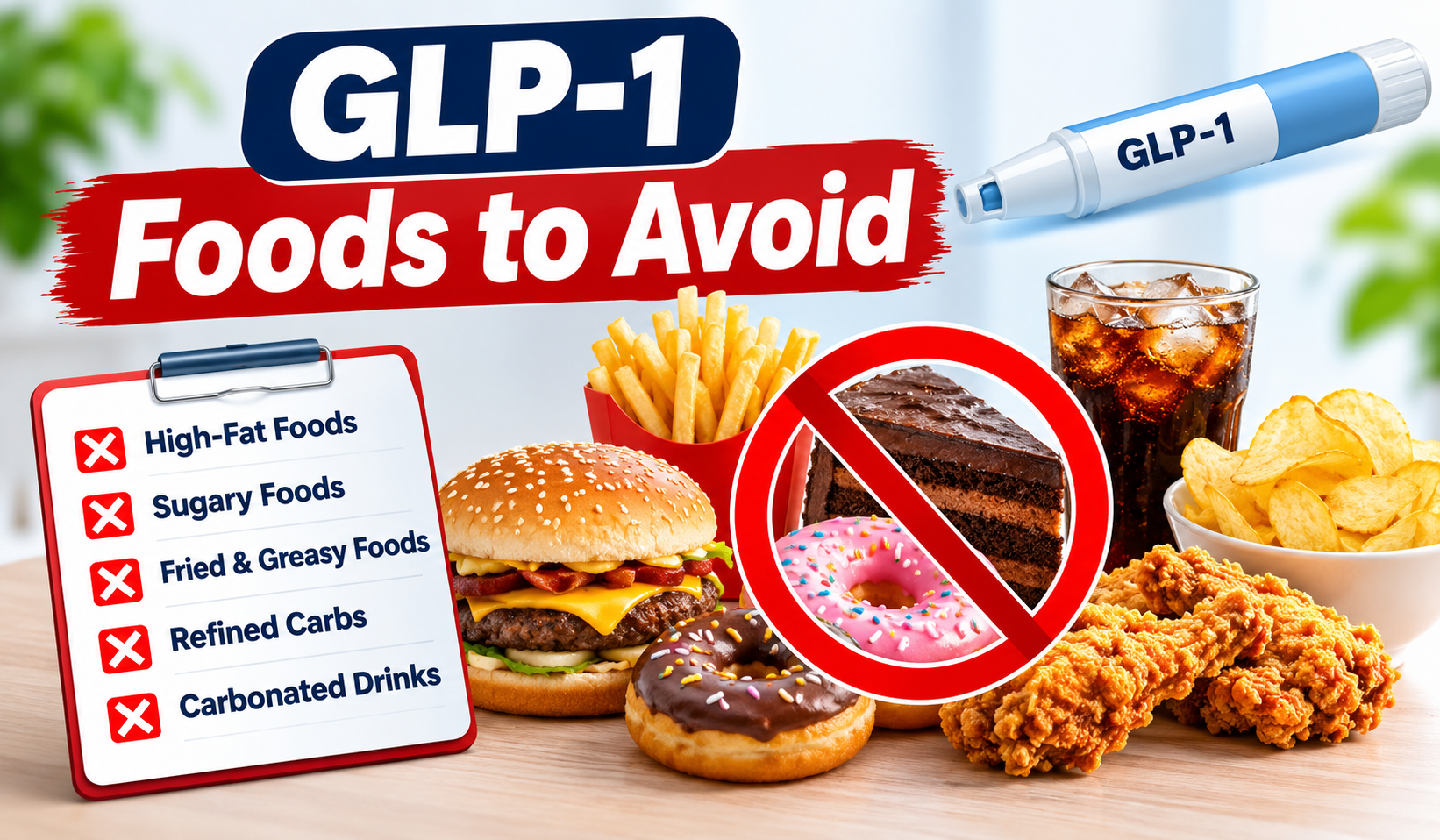
Medications such as Ozempic, Wegovy, Mounjaro, and Zepbound can help regulate appetite, increase feelings of fullness, and reduce food intake.
But while these treatments can support weight management, what you eat plays an important role in how comfortable and successful your experience will be.
One of the most common questions people ask when starting treatment is: What are the GLP-1 foods to avoid?
The answer isn’t necessarily about eliminating entire food groups. Instead, it’s about recognizing which foods may worsen nausea, bloating, acid reflux, constipation, or other digestive symptoms.
Because GLP-1 medications slow stomach emptying, certain meals can feel heavier or take longer to digest. High-fat meals, greasy foods, sugary drinks, and oversized portions are particularly likely to cause discomfort.
In this guide, we’ll explore the foods to avoid while taking GLP-1 medications, explain why they may cause problems, and share healthier alternatives that support nutrition, digestion, and sustainable weight management.
 GLP-1 Starting at $59 Per Month – 100% Online
What Are GLP-1 Medications, and How Do They Affect Digestion?
GLP-1 stands for glucagon-like peptide-1, a hormone naturally produced in the intestines after eating. It helps regulate blood sugar, communicates fullness signals to the brain, and slows the movement of food from the stomach into the small intestine.
GLP-1 receptor agonist medications mimic some of these effects. Tirzepatide, the active ingredient in Mounjaro and Zepbound, acts on both GLP-1 and GIP receptors.
These medications influence the body in several important ways:
- Appetite regulation: They help reduce hunger and promote fullness.
- Slower stomach emptying: Food may remain in the stomach longer, particularly when starting treatment.
- Blood sugar support: They help improve glucose regulation through glucose-dependent insulin release and other mechanisms.
- Reduced food intake: People may naturally consume smaller portions.
- Weight management: Reduced calorie intake can contribute to gradual weight loss.
Because digestion changes during treatment, foods that previously caused no problems might suddenly feel uncomfortable.
Common gastrointestinal side effects include nausea, vomiting, constipation, diarrhea, bloating, and acid reflux.
Choosing appropriate foods and adjusting portion sizes can help make these symptoms easier to manage.
Fried and Greasy Foods
Fried foods are among the first foods worth reducing when taking GLP-1 medications.
French fries, fried chicken, onion rings, and similar dishes often contain large amounts of fat. Fat naturally slows digestion, and combining fatty meals with medications that delay stomach emptying can increase feelings of heaviness and discomfort.
Some people experience nausea, stomach pressure, bloating, or reflux after eating greasy foods.
Examples of fried foods to avoid or limit:
- Deep-fried chicken and fish
- French fries and potato chips
- Fried mozzarella sticks
- Doughnuts and fried pastries
- Onion rings
- Greasy fast-food meals
Better alternatives: Choose baked chicken, grilled fish, air-fried potatoes with minimal oil, or roasted vegetables.
Cooking methods such as steaming, grilling, baking, and roasting make it easier to prepare satisfying meals without excessive added fat.
You don’t need to eliminate dietary fat entirely. Healthy fats remain essential for nutrition, but smaller portions may be more comfortable during treatment.
GLP-1 Starting at $59 Per Month – 100% Online
High-Fat and Heavy Meals
High-fat meals can be challenging for some people taking GLP-1 medications, especially during the first few weeks or after a dose increase.
Large portions of creamy pasta, fatty meats, and rich sauces can create prolonged fullness because the stomach empties more slowly.
This may contribute to nausea, burping, reflux, and abdominal discomfort.
Foods worth limiting include fatty cuts of beef, heavy cream sauces, large servings of full-fat cheese, buttery casseroles, and high-fat fast food.
Healthier alternatives: Try lean chicken, turkey, tofu, beans, white fish, or moderate portions of salmon.
You can also replace heavy cream sauces with tomato-based sauces, yogurt-based dressings, or lighter vegetable preparations.
The goal is not necessarily a low-fat diet. Instead, focus on moderate portions of nutritious fats and avoid combining excessively fatty foods with large meals.
Sugary Drinks and Sweetened Beverages
Sugary beverages can make it harder to achieve weight-management goals because they provide calories without the same fullness that solid foods often produce.
Many sweetened beverages contain substantial amounts of added sugar, which may also lead to rapid blood sugar increases.
Although GLP-1 medications improve glucose regulation, reducing sugary drinks can still support overall metabolic health.
Drinks to limit:
- Regular soda
- Sweetened iced tea
- Energy drinks with added sugar
- Sweetened coffee beverages
- Fruit punch and sugary juice drinks
- High-sugar smoothies
Liquid calories can add up quickly, even when appetite is reduced.
Better alternatives: Choose water, unsweetened tea, sparkling water if tolerated, or coffee with minimal added sugar.
Whole fruits are generally preferable to fruit juice because they provide fiber and require chewing, which can promote satisfaction.
If plain water feels boring, add cucumber slices, berries, or fresh mint for natural flavor.
GLP-1 Starting at $59 Per Month – 100% Online
Highly Processed Snacks
Highly processed snacks are often low in fiber and protein while containing substantial amounts of refined carbohydrates, sodium, and added fats.
These foods can make it difficult to meet nutritional needs, particularly when GLP-1 medications significantly reduce appetite.
Examples include packaged pastries, sugary breakfast bars, candy, crackers made with refined flour, and heavily processed snack mixes.
Such foods aren’t automatically harmful, but relying on them frequently may crowd out more nutritious options.
Better snack choices include:
- Greek yogurt with berries
- Cottage cheese
- Apple slices with a small amount of peanut butter
- A boiled egg
- Whole-grain crackers with hummus
- A small serving of nuts
Choosing snacks with protein, fiber, or both can help maintain nutrition while supporting satiety.
Since you may feel full after eating smaller amounts, making those portions nutritionally valuable becomes especially important.
Large Portions of Refined Carbohydrates
White bread, sugary cereals, pastries, and oversized servings of refined pasta can provide substantial amounts of quickly digested carbohydrates.
These foods may produce sharper blood sugar rises than fiber-rich alternatives, especially when eaten without protein or vegetables.
You don’t need to completely avoid bread, rice, or pasta while taking GLP-1 medications.
Instead, focus on appropriate portions and balanced meals.
For example, instead of eating a large plate of plain white pasta, try a smaller portion with grilled chicken and cooked vegetables.
Better alternatives: Oats, quinoa, brown rice, whole-grain bread, and other fiber-containing carbohydrates can support a balanced diet.
Increase fiber gradually if you experience bloating, since suddenly consuming large amounts can worsen gastrointestinal discomfort.
GLP-1 Starting at $59 Per Month – 100% Online
Carbonated Drinks
Carbonated beverages are not prohibited during GLP-1 treatment, but they may cause problems for people experiencing bloating, burping, or acid reflux.
Carbon dioxide creates bubbles that can increase gas and pressure in the stomach.
When digestion is already slower, this additional gas may feel uncomfortable.
Common examples include soda, sparkling water, fizzy energy drinks, and carbonated flavored beverages.
If these drinks trigger symptoms, try still water or noncarbonated unsweetened beverages.
People who tolerate sparkling water comfortably don’t necessarily need to eliminate it.
The important factor is how your digestive system responds.
Spicy Foods That Trigger Heartburn
Spicy meals can be difficult to tolerate for some people taking GLP-1 medications, particularly those prone to acid reflux or nausea.
Foods containing large amounts of hot sauce, chili peppers, or spicy seasonings can trigger burning sensations or digestive discomfort in susceptible individuals.
Examples include extra-spicy curries, hot wings, heavily seasoned fried foods, and meals covered in chili sauce.
Spicy foods do not universally interfere with GLP-1 medication.
If you regularly enjoy them without symptoms, there may be no reason to stop.
If heartburn develops, reduce the heat level and choose gentler seasonings such as basil, oregano, parsley, or ginger.
Eating smaller portions and avoiding lying down immediately after meals may also help reduce reflux.
Alcoholic Beverages
Alcohol deserves special attention during GLP-1 treatment.
Although alcohol is not universally prohibited with these medications, it may worsen nausea, dehydration, reflux, and other digestive symptoms.
Alcohol also adds calories without providing significant nutritional value.
For individuals with diabetes, alcohol may increase the risk of low blood sugar, especially when combined with insulin or certain medications such as sulfonylureas.
People who eat substantially less while taking GLP-1 medications may be particularly vulnerable to alcohol-related problems.
Consider limiting or avoiding:
- Sugary cocktails
- Heavy drinking sessions
- Alcohol on an empty stomach
- High-calorie mixed drinks
If you choose to drink alcohol, discuss safe limits with your healthcare provider and pay attention to how your body responds.
Avoid alcohol if it consistently triggers nausea or other symptoms.
GLP-1 Starting at $59 Per Month – 100% Online
Oversized Meals and All-You-Can-Eat Portions
Sometimes the biggest problem isn’t a particular food. It’s the amount eaten at one time.
GLP-1 medications increase fullness, meaning the body may signal satisfaction earlier than expected.
Eating beyond that point can lead to uncomfortable pressure, nausea, bloating, or vomiting.
Large restaurant portions, buffet meals, and heavy dinners can be especially challenging.
Helpful eating habits include:
- Start with smaller portions.
- Eat slowly and chew thoroughly.
- Pause during meals to assess fullness.
- Stop eating when comfortably satisfied.
- Save leftovers instead of finishing everything.
Some individuals find smaller, more frequent meals easier to tolerate, especially when experiencing nausea.
You don’t need to follow a rigid meal schedule. The priority is eating enough nutritious food without overwhelming your digestive system.
Foods That Personally Trigger Digestive Symptoms
Not everyone responds to the same foods during GLP-1 treatment.
Some people tolerate salads, beans, and dairy without difficulty, while others experience gas, cramps, or bloating.
Potential triggers include large servings of raw cruciferous vegetables, high-lactose dairy products, onions, garlic, and certain sugar substitutes.
Sugar alcohols such as sorbitol, mannitol, and xylitol may also cause gas or diarrhea when consumed in larger amounts.
These foods aren’t universally bad.
In fact, vegetables, legumes, and dairy products can provide important nutrients.
If a nutritious food causes discomfort, try reducing the portion, cooking it differently, or introducing it more gradually rather than permanently eliminating it.
Keeping a simple food-and-symptom diary can help identify individual patterns.
GLP-1 Starting at $59 Per Month – 100% Online
GLP-1 Foods to Avoid vs. Foods to Eat
The following table provides an easy comparison of foods that may worsen symptoms and alternatives that are often easier to tolerate.
| Foods to Limit | Better Alternatives |
|---|---|
| Fried chicken | Baked or grilled chicken |
| French fries | Roasted potatoes |
| Sugary soda | Still water or unsweetened tea |
| Heavy cream pasta | Pasta with vegetables and lean protein |
| Fatty processed meats | Lean turkey, chicken, or tofu |
| Candy and pastries | Fruit with Greek yogurt |
| Oversized refined-grain meals | Moderate portions of whole grains |
| Sugary cocktails | Nonalcoholic, low-sugar beverages |
| Extra-spicy meals when symptomatic | Mildly seasoned meals |
| Large, heavy dinners | Smaller balanced meals |
These are flexible recommendations rather than strict dietary rules.
A balanced eating pattern that provides sufficient protein, fiber, vitamins, minerals, and fluids is usually more valuable than following an overly restrictive list.
Best Foods to Eat While Taking GLP-1 Medications
Understanding what to avoid is useful, but knowing what to eat is equally important.
Because appetite often decreases, prioritizing nutrient-dense foods helps support muscle maintenance, energy, and digestive health.
Lean Protein
Protein helps maintain muscle mass during weight loss and supports tissue repair.
Useful choices include chicken breast, fish, eggs, Greek yogurt, tofu, lentils, and cottage cheese.
Try including a protein source in each main meal.
Fruits and Vegetables
Fruits and vegetables provide vitamins, minerals, antioxidants, and fiber.
Berries, bananas, carrots, zucchini, spinach, and cooked green beans may be convenient options.
Cooked vegetables can be easier to tolerate than large raw salads when nausea or bloating occurs.
Fiber-Rich Carbohydrates
Oatmeal, quinoa, whole-grain bread, lentils, and brown rice can provide longer-lasting energy and support bowel regularity.
Increase fiber gradually and drink adequate fluids, particularly if constipation develops.
Healthy Fats
Olive oil, avocado, nuts, and seeds provide essential fatty acids and help absorb fat-soluble vitamins.
Use moderate portions if large amounts of fat trigger nausea.
Water and Hydrating Foods
Adequate hydration becomes particularly important if treatment causes vomiting, diarrhea, or constipation.
Water, broth, and water-rich foods can contribute to daily fluid intake.
Individuals with heart or kidney conditions requiring fluid restrictions should follow their healthcare provider’s advice.
GLP-1 Starting at $59 Per Month – 100% Online
Sample One-Day GLP-1-Friendly Meal Plan
A simple meal plan can make healthy eating less stressful.
| Meal | Suggested Foods |
|---|---|
| Breakfast | Scrambled eggs with whole-grain toast and berries |
| Morning Snack | Small Greek yogurt |
| Lunch | Grilled chicken, quinoa, and cooked vegetables |
| Afternoon Snack | Apple slices with a little peanut butter |
| Dinner | Baked salmon, roasted sweet potato, and green beans |
| Hydration | Water and unsweetened beverages throughout the day |
Adjust portions to your appetite, nutritional requirements, activity level, and medical needs.
The objective isn’t to eat as little as possible. It’s to provide enough nourishment while respecting your body’s changing hunger signals.
How to Prevent Nausea and Digestive Problems on GLP-1
Even with appropriate food choices, mild gastrointestinal symptoms may occur during treatment.
Several practical habits can improve comfort.
Eat slowly: Taking smaller bites gives your body time to register fullness and may prevent overeating.
Choose smaller meals: Large meals can worsen fullness and nausea when stomach emptying is delayed.
Stay hydrated: Sip fluids consistently throughout the day, especially if appetite is reduced.
Avoid lying down after eating: Remaining upright can help reduce reflux and heartburn.
Choose bland foods when nauseated: Crackers, toast, rice, bananas, and broth may be easier to tolerate temporarily.
Monitor your symptoms: Note foods, portions, and situations that consistently cause discomfort.
Discuss persistent symptoms: If nausea, vomiting, or constipation continues, speak with your prescriber rather than changing medication doses yourself.
Seek prompt medical care for severe or persistent abdominal pain, especially pain radiating to the back, repeated vomiting, or signs of dehydration.
These symptoms should not be dismissed as routine dietary discomfort.
GLP-1 Starting at $59 Per Month – 100% Online
Common Mistakes to Avoid on a GLP-1 Diet
One mistake is assuming that having less appetite means nutrition no longer matters.
Eating too little protein, skipping meals consistently, or relying on low-nutrient snacks may increase the risk of fatigue and muscle loss during weight reduction.
Another mistake is cutting out too many foods unnecessarily.
Extreme restrictions can make it harder to meet nutritional requirements and maintain healthy habits over time.
Some individuals also forget the importance of hydration, particularly when they no longer feel like eating or drinking as much.
Finally, eating quickly or continuing beyond comfortable fullness can worsen digestive symptoms even when the meal contains healthy ingredients.
Successful GLP-1 nutrition is generally about consistency, flexibility, and adequate nourishment rather than perfect food choices.
Final Verdict:
Choosing the right foods while taking GLP-1 medications can make a meaningful difference in comfort, nutrition, and long-term weight-management habits.
The main GLP-1 foods to avoid or limit are fried foods, excessively fatty meals, sugary beverages, heavily processed snacks, and oversized portions. Alcohol, carbonated drinks, and spicy foods may also be worth reducing when they trigger digestive symptoms.
But successful GLP-1 nutrition isn’t about following a strict forbidden-food list.
Instead, focus on lean protein, vegetables, fruits, fiber-rich carbohydrates, moderate amounts of healthy fats, and adequate hydration.
Eat slowly, recognize fullness signals, and adjust portions based on your comfort and nutritional needs.
Most importantly, remember that GLP-1 medications work best as part of a comprehensive treatment plan that includes balanced nutrition, physical activity, and medical guidance.
With thoughtful food choices and consistent habits, you can make your GLP-1 journey more comfortable while building healthier eating patterns that last.
GLP-1 Starting at $59 Per Month – 100% Online
References
https://www.healthline.com/health/nutrition/glp-1-diet
