Does BCBS Cover GLP-1? Coverage Guide for 2026
Getting a prescription for a GLP-1 medication is one thing. Finding out whether your insurance will actually pay for it is another. For Blue Cross Blue Shield (BCBS) members, the difference can mean paying a manageable monthly copay or facing hundreds of dollars in prescription costs.
The confusing part? Two people with BCBS insurance can receive completely different coverage decisions for the same medication.
One might qualify for Ozempic or Wegovy with minimal out-of-pocket expenses, while another discovers that their plan requires additional approval or excludes certain treatments entirely.
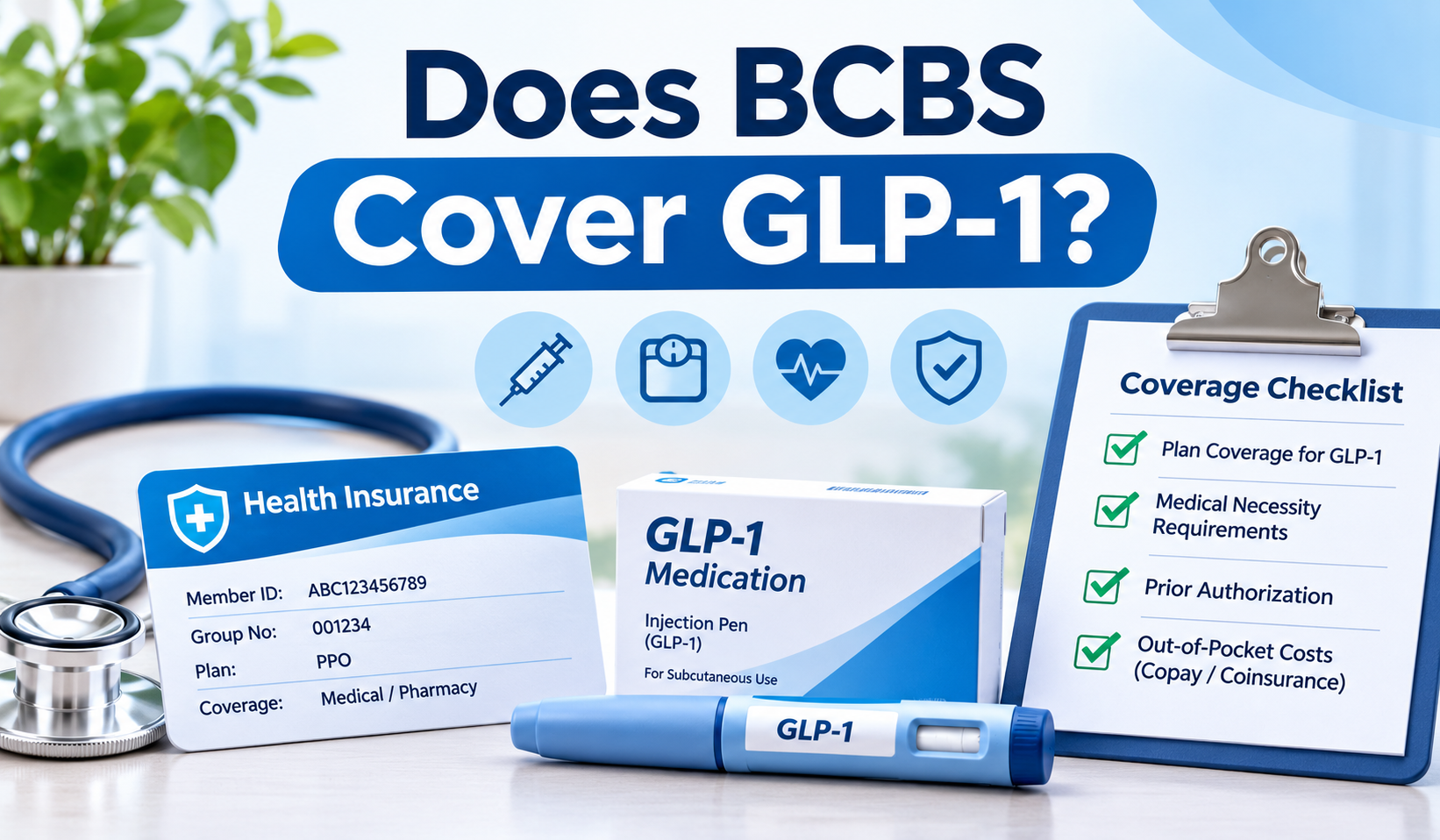
So, does BCBS cover GLP-1 medications in 2026? The answer is yes for some plans, but the details matter. Your diagnosis, prescription benefits, employer coverage, and even the specific medication your doctor recommends can influence the outcome.
Before assuming your prescription is covered or preparing to pay the full price, it’s worth understanding how BCBS evaluates these medications.
This guide breaks down the coverage requirements, eligible treatments, potential costs, and practical steps you can take to navigate the approval process.
 GLP-1 Starting at $59 Per Month – 100% Online
Does Blue Cross Blue Shield Cover GLP-1 Medications in 2026?
Yes, Blue Cross Blue Shield (BCBS) may cover GLP-1 medications in 2026, depending on the member’s specific insurance plan, prescription drug benefits, and medical condition.
GLP-1 medications are commonly prescribed for type 2 diabetes and chronic weight management. Insurance companies evaluate these treatments differently based on their FDA-approved uses and plan-specific medical policies.
For example, a BCBS plan may provide coverage for Ozempic when prescribed to manage type 2 diabetes but exclude the same medication when prescribed solely for weight loss.
Similarly, Wegovy or Zepbound may be covered under plans that include comprehensive obesity treatment benefits.
Coverage may depend on:
- Insurance plan type: Employer-sponsored, individual, marketplace, Medicare, or Medicaid coverage.
- Medical diagnosis: Type 2 diabetes, obesity, or another qualifying condition.
- Medication prescribed: Ozempic, Wegovy, Mounjaro, Zepbound, or another GLP-1 treatment.
- Prior authorization: Approval requirements established by the insurance provider.
- Formulary placement: Whether the prescribed medication appears on the plan’s covered drug list.
- Employer benefits: Some employers include weight management medications, while others exclude them.
Because BCBS policies differ, members should review their current prescription drug benefits before beginning treatment.
Which GLP-1 Medications Does BCBS Cover?
Blue Cross Blue Shield plans may cover several GLP-1 medications, particularly when prescribed for FDA-approved medical indications.
Understanding the differences between these medications can help patients determine which treatment is more likely to qualify for insurance coverage.
Ozempic (Semaglutide)
Ozempic is a once-weekly injectable medication primarily prescribed to improve blood sugar control in adults with type 2 diabetes. It also has additional approved uses for certain patients with type 2 diabetes and cardiovascular or kidney-related risks.
Many BCBS plans include Ozempic in their prescription drug formularies for eligible patients.
Coverage frequently requires documentation confirming a type 2 diabetes diagnosis, and some plans have additional authorization requirements.
When Ozempic is prescribed exclusively for weight loss without type 2 diabetes, insurance approval may be more difficult because weight loss is not its FDA-approved indication.
Wegovy (Semaglutide)
Wegovy contains semaglutide and is approved for chronic weight management in eligible patients. It also has certain additional FDA-approved indications.
BCBS coverage for Wegovy varies significantly.
Some plans include prescription benefits for obesity medications, while others exclude weight management drugs altogether.
Members may need to meet body mass index (BMI) requirements, have qualifying weight-related conditions, or provide documentation of previous weight management efforts.
A prescription alone does not guarantee approval.
Mounjaro (Tirzepatide)
Mounjaro is an injectable medication containing tirzepatide, which activates both GIP and GLP-1 receptors.
It is prescribed to help manage blood sugar levels in people with type 2 diabetes.
Many BCBS plans may cover Mounjaro for eligible patients with diabetes, subject to formulary and prior authorization requirements.
Coverage criteria may include medical history, laboratory results, and information about previous diabetes treatments.
Patients prescribed Mounjaro primarily for weight loss without diabetes may encounter coverage restrictions.
Zepbound (Tirzepatide)
Zepbound contains tirzepatide and is approved for chronic weight management in qualifying individuals. It is also approved for certain adults with obesity and moderate-to-severe obstructive sleep apnea.
BCBS plans that offer obesity medication benefits may cover Zepbound under specific medical criteria.
Approval can depend on BMI, associated health conditions, and the treatment indication.
Some plans may cover Zepbound for one approved indication but not another, making a review of the specific plan policy essential.
Trulicity, Victoza, and Rybelsus
Other GLP-1 medications, including Trulicity, Victoza, and Rybelsus, may also appear on BCBS prescription drug formularies.
These medications are commonly used to manage type 2 diabetes, although their approved indications differ.
Insurance coverage typically depends on the patient’s diagnosis, the drug’s formulary status, and whether medical authorization is required.
Some plans may prefer one medication over another based on their negotiated pharmacy benefits.
GLP-1 Starting at $59 Per Month – 100% Online
Does BCBS Cover GLP-1 for Weight Loss?
One of the biggest concerns among patients is whether BCBS covers GLP-1 medications specifically for weight loss.
BCBS may cover GLP-1 medications for weight loss, but not every plan includes obesity treatment drugs in its prescription benefits.
Coverage often depends on whether weight management medications are included in the member’s insurance contract.
For plans that include obesity medication benefits, patients may qualify when they meet certain clinical requirements.
These may include having a BMI of 30 or higher, or a BMI of 27 or higher with at least one weight-related medical condition, depending on the medication and applicable policy.
Common qualifying conditions may include high blood pressure, abnormal cholesterol levels, or obstructive sleep apnea.
Some plans may also require documented participation in lifestyle or weight management programs.
Even when a medication is FDA-approved for weight management, an insurance plan can exclude that category of treatment.
This distinction is important because FDA approval does not automatically mean insurance coverage.
Patients should contact BCBS to determine whether their plan includes anti-obesity medication benefits before scheduling treatment or filling a prescription.
Does BCBS Cover GLP-1 for Type 2 Diabetes?
GLP-1 medications generally have broader insurance coverage opportunities when prescribed for type 2 diabetes.
Many BCBS prescription drug plans include medications such as Ozempic, Mounjaro, Trulicity, and Rybelsus for eligible members.
These medications help improve blood sugar regulation through several mechanisms, including increasing glucose-dependent insulin secretion and influencing appetite and digestion.
Some GLP-1 medications also provide cardiovascular or kidney-related benefits for specific patient populations.
Insurance providers may require confirmation of a diabetes diagnosis before approving treatment.
Doctors may need to submit clinical records, recent A1C results, medication history, or other supporting information.
Certain plans also apply step therapy rules, which require patients to try a preferred medication before receiving coverage for another treatment.
For example, a plan may ask whether metformin or another preferred diabetes medication has been tried, when medically appropriate.
Not all patients must follow the same treatment pathway. Coverage requirements depend on the plan and individual medical circumstances.
Patients with type 2 diabetes should review the current BCBS formulary to identify covered GLP-1 options and applicable restrictions.
GLP-1 Starting at $59 Per Month – 100% Online
How Does BCBS GLP-1 Coverage Work?
Understanding how prescription coverage works can make the insurance approval process easier.
BCBS plans generally evaluate GLP-1 medications through their prescription drug benefit systems.
Each plan maintains a formulary, which identifies covered medications and their corresponding cost-sharing levels.
Some medications are classified as preferred brand-name drugs, while others are placed on higher-cost tiers or excluded from coverage.
A covered medication may still require medical approval before the pharmacy can process the claim.
Prescription Drug Formularies
A formulary is the list of medications covered under a health insurance plan.
BCBS members can review their plan’s formulary to determine whether a particular GLP-1 medication is included.
Drug formularies can change during the year, subject to applicable rules, making it important to confirm current coverage rather than relying on outdated information.
Prior Authorization Requirements
Prior authorization is a process in which the insurance company reviews medical information before agreeing to cover a prescribed treatment.
For GLP-1 medications, authorization requests may include diagnosis codes, treatment history, laboratory findings, and other clinical details.
Approval requirements differ depending on the medication and insurance plan.
Step Therapy Policies
Some BCBS plans require patients to try certain preferred medications before covering more expensive alternatives.
This process is called step therapy.
A physician may request an exception when the preferred medication is inappropriate, ineffective, or causes unacceptable side effects.
Quantity Limits
BCBS plans may establish limits on how much medication can be dispensed within a specific period.
These restrictions are intended to align dispensing with approved dosing schedules and plan rules.
Patients who need different quantities may require additional authorization.
BCBS GLP-1 Coverage by Insurance Plan Type
Not all Blue Cross Blue Shield members have the same prescription benefits. Coverage depends heavily on the type of health insurance policy.
Employer-Sponsored BCBS Plans
Employer-sponsored health insurance is one of the most common ways people receive BCBS benefits.
In these plans, employers may have a significant influence on prescription drug coverage, particularly for self-funded health plans.
Some employers choose to include weight management medications as part of their employee health benefits.
Others may exclude obesity medications because of plan design or financial considerations.
Employees should review their benefits documents or contact their human resources department to understand whether GLP-1 treatments are included.
Individual and Marketplace Plans
People who purchase BCBS insurance independently or through the Health Insurance Marketplace may have different prescription coverage options.
These policies often include diabetes medications, but coverage for drugs prescribed specifically for weight management varies.
Members should examine the plan’s formulary, exclusions, and prior authorization requirements.
BCBS Medicare Advantage Plans
Medicare coverage for GLP-1 medications depends on the medication’s approved indication and applicable Medicare prescription drug rules.
Medicare Part D generally excludes medications used solely for weight loss, but certain GLP-1 medications may be eligible when prescribed for another medically accepted indication.
For example, Wegovy may qualify under applicable criteria for certain patients with established cardiovascular disease, while Zepbound may qualify for certain patients with obesity-related obstructive sleep apnea.
Eligibility is not automatic, and Medicare rules, plan formularies, and prior authorization requirements must all be considered.
BCBS Medicaid Plans
Medicaid coverage varies by state.
Some state Medicaid programs provide coverage for GLP-1 medications used to manage obesity, while others impose restrictions or exclude weight-loss-only indications.
Coverage for type 2 diabetes treatments may be more widely available.
Members enrolled in Medicaid plans administered by BCBS should check their state’s current prescription policies.
GLP-1 Starting at $59 Per Month – 100% Online
How Much Does GLP-1 Cost With BCBS Insurance?
The cost of GLP-1 medications with BCBS insurance varies based on the insurance plan, medication, pharmacy network, and deductible.
Some members may pay a fixed copayment, while others must pay coinsurance based on a percentage of the medication’s covered cost.
The amount can also depend on whether the medication is classified as preferred or non-preferred.
Several factors influence out-of-pocket expenses.
Deductibles: Members with high-deductible plans may have to pay more before certain prescription benefits apply.
Copayments: Some plans charge a fixed amount for each prescription.
Coinsurance: Other plans require members to pay a percentage of the medication’s negotiated cost.
Pharmacy networks: Using a preferred pharmacy may lower prescription expenses.
Out-of-pocket limits: Covered prescription expenses may count toward the plan’s annual out-of-pocket maximum, depending on the benefit structure.
Without insurance coverage, some brand-name GLP-1 treatments may cost several hundred dollars or more per month.
Patients should request an individual prescription cost estimate from BCBS or their pharmacy benefits administrator before starting treatment.
How to Check If Your BCBS Plan Covers GLP-1
Checking your prescription benefits is one of the most reliable ways to avoid unexpected medication costs.
The process is usually straightforward.
Step 1: Review Your BCBS Insurance Card
Find your member identification number and the customer service telephone number printed on your insurance card.
This information helps BCBS representatives locate your specific benefit plan.
Step 2: Access Your Member Account
Sign in to your BCBS member portal or mobile application.
Look for the prescription drug coverage section or medication search feature.
Enter the name of the GLP-1 medication prescribed by your healthcare provider.
Step 3: Check the Drug Formulary
Review whether the medication is covered, its formulary tier, and whether restrictions apply.
Pay particular attention to prior authorization, step therapy, and quantity limits.
Step 4: Confirm the Medical Indication
Ask BCBS whether coverage differs depending on the diagnosis.
This is especially important when determining whether a medication is covered for type 2 diabetes, obesity, or another approved medical condition.
Step 5: Contact Customer Service
If the online information is unclear, call the member services number on your insurance card.
Ask whether the prescribed medication is covered under your current plan and what documentation is necessary for approval.
Step 6: Speak With Your Healthcare Provider
Your doctor can help determine whether you meet applicable treatment criteria.
They can also submit supporting documentation or explore other covered medications when necessary.
GLP-1 Starting at $59 Per Month – 100% Online
How to Get BCBS Approval for GLP-1 Medications
Getting approved for a GLP-1 prescription may require more than simply receiving a prescription from your doctor.
BCBS often evaluates medical necessity and plan eligibility before approving certain medications.
The first step is to schedule a healthcare appointment and discuss your treatment goals, existing medical conditions, and previous medications.
Your healthcare provider can determine whether GLP-1 therapy is medically appropriate.
If your plan requires prior authorization, your physician’s office may submit the necessary request.
Supporting documentation can include your diagnosis, relevant laboratory results, BMI when applicable, and previous treatment history.
Providing accurate and complete medical information can help avoid unnecessary processing delays.
If the insurance company approves the request, your prescription may become eligible for coverage under the plan’s pharmacy benefits.
Some approvals are valid only for a specific period.
Continuing treatment may require updated medical records or renewal of the authorization.
Patients should also understand that medical eligibility and insurance eligibility are separate considerations.
A doctor may recommend a treatment that is appropriate for a patient’s health needs even when the insurance plan does not cover it.
Why Does BCBS Deny GLP-1 Coverage?
A GLP-1 prescription can be denied for several reasons.
One of the most common is that the medication is not covered for the patient’s specific diagnosis.
For example, an insurance plan may cover Ozempic for type 2 diabetes but deny a prescription submitted solely for weight loss.
Another possible reason is a plan exclusion.
Some BCBS policies do not include prescription benefits for medications used exclusively for obesity management.
Insurance companies may also deny coverage when required medical records are missing or when prior authorization criteria have not been satisfied.
Other potential reasons include incomplete documentation, step therapy requirements, quantity restrictions, or a medication being excluded from the current formulary.
A denial does not always mean treatment is permanently unavailable.
Patients can request the specific reason for denial and discuss appropriate next steps with their healthcare providers.
GLP-1 Starting at $59 Per Month – 100% Online
What to Do If BCBS Denies Your GLP-1 Prescription
Receiving an insurance denial can be frustrating, especially when a healthcare professional has recommended GLP-1 treatment.
Fortunately, several options may be available.
Request an explanation: Contact BCBS and ask for the precise reason the medication was denied.
Review the plan policy: Determine whether the denial relates to missing clinical information, prior authorization requirements, or an explicit benefit exclusion.
Submit an appeal: If the medication is potentially covered, your healthcare provider may help submit a formal appeal with supporting medical documentation.
Request a formulary exception: If clinically appropriate, your physician can ask the plan to consider an exception to its preferred medication requirements.
Explore covered alternatives: Your doctor may recommend another GLP-1 medication or a different treatment that is included in your prescription benefits.
Investigate financial assistance: Manufacturer savings programs may reduce costs for some eligible patients with commercial insurance. These programs often exclude people enrolled in federal healthcare programs.
An appeal may be helpful when a claim was denied because medical criteria were not established correctly. However, appeals do not necessarily override explicit exclusions in an insurance contract.
Can You Get GLP-1 Covered by BCBS Without Diabetes?
Yes, some BCBS members may obtain coverage for GLP-1 medications without having type 2 diabetes.
The most common pathway is through plans that include treatment for obesity or chronic weight management.
For example, Wegovy and Zepbound may be prescribed to eligible patients based on BMI and qualifying health conditions.
Some GLP-1 medications also have FDA-approved indications beyond diabetes and weight management.
Depending on the medication, those indications may involve cardiovascular risk reduction or obstructive sleep apnea.
Whether BCBS pays for treatment depends on the specific plan’s coverage rules and the patient’s qualifying diagnosis.
Having obesity or a weight-related condition does not automatically guarantee that the medication will be covered.
Members should carefully review their policies to determine which indications and treatments qualify.
GLP-1 Starting at $59 Per Month – 100% Online
Will BCBS Cover GLP-1 Medications Long-Term?
Long-term coverage depends on the insurance plan, the medication’s approved use, and whether the patient continues meeting coverage requirements.
GLP-1 medications are often prescribed as part of ongoing management for chronic medical conditions.
For patients with type 2 diabetes, continued coverage may depend on maintaining eligibility and completing authorization renewals when required.
For obesity treatment, some plans require documentation showing that the patient has responded to medication and continues participating in an appropriate weight management program.
Coverage policies can also change when employers renew their insurance contracts or insurers update their formularies.
A medication covered in one plan year may have different restrictions the following year.
Patients taking GLP-1 medications should periodically review their benefits and keep in contact with their healthcare providers.
Stopping a prescribed medication without medical guidance is not recommended, particularly when it is being used to manage blood sugar levels or another chronic condition.
Tips to Improve Your Chances of Getting GLP-1 Coverage Through BCBS
Although insurance approval cannot be guaranteed, taking a few practical steps may make the process more manageable.
Start by confirming that your insurance plan includes benefits for the prescribed medication and medical indication.
Work closely with your healthcare provider to ensure that the diagnosis and treatment history are documented accurately.
If prior authorization is required, submit all requested information rather than relying on the prescription alone.
Review your plan’s preferred medication list and discuss appropriate alternatives when the first-choice treatment is not covered.
It is also helpful to maintain copies of authorization decisions, denial letters, and relevant communications.
When requesting an appeal, follow the deadlines and procedures outlined by the insurance company.
Patients with employer-sponsored coverage may also benefit from discussing available prescription benefits with their human resources department.
Most importantly, select GLP-1 treatment based on medical suitability, safety, and professional guidance rather than insurance coverage alone.
GLP-1 Starting at $59 Per Month – 100% Online
Are There Alternatives If BCBS Does Not Cover GLP-1?
If your BCBS plan excludes a particular GLP-1 medication, there may still be other medically appropriate treatment options.
For patients with type 2 diabetes, doctors may consider alternative medications based on blood sugar control, cardiovascular health, kidney function, and other individual factors.
For patients seeking weight management treatment, healthcare providers may recommend other FDA-approved obesity medications, structured lifestyle interventions, or specialist care.
Some commercially insured patients may qualify for manufacturer assistance programs that reduce the cost of eligible prescriptions.
Cash-pay programs may also offer different pricing options, depending on the medication and provider.
Patients should avoid purchasing prescription GLP-1 medications from unlicensed sellers or sources offering unusually inexpensive products without appropriate medical oversight.
The best alternative depends on the patient’s medical history, treatment goals, financial circumstances, and insurance benefits.
Final Verdict:
Yes, Blue Cross Blue Shield may cover GLP-1 medications in 2026, but coverage depends on your specific insurance plan, medical diagnosis, and prescribed treatment.
Medications used for type 2 diabetes, such as Ozempic and Mounjaro, may have broader coverage under BCBS prescription drug benefits. Weight management medications, including Wegovy and Zepbound, may also qualify when a plan includes obesity treatment benefits or covers another applicable approved indication.
Prior authorization, formulary restrictions, step therapy, and medical documentation can all affect whether a prescription is approved.
Because Blue Cross Blue Shield consists of independent insurance companies with different benefit structures, there is no single coverage policy that applies to every member.
The best way to determine your eligibility is to review your plan’s current drug formulary, contact BCBS member services, and work with your healthcare provider.
Understanding your insurance benefits before starting treatment can help you identify suitable medications, estimate out-of-pocket costs, and make informed decisions about your long-term health.
GLP-1 Starting at $59 Per Month – 100% Online
References
https://www.webmd.com/obesity/glps-for-weight-loss
https://pmc.ncbi.nlm.nih.gov/articles/PMC11668918/
https://en.wikipedia.org/wiki/Glucagon-like_peptide-1
