GLP-1 Blindness: Vision Risks, Symptoms, and What to Know
Imagine waking up one morning and discovering that part of your vision has disappeared. There is no pain, no obvious injury, and no warning from the night before.
For some people experiencing a rare eye condition called non-arteritic anterior ischemic optic neuropathy (NAION), this frightening situation can become a reality.
As GLP-1 medications such as Ozempic, Wegovy, and Mounjaro become increasingly popular for diabetes management and weight loss, concerns about their possible effects on eyesight have attracted significant attention.
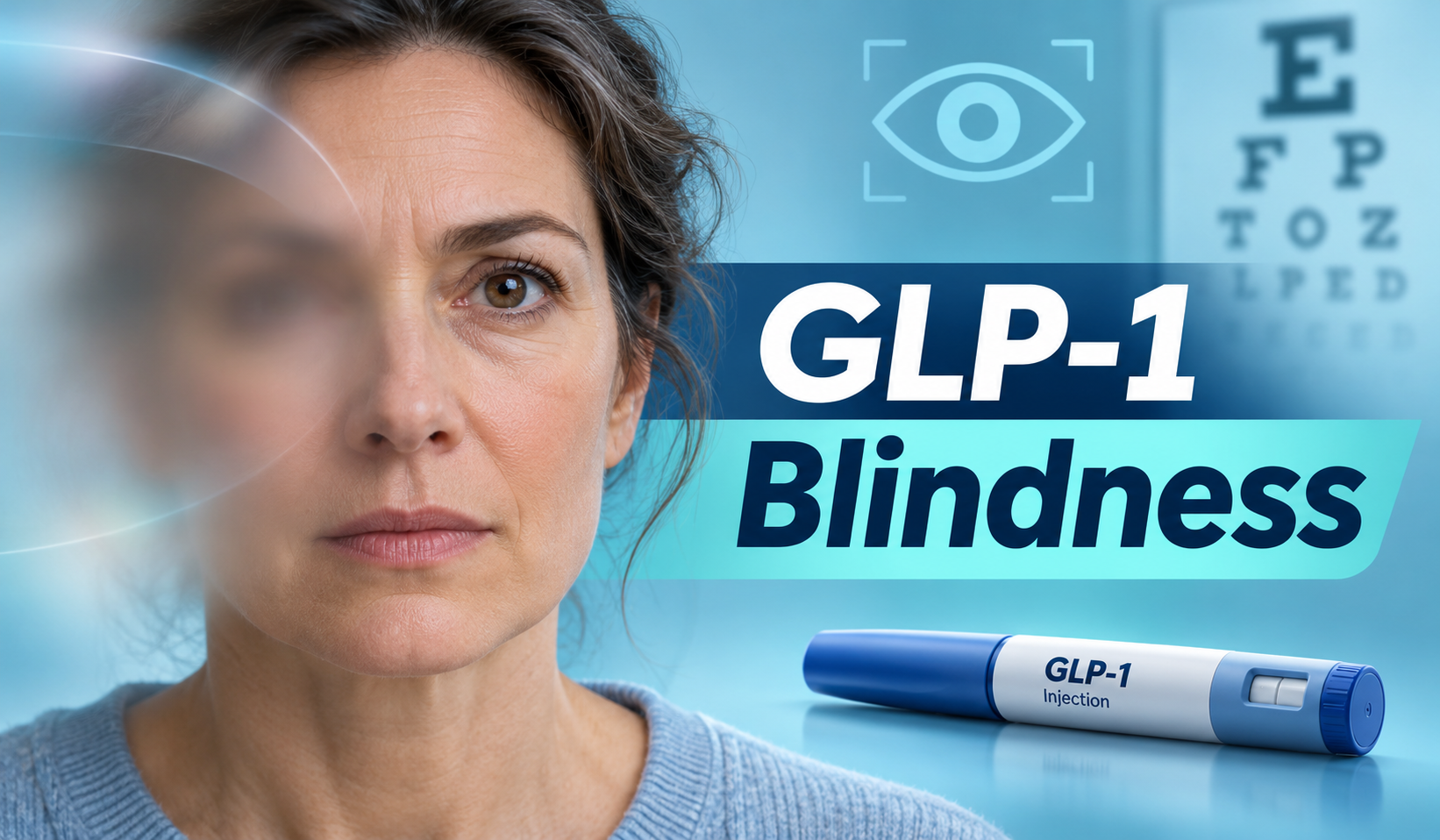
The phrase GLP-1 blindness has become a widely searched topic, particularly following research linking certain GLP-1 medications with a rare form of optic nerve damage.
In November 2026, the U.S. Food and Drug Administration announced new safety labeling requirements for GLP-1 receptor agonists because of a potential increased risk of NAION. The condition can cause sudden, painless, and sometimes permanent vision loss.
But does taking a GLP-1 medication mean you could go blind? How common is this complication, and are certain individuals more vulnerable?
Understanding the actual risks, early warning signs, and available medical guidance can help patients make informed treatment decisions without unnecessary fear.
 GLP-1 Starting at $59 Per Month – 100% Online
What Is GLP-1 Blindness?
GLP-1 blindness is an informal term describing vision loss potentially associated with medications that act on the glucagon-like peptide-1 receptor.
These medications are commonly prescribed for managing type 2 diabetes, reducing appetite, supporting weight loss, and improving certain metabolic health outcomes.
The primary concern involves a rare eye condition known as non-arteritic anterior ischemic optic neuropathy (NAION).
NAION develops when blood flow to the front portion of the optic nerve becomes insufficient. The optic nerve carries visual information from the eyes to the brain, making it essential for normal eyesight.
When its blood supply is disrupted, nerve tissue can become damaged, leading to partial or significant vision loss.
Unlike ordinary blurry vision caused by changes in blood sugar, NAION can produce lasting damage that may not recover.
The condition often affects one eye initially, although the other eye may also become affected at a later time.
Importantly, GLP-1 blindness does not mean everyone taking these medications will experience eye damage. NAION remains uncommon, even among people receiving GLP-1 treatment.
Can GLP-1 Medications Cause Blindness?
Research has identified an association between GLP-1 medications and an increased risk of NAION, although the precise biological mechanism has not been established.
The strongest early concerns centered on semaglutide, the active ingredient in Ozempic, Wegovy, and Rybelsus.
In June 2025, the European Medicines Agency classified NAION as a very rare side effect of semaglutide, potentially affecting up to 1 in 10,000 users.
The agency also reported that several large studies suggested approximately twice the risk of NAION among adults with type 2 diabetes taking semaglutide compared with those not using it.
The FDA expanded its safety assessment and announced on November 9, 2026, that warnings about the potential risk should be included in the labeling of all GLP-1 receptor agonists.
Its analysis of 126 randomized clinical trials found approximately 6.4 NAION cases per 100,000 person-years among GLP-1 users, compared with 3.8 cases per 100,000 person-years among comparison groups.
These findings suggest that the risk may be higher with treatment, but the overall likelihood remains low.
It is also important to distinguish NAION from complete blindness. Many affected individuals experience partial vision loss rather than losing all sight.
GLP-1 Starting at $59 Per Month – 100% Online
How Could GLP-1 Medications Affect Eyesight?
The relationship between GLP-1 medications and visual health is complex because these treatments influence several processes that can affect the eyes.
Researchers continue investigating why some patients develop visual complications while others experience no problems.
1. Changes in Blood Sugar Levels
GLP-1 medications help regulate blood glucose by increasing glucose-dependent insulin secretion and reducing glucagon activity.
When blood sugar levels improve rapidly, temporary changes in the eye’s focusing ability may occur.
People who previously experienced prolonged high glucose levels sometimes notice blurry vision as their blood sugar begins to stabilize.
These temporary focusing changes are different from NAION and do not necessarily indicate permanent optic nerve damage.
2. Changes in Retinal Health
The retina contains light-sensitive cells responsible for converting visual information into signals that travel to the brain.
People with diabetes may develop diabetic retinopathy, a condition affecting the small blood vessels supplying the retina.
Rapid improvements in blood glucose can sometimes temporarily worsen existing diabetic retinopathy, particularly in individuals with advanced disease or historically poor glucose control.
For this reason, people with pre-existing diabetic eye disease may require closer monitoring when starting effective glucose-lowering treatment.
3. Optic Nerve Blood Supply
NAION occurs when circulation to the front of the optic nerve becomes inadequate.
Researchers are examining whether GLP-1 treatment could influence susceptibility to this circulation-related injury in certain individuals.
The mechanism remains uncertain. The FDA’s November 2026 review did not identify a clear explanation from the available animal studies.
Because diabetes, hypertension, and other vascular conditions can independently contribute to optic nerve damage, separating medication-related effects from existing health risks is particularly challenging.
4. Blood Pressure and Circulatory Factors
GLP-1 treatment may improve blood pressure and metabolic health over time.
Yet optic nerve circulation is influenced by multiple factors, including vascular health, blood pressure regulation, and individual anatomy.
Researchers are studying how these factors interact in patients who develop NAION.
A direct pathway connecting GLP-1-induced blood pressure changes to NAION has not been established.
What Is NAION, and Why Is It Dangerous?
NAION stands for non-arteritic anterior ischemic optic neuropathy.
Although the medical name sounds complicated, the underlying problem involves inadequate blood flow to the optic nerve.
This condition is sometimes described as an optic nerve stroke, although it differs from a stroke occurring in the brain.
NAION generally develops suddenly and may be discovered immediately after waking.
One of its most distinctive characteristics is that vision loss usually occurs without pain.
A person might notice that part of their visual field is missing, objects appear unusually dim, or their vision has become dramatically blurred.
Damage may affect the upper or lower portion of vision, central clarity, or larger areas of the visual field.
Some patients retain useful eyesight, while others experience severe impairment.
There is currently no reliably effective treatment that reverses established NAION-related optic nerve damage. Early evaluation remains essential because other causes of sudden vision loss may require urgent treatment.
The World Health Organization highlighted this concern in June 2025, emphasizing both the seriousness of NAION and its association with semaglutide use.
GLP-1 Starting at $59 Per Month – 100% Online
GLP-1 Blindness Symptoms: Early Warning Signs to Recognize
Vision changes should never be dismissed simply because they occur during treatment for diabetes or weight management.
Certain symptoms require immediate evaluation by an eye specialist.
Sudden Vision Loss in One Eye
One of the clearest warning signs is an unexpected decrease in eyesight affecting one eye.
The loss may be partial or substantial and can develop without discomfort.
Blurred or Cloudy Vision
Some people notice that objects appear hazy or that their vision becomes less sharp.
Blurred vision can have several causes, including blood sugar fluctuations, but sudden unexplained blurring requires urgent medical attention.
Missing Areas of Vision
NAION can create blind spots or missing sections of the visual field.
A person may struggle to see objects positioned above, below, or beside their central line of sight.
Changes in Color Perception
Colors may appear faded, dull, or different between the two eyes.
This can occur when optic nerve function becomes impaired.
Reduced Central Vision
Reading, recognizing faces, or focusing on nearby objects may become difficult when the central portion of vision is affected.
Seek emergency medical assessment for sudden vision loss, new blind spots, or rapidly worsening eyesight. Do not wait for symptoms to improve or assume they are a routine medication side effect.
GLP-1 Starting at $59 Per Month – 100% Online
Which GLP-1 Medications Are Linked to Vision Loss?
Several medications belong to the GLP-1 receptor agonist category, and their safety profiles are continually evaluated.
Ozempic (Semaglutide)
Ozempic is prescribed primarily for type 2 diabetes and certain additional approved indications. Research involving semaglutide helped identify the potential association between GLP-1 treatment and NAION.
Wegovy (Semaglutide)
Wegovy contains semaglutide and is used for chronic weight management and other approved indications. Because it contains the same active ingredient as Ozempic, the NAION safety concern applies to this medication as well.
Rybelsus (Semaglutide)
Rybelsus is an oral semaglutide medication. Its inclusion in European safety guidance demonstrates that the concern is not restricted to injectable formulations.
Mounjaro (Tirzepatide)
Mounjaro acts on both GIP and GLP-1 receptors and is prescribed for type 2 diabetes. It falls within the scope of the FDA’s 2026 labeling requirements addressing potential NAION risk.
Zepbound (Tirzepatide)
Zepbound contains tirzepatide and is used for weight management and other approved conditions. The FDA’s broader GLP-1 safety warning also includes this medication.
Other GLP-1 receptor agonists, including liraglutide and dulaglutide, are covered by the FDA’s updated safety requirements.
The amount and certainty of evidence differ across individual medications. A class-wide warning does not establish identical risk levels for every drug.
Who Is Most at Risk of GLP-1-Related Vision Problems?
Not everyone taking GLP-1 medication has the same likelihood of experiencing visual complications.
Certain medical conditions and individual characteristics may increase the underlying risk of NAION.
People With Type 2 Diabetes
Diabetes can affect small blood vessels throughout the body, including those supplying the eyes and optic nerve.
Long-standing diabetes may increase vulnerability to various vision-related conditions.
Individuals With High Blood Pressure
Hypertension can damage blood vessels over time and contribute to circulation-related eye disorders.
Keeping blood pressure appropriately controlled is important for overall vascular health.
People With Sleep Apnea
Obstructive sleep apnea is recognized as a risk factor for NAION.
People who experience repeated interruptions in breathing during sleep may benefit from evaluation and appropriate treatment.
Adults With Previous Optic Nerve Problems
A previous episode of NAION in one eye increases concern about possible involvement of the other eye.
Patients with this history should discuss medication decisions with both their prescribing clinician and ophthalmologist.
People With Other Vascular Risk Factors
Smoking, kidney disease, anemia, and certain anatomical characteristics of the optic nerve may contribute to NAION risk.
Having one or more risk factors does not mean blindness is inevitable. It means individual medical assessment becomes particularly important.
GLP-1 Starting at $59 Per Month – 100% Online
Can GLP-1 Cause Permanent Blindness?
NAION can cause permanent visual impairment because damaged optic nerve fibers may not recover.
Some individuals experience partial improvement after the initial event, but substantial visual field defects can persist.
The severity differs from person to person.
Complete blindness in both eyes is not the typical presentation of NAION. Most cases initially involve one eye, and the degree of vision loss varies considerably.
The possibility of permanent damage is the reason sudden visual symptoms require urgent assessment.
It is also important to recognize that GLP-1 medications can provide substantial benefits in appropriately selected patients.
Improved diabetes management, weight reduction, and cardiovascular risk reduction may contribute to better long-term health outcomes.
The decision to continue treatment should therefore consider both the medication’s benefits and the patient’s individual eye health.
For patients who develop confirmed NAION, the European Medicines Agency recommends stopping semaglutide. U.S. guidance recommends considering discontinuation while weighing potential treatment benefits and risks with the care team.
How to Protect Your Eyes While Taking GLP-1 Medications
Although no strategy can guarantee prevention of NAION, several measures can support eye health during GLP-1 treatment.
1. Schedule Regular Eye Examinations
People with diabetes should follow recommended dilated eye examination schedules.
An ophthalmologist can evaluate retinal health, optic nerve appearance, and signs of existing diabetic eye disease.
Individuals with known retinal complications may require more frequent monitoring.
2. Monitor Blood Sugar Carefully
Maintaining healthy blood glucose levels can reduce the risk of several long-term diabetes complications.
Patients who experience significant blood sugar improvements should discuss their treatment progress with their clinician, especially if they already have diabetic retinopathy.
Avoid adjusting medication doses independently.
3. Manage Blood Pressure
Appropriate blood pressure management supports overall cardiovascular and eye health.
Patients should follow personalized treatment targets rather than attempting aggressive blood pressure reductions without medical supervision.
4. Discuss Existing Eye Conditions Before Treatment
Patients with a history of NAION, diabetic retinopathy, or unexplained vision loss should inform their prescribing clinician.
This information helps the care team evaluate whether additional monitoring or an alternative treatment may be appropriate.
5. Recognize Sudden Visual Changes
Be familiar with your normal eyesight and pay attention to unexpected changes.
Sudden vision loss, new blind spots, or rapidly worsening vision requires emergency evaluation regardless of which medication you are taking.
6. Address Other Health Risks
Managing sleep apnea, avoiding smoking, and treating cardiovascular risk factors can support vascular health.
These measures are valuable for general well-being, although they have not been shown to eliminate medication-associated NAION risk.
GLP-1 Starting at $59 Per Month – 100% Online
Should You Stop Taking GLP-1 Because of Blindness Concerns?
Hearing that a medication may be associated with vision loss can understandably cause anxiety.
Yet stopping GLP-1 treatment without medical guidance can create additional health concerns, especially for people relying on these medications for diabetes control.
The appropriate decision depends on individual circumstances.
Someone with stable eyesight and no significant eye disease may have a different benefit-risk profile from someone who previously experienced NAION.
The American Academy of Ophthalmology and the North American Neuro-Ophthalmology Society have emphasized individualized decisions about GLP-1 treatment, particularly for patients with certain risk factors or a history of optic nerve damage.
Patients should discuss any concerns with their prescribing clinician rather than independently discontinuing treatment.
If NAION is suspected, urgent ophthalmological evaluation is necessary, and the treating team should promptly review whether the GLP-1 medication should be withheld or discontinued.
For anyone currently experiencing sudden vision loss, the priority is immediate medical assessment, not waiting for a routine medication appointment.
GLP-1 Blindness Research: What Do Studies Say in 2026?
Scientific understanding of GLP-1-related vision complications has developed significantly since the first widely discussed reports.
A 2024 study published in JAMA Ophthalmology identified an association between semaglutide prescriptions and NAION in patients treated for diabetes or obesity.
The findings generated considerable interest but also raised questions about potential confounding factors and the ability of observational research to establish causation.
In 2025, European regulators reviewed clinical trials, epidemiological findings, and postmarketing reports before classifying NAION as a very rare semaglutide adverse effect.
Research continued throughout 2026, including assessments by ophthalmology organizations and additional observational studies.
On November 9, 2026, the FDA announced a broader safety response after reviewing data across multiple GLP-1 medications.
Its clinical trial analysis identified a small absolute increase in NAION incidence. Its observational comparisons were more nuanced: risk was significantly elevated relative to one type of diabetes medication but not another.
These differences illustrate why medical researchers continue studying the relationship.
The critical distinction is between relative risk and absolute risk.
A doubling of relative risk may sound alarming, but when a complication is extremely rare, the absolute number of additional cases may remain small.
The available research supports taking NAION seriously while recognizing that most GLP-1 users will never experience this complication.
Final Verdict:
GLP-1 blindness is a legitimate medical safety concern, particularly because research has linked certain GLP-1 receptor agonists with non-arteritic anterior ischemic optic neuropathy.
NAION can develop suddenly, frequently without pain, and may result in permanent visual impairment.
Regulatory reviews in Europe and the United States have strengthened recognition of this rare potential complication.
At the same time, GLP-1 medications do not commonly cause blindness, and their established benefits remain important for many patients managing obesity, type 2 diabetes, and related medical conditions.
The most appropriate approach is informed treatment rather than unnecessary fear.
People considering GLP-1 medication should discuss existing eye conditions and personal risk factors with their healthcare professional. Those already receiving treatment should follow recommended eye examinations and report any unexpected visual changes immediately.
Above all, sudden vision loss is a medical emergency, whether or not GLP-1 treatment is involved.
Protecting eyesight while benefiting from appropriate medical treatment requires awareness, careful monitoring, and individualized decisions supported by qualified healthcare professionals.
GLP-1 Starting at $59 Per Month – 100% Online
References
https://pmc.ncbi.nlm.nih.gov/articles/PMC12340654/
https://www.webmd.com/obesity/ozempic-blindness
https://www.healthline.com/health-news/glp-1-drugs-eye-health-research
