GLP-1 Comparison 2026: Best Medications, Costs & Benefits
Choosing a GLP-1 medication is no longer as straightforward as comparing two weight-loss injections. With several treatments available, differences in effectiveness, dosing schedules, side effects, costs, and health benefits can make the decision surprisingly complicated.
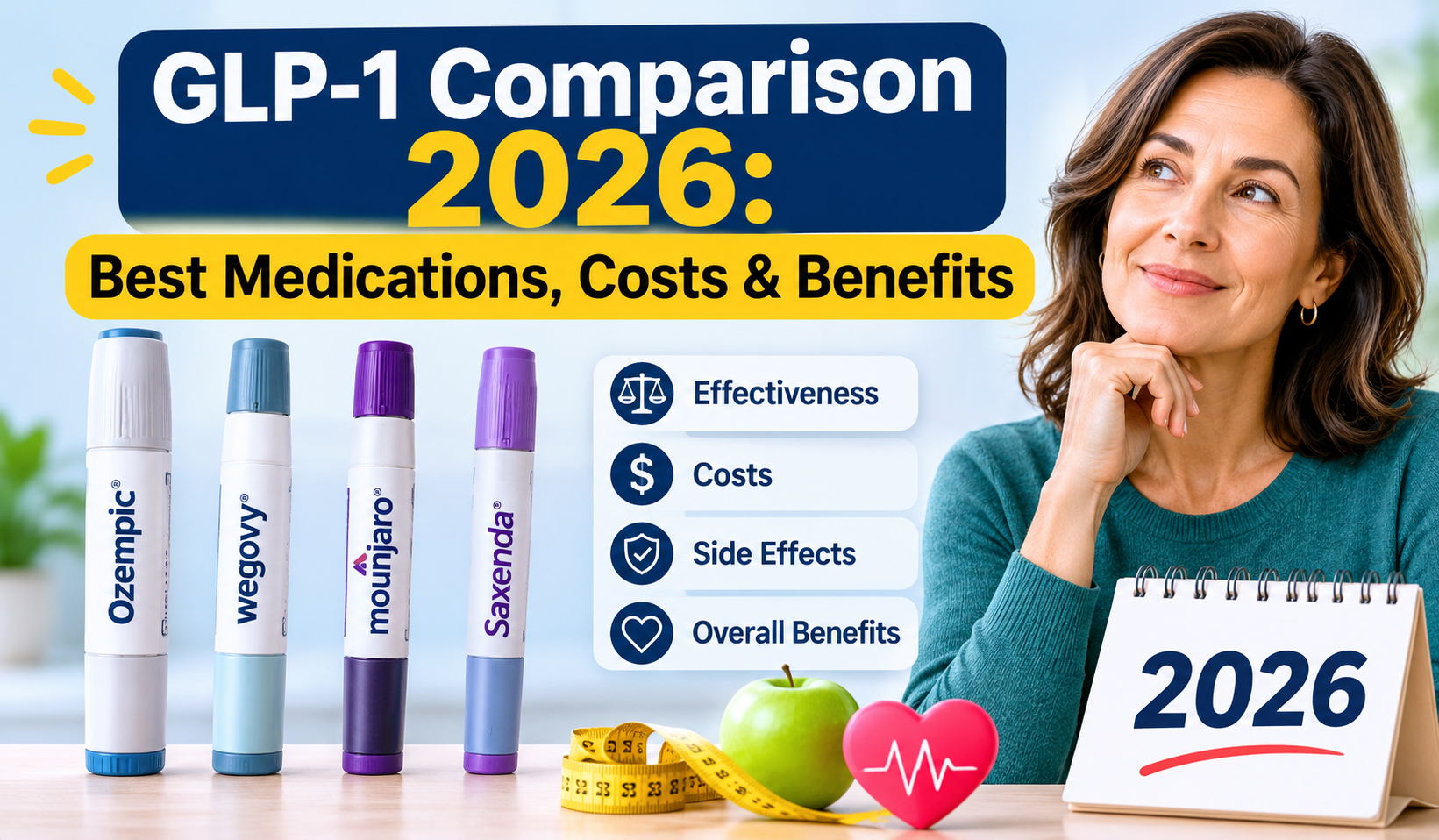
Some medications are designed primarily to improve blood sugar control, while others are approved for chronic weight management. Certain treatments target one hormone pathway, while newer options work through two pathways to influence appetite and metabolism.
Names such as Ozempic, Wegovy, Mounjaro, Zepbound, Saxenda, and Trulicity frequently appear in conversations about GLP-1 therapy. Although these medications share important characteristics, they are not interchangeable.
This comprehensive GLP-1 comparison explores how popular medications differ, what clinical research reveals about their effectiveness, and which factors matter most when choosing treatment.
Whether your goal is weight management, type 2 diabetes control, or improved metabolic health, understanding these differences can help you have a more informed conversation with your healthcare provider.
 GLP-1 Starting at $59 Per Month – 100% Online
What Is GLP-1 and Why Are These Medications Different?
Glucagon-like peptide-1, commonly called GLP-1, is a hormone naturally released by the intestines after eating. It plays an important role in regulating blood sugar, appetite, digestion, and feelings of fullness.
GLP-1 receptor agonists are medications that mimic the activity of this hormone. They activate receptors involved in insulin secretion, appetite regulation, and digestive processes.
These effects can help people consume fewer calories while improving blood sugar regulation.
Most GLP-1 medications share several important mechanisms:
- Stimulating insulin release when blood sugar is elevated.
- Reducing inappropriate glucagon secretion.
- Slowing gastric emptying, particularly during early treatment.
- Increasing fullness after meals.
- Reducing hunger and overall food intake.
- Supporting weight management and metabolic health.
Despite these similarities, GLP-1 medications differ in their active ingredients, receptor activity, strength, duration, and approved uses.
For example, semaglutide activates GLP-1 receptors, while tirzepatide activates both GLP-1 and glucose-dependent insulinotropic polypeptide (GIP) receptors.
This distinction contributes to differences in their average effects on weight and blood sugar.
GLP-1 Comparison: Popular Medications Explained
Several well-known prescription medications belong to the GLP-1 treatment category or a closely related class.
Understanding their active ingredients is essential because different brand names may contain the same medication.
Ozempic (Semaglutide)
Ozempic is a once-weekly injectable medication primarily used to manage type 2 diabetes.
Its active ingredient, semaglutide, helps improve blood sugar regulation and can reduce appetite.
Many patients also experience weight loss during treatment.
Ozempic has additional indications for reducing certain cardiovascular risks and kidney disease progression risks in eligible adults with type 2 diabetes.
It is not specifically approved as a weight-loss medication, even though weight reduction is a common treatment effect.
Wegovy (Semaglutide)
Wegovy contains semaglutide, the same active ingredient found in Ozempic, but uses dosing and labeling specifically developed for weight management and other approved indications.
It is commonly prescribed for eligible adults with obesity or overweight accompanied by certain weight-related conditions.
Wegovy helps reduce hunger, improve portion control, and support sustained weight reduction when combined with appropriate nutrition and physical activity.
It is administered once weekly in its injectable formulation.
Mounjaro (Tirzepatide)
Mounjaro contains tirzepatide, which activates both GIP and GLP-1 receptors.
This dual-action mechanism improves blood sugar regulation and influences appetite.
Mounjaro is approved for treating type 2 diabetes and is administered through a weekly injection.
Clinical trials have demonstrated substantial improvements in blood sugar control, along with meaningful weight reduction.
Although it is frequently discussed alongside weight-loss medications, Mounjaro’s primary US indication is diabetes treatment.
Zepbound (Tirzepatide)
Zepbound contains tirzepatide, the same active ingredient used in Mounjaro.
Its labeling focuses on chronic weight management in eligible patients, along with certain additional indications.
By targeting two hormone receptors, Zepbound can produce substantial reductions in appetite and body weight.
It is administered once weekly, with doses gradually increased to improve tolerability.
Saxenda (Liraglutide)
Saxenda contains liraglutide, a GLP-1 receptor agonist prescribed for chronic weight management.
Unlike Wegovy and Zepbound, Saxenda requires daily injections.
It helps regulate appetite and promotes earlier feelings of fullness.
Although Saxenda can support clinically meaningful weight reduction, trials generally show less average weight loss than newer high-efficacy treatments.
Trulicity (Dulaglutide)
Trulicity contains dulaglutide and is prescribed primarily for type 2 diabetes management.
It is administered once weekly and improves blood sugar regulation by stimulating glucose-dependent insulin secretion.
Some patients experience modest weight loss, but Trulicity is not specifically approved as a weight-loss treatment.
It may be appropriate for patients whose treatment priorities include diabetes control and cardiovascular risk reduction.
GLP-1 Starting at $59 Per Month – 100% Online
GLP-1 Comparison for Weight Loss: Which Is Most Effective?
Weight-loss effectiveness is one of the biggest differences among GLP-1 medications.
Clinical research consistently demonstrates that certain newer treatments produce greater average weight reduction than earlier medications.
Tirzepatide and higher-dose semaglutide generally produce the greatest average weight loss among these established medications.
Results from major clinical trials provide useful comparisons.
Tirzepatide: Approximately 15%–21% Average Weight Loss
In the SURMOUNT-1 trial, adults with obesity or overweight without diabetes experienced average weight reductions of approximately 15% to 21% over 72 weeks, depending on the tirzepatide dose.
Higher doses generally produced larger average reductions.
For someone starting at 220 pounds, a 20% reduction would represent approximately 44 pounds.
Individual results vary considerably, and weight loss generally develops gradually rather than immediately.
Semaglutide: Approximately 15% Average Weight Loss
In the STEP 1 trial, adults without diabetes receiving semaglutide 2.4 mg experienced an average body-weight reduction of approximately 14.9% after 68 weeks.
This result was achieved alongside lifestyle interventions.
Semaglutide can also improve waist circumference, blood pressure, and several cardiometabolic risk factors.
Liraglutide: Approximately 8% Average Weight Loss
In a major 56-week clinical trial, adults receiving liraglutide 3 mg experienced average weight reductions of approximately 8%.
Although this average is smaller than those reported for newer medications, it still represents meaningful weight loss for many individuals.
What Does a Direct Comparison Show?
The SURMOUNT-5 trial directly compared tirzepatide and semaglutide in adults with obesity or overweight without diabetes.
At 72 weeks, average weight reductions were approximately 20.2% with tirzepatide and 13.7% with semaglutide at the studied doses.
These findings favor tirzepatide for average weight reduction in that study.
Still, medication selection depends on more than weight-loss percentages. Medical history, tolerability, contraindications, accessibility, and treatment goals all influence the best choice.
GLP-1 Starting at $59 Per Month – 100% Online
GLP-1 Comparison for Type 2 Diabetes Management
GLP-1 medications are also widely used to help manage type 2 diabetes.
Their primary benefits include improving glucose-dependent insulin secretion, reducing inappropriate glucagon activity, and helping control blood sugar after meals.
Treatment effectiveness is often measured using hemoglobin A1c, which reflects average blood glucose over approximately three months.
Tirzepatide has demonstrated particularly strong A1c reductions in comparative trials.
For example, the SURPASS-2 trial found that tirzepatide reduced A1c more than semaglutide 1 mg in adults with type 2 diabetes receiving metformin.
Other GLP-1 medications, including dulaglutide, liraglutide, and semaglutide, also provide effective glucose management.
The choice may depend on:
- Starting A1c and individualized blood sugar targets.
- Existing cardiovascular or kidney disease.
- Desired weight reduction.
- Other diabetes medications.
- Kidney function and overall medical history.
- Insurance coverage and affordability.
A medication producing the most weight loss is not automatically the best diabetes medication for every patient.
Some patients benefit more from a treatment with specific cardiovascular or kidney indications, while others prioritize stronger glucose reduction.
GLP-1 vs. Dual GIP/GLP-1 Medications: What’s the Difference?
One important development in metabolic medicine is the introduction of medications that activate more than one hormone receptor.
Traditional GLP-1 receptor agonists primarily activate the GLP-1 pathway.
Dual GIP/GLP-1 receptor agonists, such as tirzepatide, target two pathways involved in metabolic regulation.
How GLP-1 Receptor Agonists Work
GLP-1 receptor agonists help regulate appetite, glucose-dependent insulin secretion, and digestive activity.
Semaglutide, liraglutide, and dulaglutide belong to this category.
How Dual GIP/GLP-1 Receptor Agonists Work
Tirzepatide activates both GLP-1 and GIP receptors.
GIP is another hormone released after meals that influences insulin secretion and metabolic signaling.
Activating both receptors can produce stronger average effects on blood sugar and weight than activating GLP-1 receptors alone.
This does not mean dual-action medications are suitable for everyone.
Treatment tolerability, medical conditions, prescribing indications, and individual response remain essential considerations.
GLP-1 Starting at $59 Per Month – 100% Online
GLP-1 Comparison: Weekly vs. Daily Injections
Dosing frequency can strongly influence treatment convenience and long-term adherence.
Several newer medications require only one injection per week.
These include injectable semaglutide, tirzepatide, and dulaglutide.
Liraglutide generally requires daily administration.
Weekly GLP-1 Medications
Weekly injections may be more convenient for individuals who prefer fewer dosing days.
They can make it easier to establish a consistent routine without thinking about medication every morning.
Depending on the product, dosing increases may occur gradually over several weeks or months.
Daily GLP-1 Medications
Daily treatments require more frequent administration.
For some patients, a daily routine may fit their existing medication habits.
Oral GLP-1 formulations are also available for certain indications, with specific administration instructions that differ from injections.
Convenience matters because consistent use is important for maintaining treatment benefits.
Patients should follow their medication’s exact instructions rather than assuming that dosing rules are the same across products.
GLP-1 Comparison of Side Effects and Safety
Most GLP-1-based treatments share a similar gastrointestinal side-effect profile.
Symptoms are often most noticeable when starting treatment or increasing the dose.
Common side effects include nausea, vomiting, diarrhea, constipation, abdominal discomfort, indigestion, and reduced appetite.
For many patients, symptoms improve as the body adjusts, although some experience persistent discomfort or discontinue treatment.
Important Safety Considerations
GLP-1 medications and tirzepatide may carry important warnings and precautions, including:
- Pancreatitis: persistent, severe abdominal pain requires prompt medical evaluation.
- Gallbladder problems: rapid weight loss and treatment-related factors may increase the risk.
- Dehydration and kidney injury: prolonged vomiting or diarrhea can become serious.
- Low blood sugar: risk increases when used with insulin or sulfonylureas.
- Delayed stomach emptying: this can affect tolerability and certain medical procedures.
Many products in these classes also carry boxed warnings involving thyroid C-cell tumors observed in rodents. Their relevance to humans remains uncertain, but affected medications are contraindicated in people with a personal or family history of medullary thyroid carcinoma or multiple endocrine neoplasia syndrome type 2.
Pregnancy, severe digestive disorders, and certain other medical circumstances require special consideration.
Patients should review the specific product labeling and discuss potential risks with a qualified healthcare professional.
GLP-1 Starting at $59 Per Month – 100% Online
GLP-1 Comparison for Heart and Kidney Health
Weight reduction and glucose control are important benefits, but certain GLP-1 medications offer additional advantages.
Large clinical outcome trials have shown cardiovascular benefits with some medications in appropriately selected patient populations.
For example, semaglutide has demonstrated reductions in major cardiovascular events in certain high-risk populations.
The SELECT trial evaluated semaglutide 2.4 mg in people with overweight or obesity and established cardiovascular disease who did not have diabetes.
Results showed a meaningful reduction in major adverse cardiovascular events compared with placebo.
Some GLP-1 receptor agonists also have approved indications involving cardiovascular risk reduction in adults with type 2 diabetes.
Kidney protection is another developing treatment area.
In the FLOW trial, semaglutide demonstrated kidney and cardiovascular benefits in adults with type 2 diabetes and chronic kidney disease.
These findings highlight why GLP-1 treatment decisions should consider broader health outcomes rather than focusing exclusively on pounds lost.
Not every medication has demonstrated the same benefits in the same populations.
Doctors should match the specific treatment’s evidence and approved indications to the patient’s health needs.
GLP-1 Comparison: Price, Insurance, and Affordability
Medication affordability can be a major factor in choosing long-term GLP-1 treatment.
Costs vary depending on brand, dose, formulation, insurance coverage, pharmacy, and available manufacturer programs.
GLP-1 Starting at $59 Per Month – 100% Online
Why Are GLP-1 Medications Expensive?
Many newer GLP-1 medications remain protected by patents or other market exclusivities.
Development, manufacturing, distribution, and demand can all affect pricing.
Coverage restrictions may further increase out-of-pocket expenses.
Does Insurance Cover GLP-1 Medications?
Insurance plans frequently distinguish between medications prescribed for diabetes and those prescribed for weight management.
For example, a plan might cover a medication for type 2 diabetes while excluding another product used primarily for obesity treatment.
Coverage rules may include prior authorization, documented diagnoses, treatment history, or other eligibility requirements.
GLP-1 Starting at $59 Per Month – 100% Online
How Can Patients Reduce Costs?
Patients can explore manufacturer savings programs, covered alternatives, authorized pharmacies, and insurance formulary options.
Prescription coverage and manufacturer pricing programs can change, so current costs should be checked before starting treatment.
Unapproved or illegally marketed GLP-1 products should be avoided. Compounded medications are not FDA-approved and can carry additional quality, dosing, and safety risks.
Long-term affordability matters because stopping treatment may lead to weight regain or worsening blood sugar control.
Which GLP-1 Medication Is Best for Different Health Goals?
There is no universally best GLP-1 medication because treatment goals and medical needs vary.
The most effective choice depends on what an individual wants to achieve and which medication can be used safely and consistently.
Best for Greater Average Weight Loss
Tirzepatide has produced greater average weight reduction than semaglutide in direct comparative obesity research.
For eligible patients primarily focused on weight management, Zepbound may be an option worth discussing.
Best for Type 2 Diabetes
Ozempic, Mounjaro, and Trulicity are among the medications prescribed for diabetes.
Selection depends on desired glucose control, other medical conditions, medication interactions, and the patient’s overall risk profile.
Best for Patients With Cardiovascular Disease
Certain semaglutide and other GLP-1 products have demonstrated cardiovascular benefits in specified populations.
A clinician may prioritize a medication with an established indication matching a patient’s cardiovascular history.
Best for Convenient Dosing
Once-weekly injections may be preferred by individuals who want fewer administration days.
Ozempic, Wegovy injection, Mounjaro, Zepbound, and Trulicity provide weekly options.
Best for Patients Concerned About Side Effects
No GLP-1 medication guarantees a symptom-free experience.
Slow dose escalation, individualized treatment plans, and appropriate nutrition can improve tolerability.
A lower effective dose or a different medication may be preferable when side effects become difficult to manage.
GLP-1 Starting at $59 Per Month – 100% Online
How Long Does It Take for GLP-1 Medications to Work?
GLP-1 medications begin influencing physiological processes before major changes appear on the scale.
Some patients notice reduced appetite or improved blood sugar within the first few weeks.
Meaningful weight reduction typically takes longer.
During the First Month
Early changes may include improved appetite awareness, smaller meal portions, and blood sugar improvements.
The starting dose is often deliberately low to help the body adjust.
During Months Two and Three
As dosing progresses, many patients experience more noticeable weight changes.
The degree of weight loss depends on dose, medication type, nutrition, activity, and individual response.
After Six Months or Longer
Substantial weight reduction may occur with continued treatment.
Clinical studies often measure outcomes after approximately one year or longer, reflecting the gradual nature of weight management.
Treatment response should be reviewed regularly to determine whether the medication remains effective and appropriate.
Weight loss is not always linear, and occasional plateaus are common.
Can You Switch Between Different GLP-1 Medications?
Switching between GLP-1 medications may be appropriate when a patient experiences side effects, inadequate treatment response, affordability problems, or changes in medical needs.
For example, someone using a GLP-1 medication for diabetes may later require a different approach to weight management.
A clinician may recommend changing medications based on treatment goals and overall health.
Important Considerations When Switching
GLP-1 medications have different dosing strengths, half-lives, and titration schedules.
A dose of one medication cannot be assumed equivalent to a dose of another.
Switching requires consideration of the previous medication’s timing, the new treatment’s starting dose, and the potential for gastrointestinal side effects.
Patients should never combine or switch GLP-1 medications without specific prescribing instructions.
A carefully managed transition can reduce the likelihood of dosing errors and unnecessary adverse effects.
GLP-1 Starting at $59 Per Month – 100% Online
Lifestyle Habits That Improve GLP-1 Treatment Results
Prescription treatment works best when supported by sustainable everyday habits.
Medications can help regulate appetite, but nutritional quality, physical activity, sleep, and muscle preservation remain important.
Prioritize Protein
Adequate protein supports muscle maintenance during weight reduction.
Lean meats, fish, eggs, dairy products, beans, lentils, and tofu can help meet daily protein needs.
Include Strength Training
Resistance exercise helps preserve muscle mass while losing weight.
Activities may include weight training, resistance bands, or bodyweight exercises.
Stay Hydrated
Reduced appetite and gastrointestinal symptoms can affect fluid intake.
Maintaining hydration is particularly important when experiencing nausea, vomiting, or diarrhea.
Eat Smaller, Balanced Meals
Large or high-fat meals can worsen digestive discomfort for some patients.
Smaller portions with protein, fiber-rich foods, and nutrient-dense ingredients may be easier to tolerate.
Maintain Consistent Sleep
Adequate sleep supports appetite regulation, recovery, and general metabolic health.
Long-term success depends on developing habits that remain practical beyond the initial weight-loss period.
Are GLP-1 Medications Better Than Traditional Weight-Loss Treatments?
GLP-1-based medications have changed obesity treatment because they target biological pathways that influence hunger and energy intake.
Traditional weight-loss approaches often focus on calorie reduction, physical activity, and behavioral changes.
These strategies remain essential, but some individuals experience strong physiological appetite responses that make weight maintenance difficult.
GLP-1 medications can reduce hunger and make dietary changes easier to sustain.
Clinical trials demonstrate that newer treatments can produce average weight reductions exceeding those historically observed with many older prescription weight-management medications.
Still, medication is not appropriate or necessary for everyone.
Lifestyle interventions, other approved weight-loss medications, behavioral therapy, and metabolic surgery may also be considered depending on medical eligibility and personal circumstances.
The strongest treatment strategy is one that balances effectiveness, safety, affordability, and long-term sustainability.
Final Verdict
A well-informed GLP-1 comparison reveals meaningful differences between today’s major treatment options.
Tirzepatide stands out for greater average weight reduction in comparative trials, while semaglutide offers extensive evidence supporting weight management, glucose control, and certain cardiovascular and kidney benefits.
Liraglutide and dulaglutide remain relevant options for patients with specific treatment needs.
The right medication is not necessarily the newest treatment or the one associated with the largest weight-loss percentage.
It is the medication that matches your diagnosis, health goals, safety considerations, insurance coverage, and ability to maintain treatment over time.
Before starting therapy, discuss your medical history, medication options, expected outcomes, and possible side effects with a qualified healthcare professional.
With appropriate guidance and consistent lifestyle habits, GLP-1-based treatment can be a valuable part of a comprehensive approach to weight management and metabolic health.
GLP-1 Starting at $59 Per Month – 100% Online
References
https://pmc.ncbi.nlm.nih.gov/articles/PMC13309865/
https://en.wikipedia.org/wiki/GLP-1_receptor_agonist
https://www.healthline.com/health/weight-loss/glp1-for-weight-loss
