GLP-1 Kidney Disease: Can GLP-1 Protect Your Kidneys?
Kidney disease often develops quietly, with few noticeable symptoms until kidney function has already declined. For millions of people living with diabetes, obesity, or high blood pressure, protecting kidney health is an important part of preventing serious long-term complications.
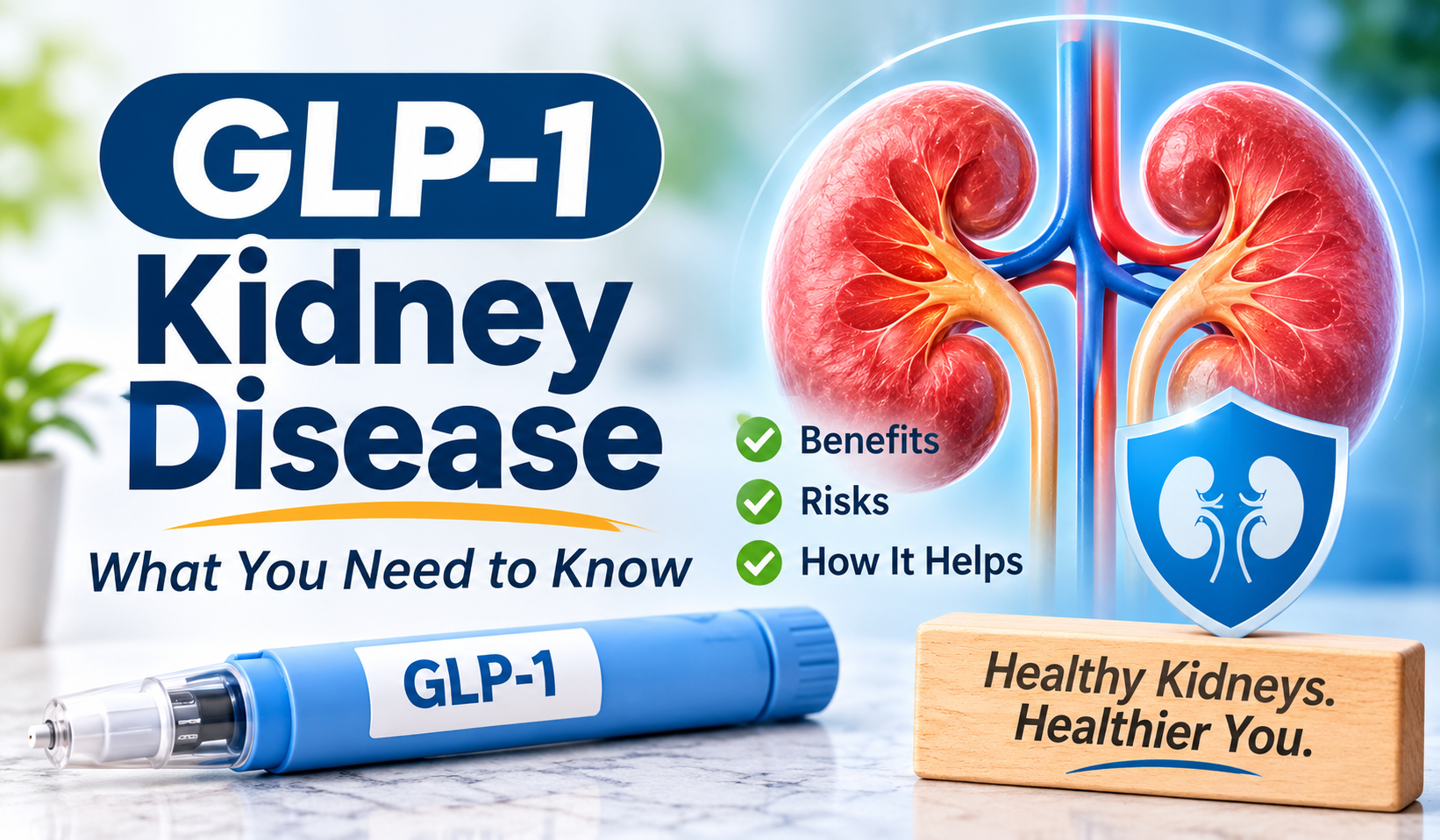
A growing area of medical research is exploring how GLP-1 medications may help protect the kidneys. These treatments, originally developed to manage blood sugar, are now receiving attention for their potential to slow kidney damage, reduce cardiovascular risks, and support people with chronic kidney disease.
Recent clinical research has produced encouraging findings, particularly for individuals with type 2 diabetes and chronic kidney disease. Some GLP-1 medications have demonstrated meaningful kidney benefits beyond their effects on blood sugar and body weight.
But can GLP-1 medications actually prevent kidney disease? Are they safe for people who already have reduced kidney function? And could they become an important part of long-term kidney protection?
Understanding the relationship between GLP-1 and kidney disease can help patients make informed decisions about treatment, prevention, and overall metabolic health.
 GLP-1 Starting at $59 Per Month – 100% Online
What Is GLP-1 and How Does It Affect Kidney Health?
GLP-1, or glucagon-like peptide-1, is a naturally occurring hormone released by the intestines after eating. It plays an important role in controlling blood sugar, regulating appetite, and supporting digestive processes.
GLP-1 helps the pancreas release insulin when blood sugar rises. It also reduces glucagon secretion, slows stomach emptying, and communicates with the brain to promote feelings of fullness.
Medications known as GLP-1 receptor agonists imitate these natural effects.
Common examples include semaglutide, liraglutide, and dulaglutide. Tirzepatide is another related medication that activates both GLP-1 and GIP receptors.
Although these medications are widely recognized for diabetes management and weight loss, researchers have discovered that certain treatments may also improve important kidney-related outcomes.
Their potential benefits involve several interconnected processes, including blood sugar regulation, weight management, cardiovascular protection, and improvements in metabolic health.
For people with diabetes-related kidney disease, these combined effects can be particularly valuable.
Understanding Chronic Kidney Disease (CKD)
Chronic kidney disease is a long-term condition in which the kidneys gradually lose their ability to filter waste products and excess fluid from the bloodstream.
Healthy kidneys perform several essential functions. They remove metabolic waste, regulate fluid levels, maintain electrolyte balance, help control blood pressure, and produce hormones involved in red blood cell formation and bone health.
When kidney function declines, these processes become less efficient.
Two important measurements help doctors evaluate kidney health.
Estimated glomerular filtration rate (eGFR) measures how effectively the kidneys filter blood. A declining eGFR may indicate worsening kidney function.
Urine albumin-to-creatinine ratio (UACR) measures albumin leakage into the urine. Elevated albumin levels may signal damage to the kidney’s filtering structures.
Chronic kidney disease is generally diagnosed when kidney abnormalities persist for at least three months.
Diabetes and high blood pressure are among the leading causes of CKD. Other contributing factors include cardiovascular disease, inherited kidney conditions, autoimmune disorders, and certain medications.
Because kidney disease can progress without obvious symptoms, regular screening is particularly important for people with diabetes or hypertension.
GLP-1 Starting at $59 Per Month – 100% Online
Can GLP-1 Medications Help Prevent Kidney Disease?
GLP-1 medications may help lower the risk of certain kidney complications, especially among people with type 2 diabetes.
One reason is their ability to improve blood sugar management.
Persistently elevated blood glucose can damage the small blood vessels responsible for filtering blood inside the kidneys. Over time, this damage may contribute to albuminuria, declining kidney function, and diabetic kidney disease.
By improving glucose regulation, GLP-1 medications can help reduce one important source of kidney stress.
Weight management may provide additional benefits. Excess body weight is associated with insulin resistance, elevated blood pressure, inflammation, and increased demands on kidney filtration.
Some GLP-1 treatments promote substantial weight loss, which may improve several of these risk factors.
Research also suggests that certain GLP-1 medications can reduce albuminuria and slow declining kidney function.
These findings support their potential role in kidney protection, but the extent of benefit differs among medications and patient populations.
GLP-1 therapy should not be viewed as a guarantee against developing kidney disease. Its protective effects are strongest where clinical trials have directly demonstrated improved outcomes.
How GLP-1 Medications May Protect the Kidneys
The relationship between GLP-1 and kidney disease involves several biological pathways. Researchers believe the kidney benefits result from a combination of direct and indirect effects.
1. Improving Blood Sugar Control
Uncontrolled blood sugar is a major contributor to diabetic kidney damage.
Excess glucose can injure the kidneys’ filtering structures, gradually reducing their ability to remove waste effectively.
GLP-1 receptor agonists help improve glucose regulation by increasing insulin release when glucose levels are elevated and reducing unnecessary glucagon secretion.
Better blood sugar control can help decrease the ongoing metabolic stress that contributes to diabetic kidney disease.
For patients with type 2 diabetes, this represents an important component of long-term kidney protection.
2. Supporting Healthy Blood Pressure
High blood pressure can damage the delicate blood vessels within the kidneys.
Some GLP-1 medications produce modest reductions in blood pressure, partly through weight loss and broader metabolic improvements.
Maintaining healthier blood pressure can reduce strain on the kidney’s filtration system.
These medications are not replacements for prescribed blood pressure treatments, but their additional effects may contribute to overall cardiovascular and kidney health.
3. Reducing Excess Body Weight
Obesity increases the likelihood of developing type 2 diabetes, hypertension, and chronic kidney disease.
Excess body weight can also increase the workload placed on the kidneys.
GLP-1 medications support weight management by influencing appetite and fullness, often leading to reduced calorie intake.
Weight loss may improve insulin sensitivity, blood pressure, and other metabolic factors associated with kidney damage.
The degree of kidney protection attributable specifically to weight loss remains an active area of research.
4. Influencing Inflammation and Oxidative Stress
Chronic inflammation and oxidative stress can contribute to progressive kidney injury.
Experimental research suggests that GLP-1 receptor activation may influence inflammatory signaling and cellular stress pathways.
These effects could play a role in protecting kidney tissue from damage.
Scientists are continuing to investigate how much of the kidney benefit seen in clinical trials comes from these pathways rather than improvements in glucose, weight, and cardiovascular health.
5. Reducing Albumin Leakage
Albuminuria occurs when damaged kidney filters allow excessive amounts of albumin to enter the urine.
It is an important marker of kidney damage and future disease progression.
Several GLP-1 receptor agonist studies have demonstrated reductions in urinary albumin levels.
Lower albuminuria can indicate improvement in an important kidney risk marker, although it does not necessarily mean existing structural kidney damage has reversed.
GLP-1 Starting at $59 Per Month – 100% Online
What Does Research Say About GLP-1 and Kidney Disease?
One of the most important developments in GLP-1 kidney research came from the FLOW clinical trial, published in 2024.
The study evaluated weekly semaglutide in 3,533 participants with type 2 diabetes and chronic kidney disease.
Over a median follow-up of approximately 3.4 years, researchers found that semaglutide reduced the relative risk of the trial’s primary combined kidney and cardiovascular outcome by 24% compared with placebo.
FLOW trial: primary outcome
18.7%
Semaglutide group
23.2%
Placebo group
Participants experiencing a primary outcome event during the trial. Absolute risk difference: approximately 4.5 percentage points.
The primary outcome included kidney failure, a major decline in kidney filtration, or death from kidney-related or cardiovascular causes.
The study also reported slower annual declines in eGFR, fewer major cardiovascular events, and lower all-cause mortality among participants receiving semaglutide.
New England Journal of Medicine
These findings were especially significant because they demonstrated benefits involving clinically important kidney outcomes rather than relying exclusively on laboratory markers.
FDA Approval for Kidney Risk Reduction
In January 2025, the U.S. Food and Drug Administration expanded the approved uses of Ozempic (semaglutide).
The medication received approval to reduce the risk of sustained kidney function decline, end-stage kidney disease, and cardiovascular death in adults with type 2 diabetes and chronic kidney disease.
This marked an important advancement in treatment options for diabetic kidney disease.
The approval applies to a specific patient population and medication. It does not mean every GLP-1 drug has the same approved kidney indication.
Is GLP-1 Safe for People With Chronic Kidney Disease?
Many individuals with chronic kidney disease can use certain GLP-1 medications safely under medical supervision.
In fact, kidney disease itself is not necessarily a reason to avoid these treatments.
Some GLP-1 receptor agonists have been studied in people with moderate and severe reductions in kidney function.
The FLOW trial included participants with eGFR levels as low as 25 mL/min/1.73 m² at enrollment, providing useful safety and effectiveness information for patients with established CKD.
For semaglutide, kidney impairment generally does not require a dose adjustment based solely on kidney function.
Nevertheless, treatment decisions should consider the individual’s kidney disease stage, other medications, hydration status, nutritional health, and medical history.
People with advanced kidney disease may need closer monitoring because they are more vulnerable to complications involving fluid balance and electrolyte changes.
A healthcare professional can determine whether a particular GLP-1 medication is appropriate.
GLP-1 Starting at $59 Per Month – 100% Online
Can GLP-1 Medications Cause Kidney Problems?
Although some GLP-1 medications provide kidney benefits, they can occasionally contribute to kidney complications.
The most important concern is dehydration associated with gastrointestinal side effects.
Nausea, vomiting, diarrhea, and reduced fluid intake may occur when beginning treatment or increasing the dosage.
If these symptoms become severe, fluid loss can reduce blood flow to the kidneys.
In susceptible individuals, this may trigger acute kidney injury, a sudden decline in kidney function.
The risk may be higher among people with existing CKD, older adults, and individuals taking medications that affect fluid balance.
Warning signs can include noticeably reduced urination, persistent vomiting, dizziness, unusual weakness, or inability to keep fluids down.
These symptoms require prompt medical assessment.
Other important precautions include risks associated with pancreatitis, gallbladder problems, severe gastrointestinal reactions, and hypoglycemia when GLP-1 medications are combined with insulin or certain diabetes medicines.
Several GLP-1 medicines also carry specific contraindications, including a personal or family history of medullary thyroid carcinoma or multiple endocrine neoplasia syndrome type 2.
Medication-specific prescribing information should guide treatment.
Which GLP-1 Medication Is Best for Kidney Disease?
Several medications influence GLP-1 pathways, but their evidence for kidney protection is not identical.
Semaglutide
Semaglutide has particularly strong evidence for reducing serious kidney outcomes in adults with type 2 diabetes and chronic kidney disease.
The FLOW trial demonstrated benefits involving kidney disease progression and cardiovascular outcomes.
Ozempic also has an FDA-approved indication specifically addressing kidney risk reduction in this population.
Dulaglutide
Dulaglutide has demonstrated favorable effects on kidney function decline in studies involving people with type 2 diabetes and kidney impairment.
It may be considered when clinicians are selecting treatment based on diabetes control, cardiovascular risk, tolerability, and other patient-specific factors.
Liraglutide
Liraglutide has shown favorable kidney-related findings, especially involving reductions in albuminuria.
Its evidence for preventing major kidney outcomes is less direct than the dedicated kidney outcome trial evidence available for semaglutide.
Tirzepatide
Tirzepatide activates both GIP and GLP-1 receptors.
Studies have reported improvements in weight, blood sugar, and certain kidney-related measurements.
Research continues to clarify its effects on long-term kidney outcomes in different patient groups.
The best medication depends on the condition being treated, clinical evidence, other health problems, affordability, and individual tolerability.
GLP-1 and Diabetic Kidney Disease
Diabetic kidney disease develops when prolonged diabetes-related changes damage the kidneys’ blood vessels and filtration structures.
It is one of the most common causes of chronic kidney disease worldwide.
Managing diabetic kidney disease involves more than lowering blood sugar.
Patients also benefit from controlling blood pressure, reducing cardiovascular risk, managing cholesterol, and using medications with demonstrated kidney-protective effects.
GLP-1 receptor agonists can play a valuable role in this broader treatment strategy.
The 2024 KDIGO chronic kidney disease guideline recommends a long-acting GLP-1 receptor agonist for adults with type 2 diabetes and CKD who have not achieved individualized blood sugar targets despite treatment with metformin and an SGLT2 inhibitor, or who cannot use those medications.
SGLT2 inhibitors, certain blood pressure medications, and other kidney-protective treatments remain important components of care.
GLP-1 medications may complement these treatments rather than replace them.
The final treatment plan should reflect kidney function, albuminuria, cardiovascular health, and the patient’s specific needs.
GLP-1 Starting at $59 Per Month – 100% Online
Can GLP-1 Reverse Kidney Damage?
An important distinction exists between slowing kidney disease progression and reversing established kidney damage.
Current research supports the ability of certain GLP-1 medications to reduce the risk of worsening kidney disease.
These medications may slow eGFR decline and improve albuminuria in some patients.
But there is not sufficient evidence to conclude that GLP-1 treatment can reliably regenerate permanently damaged kidney tissue or cure chronic kidney disease.
Some individuals may experience improved kidney-related measurements after better diabetes control, weight reduction, or blood pressure management.
Such improvements are encouraging, but they do not always represent a reversal of underlying structural damage.
The primary treatment goal is often to preserve remaining kidney function and reduce the likelihood of future complications.
Earlier treatment, appropriate medication selection, and consistent monitoring may help achieve that goal.
Can People Without Diabetes Use GLP-1 for Kidney Protection?
Researchers are increasingly interested in whether GLP-1 medications can protect kidneys in people who do not have diabetes.
Obesity, cardiovascular disease, and metabolic dysfunction can contribute to kidney problems even when blood sugar levels are normal.
Because GLP-1 medications can improve several of these risk factors, scientists are investigating whether they may also help prevent kidney disease in broader populations.
Research involving individuals with obesity and cardiovascular disease has produced encouraging kidney-related findings.
Nevertheless, the evidence is not yet equivalent across all patient groups.
A GLP-1 medication prescribed for obesity may provide metabolic benefits, but this does not automatically establish it as an approved treatment for chronic kidney disease in someone without diabetes.
People without diabetes who have kidney disease should discuss the possible benefits and risks with their kidney specialist.
GLP-1 Starting at $59 Per Month – 100% Online
How to Protect Your Kidneys While Taking GLP-1 Medication
Whether GLP-1 treatment is being used for diabetes, weight management, or an approved kidney indication, several practical habits can support safer treatment.
Maintain Appropriate Hydration
Adequate fluid intake helps support circulation and kidney function.
GLP-1 medications may reduce appetite and sometimes thirst-related drinking habits. Nausea or vomiting can further increase dehydration risk.
People should follow an individualized fluid plan, especially if they have advanced CKD, heart failure, or prescribed fluid restrictions.
Monitor Kidney Function
Regular blood and urine tests help healthcare providers evaluate treatment response.
Important measurements include eGFR, serum creatinine, electrolytes, and urinary albumin.
Monitoring may become especially important after significant gastrointestinal side effects or changes in other medications.
Follow a Kidney-Friendly Diet
A balanced diet can support metabolic and kidney health.
Many people benefit from moderating sodium intake, emphasizing appropriate portions of nutritious foods, and following personalized protein recommendations.
Patients with advanced CKD may also need individualized potassium, phosphorus, or fluid guidance.
Because GLP-1 treatment can significantly reduce appetite, maintaining adequate nutrition is essential.
Avoid Unnecessary Kidney Stress
Certain medications, including frequent use of nonsteroidal anti-inflammatory drugs such as ibuprofen, may increase kidney risks.
Patients should discuss medications and supplements with their healthcare team.
Regular physical activity, blood pressure management, diabetes care, and avoiding tobacco also contribute to long-term kidney protection.
Report Persistent Side Effects
Mild gastrointestinal symptoms often improve as the body adjusts to GLP-1 treatment.
Persistent vomiting, severe diarrhea, inability to drink enough fluids, or markedly decreased urination should not be ignored.
Early treatment of dehydration and other complications can help prevent further kidney injury.
Who May Benefit Most From GLP-1 Kidney Protection?
The people most likely to benefit are those whose medical circumstances match populations studied in clinical trials.
Adults with type 2 diabetes and established chronic kidney disease are among the best-supported groups, particularly when using a medication with proven kidney outcome benefits.
Individuals with obesity, cardiovascular disease, or persistent metabolic risk factors may also benefit from GLP-1 treatment for other approved indications.
For patients who already have reduced kidney function, the goal is often to slow additional damage while managing the underlying health conditions driving progression.
Not every person with CKD needs GLP-1 therapy.
Someone with kidney disease caused by an autoimmune disorder, inherited condition, or other nonmetabolic disease may require a different treatment approach.
A nephrologist or other qualified healthcare professional can help determine whether GLP-1 treatment belongs in an individualized kidney care plan.
GLP-1 Starting at $59 Per Month – 100% Online
The Future of GLP-1 Treatment for Kidney Disease
GLP-1 medications are becoming an increasingly important subject in kidney medicine.
For years, diabetes care focused heavily on controlling glucose levels. Modern treatment strategies are now placing greater emphasis on protecting organs and preventing long-term complications.
The FLOW trial strengthened this approach by demonstrating that semaglutide could reduce serious kidney-related outcomes in patients with type 2 diabetes and CKD.
Future research will help answer several important questions.
Scientists are investigating whether different GLP-1 medications offer comparable kidney benefits, how these treatments perform in people without diabetes, and whether combining medications can provide additional protection.
Researchers are also examining long-term effectiveness in advanced CKD and the potential effects of newer therapies targeting multiple metabolic hormones.
As evidence develops, treatment guidelines may continue to evolve.
For patients, these advances offer additional options for reducing the burden of kidney disease and its associated cardiovascular complications.
Final Verdict
GLP-1 medications can be beneficial for certain people with kidney disease, especially adults with type 2 diabetes and chronic kidney disease.
Clinical research has demonstrated that semaglutide can slow kidney function decline and reduce the likelihood of serious kidney and cardiovascular outcomes in this population.
These benefits extend beyond traditional blood sugar management and reflect the growing importance of GLP-1 treatment in metabolic and kidney health.
Still, GLP-1 medications are not a cure for kidney disease, and their effectiveness differs across drugs and patient groups.
Dehydration, gastrointestinal side effects, and individual medical circumstances must also be considered when planning treatment.
For suitable patients, GLP-1 medications may become an important part of a comprehensive strategy involving blood sugar control, blood pressure management, appropriate nutrition, kidney-protective medicines, and regular monitoring.
The most promising aspect of GLP-1 kidney disease treatment is its potential to help people preserve kidney function for longer and reduce the risk of serious complications.
With individualized medical care and continued scientific progress, GLP-1 therapies are helping reshape the future of chronic kidney disease management.
GLP-1 Starting at $59 Per Month – 100% Online
References
https://pmc.ncbi.nlm.nih.gov/articles/PMC12578383/
https://en.wikipedia.org/wiki/Diabetic_nephropathy
https://www.healthline.com/health/drugs/glp-1-long-term-side-effects
