GLP-1 Kidney Protection: Benefits, Safety & How It Works
Your kidneys work around the clock, filtering waste, balancing fluids, regulating blood pressure, and maintaining essential minerals in your body. Yet kidney damage can develop quietly for years before noticeable symptoms appear. For people living with type 2 diabetes, obesity, or high blood pressure, protecting kidney function is especially important.
Recent advances in medicine have brought new attention to GLP-1 kidney protection, particularly the potential of GLP-1 receptor agonists to reduce kidney-related complications and slow the progression of chronic kidney disease.
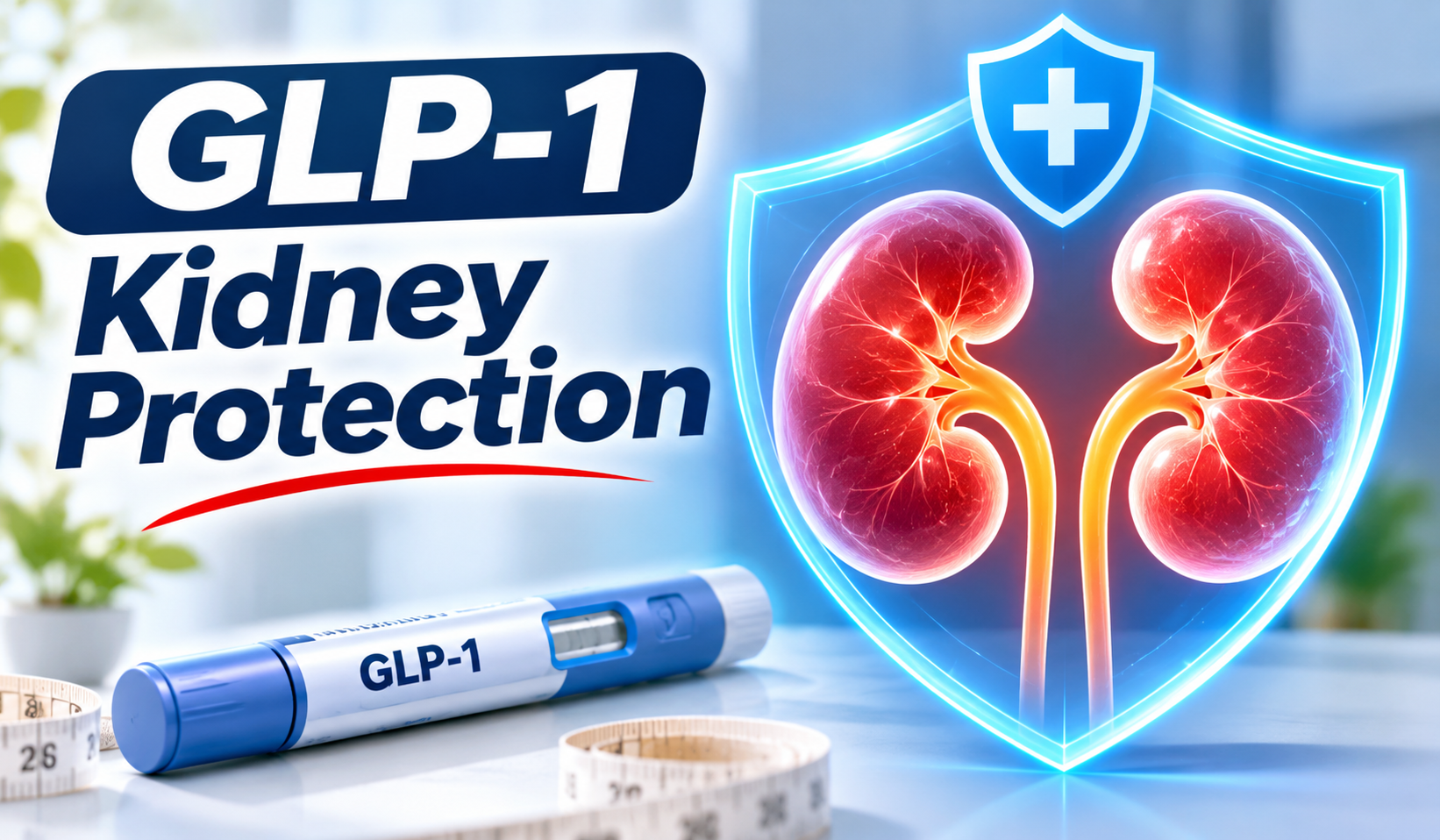
Researchers have also discovered that certain GLP-1 medications may provide meaningful benefits for kidney health.
These benefits extend beyond glucose management. GLP-1 treatments can improve metabolic health, reduce cardiovascular risks, and influence biological processes associated with kidney damage.
Understanding how these medications work, who may benefit, and what current research reveals can help patients make informed decisions about protecting long-term kidney function.
 GLP-1 Starting at $59 Per Month – 100% Online
What Is GLP-1 Kidney Protection?
GLP-1 kidney protection refers to the potential of glucagon-like peptide-1 receptor agonists to help preserve kidney function and reduce the risk of serious kidney complications.
GLP-1 is a naturally occurring hormone released by the intestines after eating. It helps regulate blood sugar by stimulating insulin secretion when glucose levels rise, reducing glucagon release, and slowing stomach emptying.
GLP-1 receptor agonist medications imitate the activity of this hormone, producing longer-lasting effects on blood sugar regulation and appetite.
Although originally developed for type 2 diabetes management, certain medications in this class have demonstrated important kidney-related benefits.
GLP-1 kidney protection may involve several interconnected effects, including improved blood sugar control, weight reduction, lower blood pressure, and reduced metabolic stress.
These improvements can help create a healthier environment for the kidneys.
In people with type 2 diabetes and chronic kidney disease, clinical trials have shown that certain GLP-1 treatments can reduce the risk of major kidney complications.
Importantly, kidney protection does not mean reversing every form of existing kidney damage. Instead, treatment generally focuses on preserving remaining function, slowing disease progression, and reducing the likelihood of complications.
How Does GLP-1 Protect the Kidneys?
Kidney damage often develops through a combination of high blood sugar, elevated blood pressure, inflammation, and metabolic dysfunction.
GLP-1 medications can address several of these problems simultaneously, creating a potentially protective effect.
Improved Blood Sugar Regulation
Persistently elevated blood glucose can damage the tiny blood vessels responsible for filtering waste from the bloodstream.
Over time, this damage can weaken the kidneys’ filtering structures and contribute to diabetic kidney disease.
GLP-1 medications help regulate glucose levels by enhancing glucose-dependent insulin release and reducing inappropriate glucagon secretion.
Better blood sugar control can reduce ongoing stress on kidney blood vessels and support long-term kidney health.
Weight Reduction
Excess body weight increases the likelihood of insulin resistance, high blood pressure, and kidney-related complications.
Some GLP-1 medications support significant weight loss by reducing appetite and increasing feelings of fullness.
Losing excess weight can improve metabolic health and may reduce the workload associated with obesity-related kidney stress.
Blood Pressure Improvement
High blood pressure damages kidney blood vessels and accelerates chronic kidney disease progression.
GLP-1 treatment can produce modest reductions in blood pressure, particularly when accompanied by weight loss and improved metabolic health.
Even relatively small improvements may contribute to better cardiovascular and kidney outcomes over time.
Effects on Inflammation
Chronic inflammation and oxidative stress play important roles in kidney injury.
Research suggests that GLP-1 receptor signaling may influence inflammatory pathways and cellular processes associated with kidney damage.
These mechanisms remain areas of active investigation, and it is not yet clear how much they independently contribute to the kidney benefits observed in clinical trials.
GLP-1 Starting at $59 Per Month – 100% Online
GLP-1 Kidney Protection and Chronic Kidney Disease
Chronic kidney disease (CKD) develops when the kidneys gradually lose their ability to filter blood effectively.
Diabetes and high blood pressure are among the leading causes of CKD, making metabolic management an essential part of prevention and treatment.
For people with type 2 diabetes, long-term exposure to elevated blood glucose can damage the glomeruli, the microscopic filtering units inside the kidneys.
As damage progresses, protein may begin leaking into the urine, and the kidneys’ filtering capacity may decline.
GLP-1 medications have gained attention because certain treatments can help slow this progression.
The FLOW clinical trial, published in 2024, investigated once-weekly semaglutide in adults with type 2 diabetes and chronic kidney disease.
The trial found a 24% relative reduction in its primary composite outcome, which included major kidney disease events and death from cardiovascular or kidney-related causes.
Participants receiving semaglutide also experienced a slower average decline in kidney filtration function.
These findings provided important evidence that semaglutide can offer kidney-related benefits in a specific high-risk population.
In January 2025, the U.S. Food and Drug Administration approved an additional indication for Ozempic to reduce the risk of kidney disease worsening, kidney failure, and cardiovascular death in adults with type 2 diabetes and chronic kidney disease.
This development strengthened the role of semaglutide in managing certain patients who face elevated kidney and cardiovascular risks.
Nevertheless, not every GLP-1 medication has demonstrated identical kidney outcomes, and treatment decisions should reflect each medication’s evidence and approved uses.
Can GLP-1 Medications Improve Kidney Function?
One important question surrounding GLP-1 kidney protection is whether treatment can improve kidney function after damage has already occurred.
The answer depends on the underlying kidney condition, existing damage, and the individual’s response to treatment.
GLP-1 medications are primarily associated with slowing kidney disease progression rather than restoring permanently damaged kidney tissue.
For patients with diabetes-related kidney problems, several improvements may occur during treatment.
First, better glucose control can reduce the metabolic stress that contributes to kidney deterioration.
Second, weight loss and modest blood pressure reductions may support healthier kidney function.
Third, certain GLP-1 medications may reduce albuminuria, a condition in which abnormal amounts of the protein albumin leak into the urine.
Albuminuria is an important indicator of kidney damage and cardiovascular risk.
Reducing albuminuria can be an encouraging sign, although it does not automatically mean existing kidney damage has completely healed.
Another important measurement is the estimated glomerular filtration rate, commonly called eGFR.
This blood-test-based estimate helps healthcare professionals assess how effectively the kidneys are filtering waste.
Clinical research indicates that semaglutide can slow the rate of eGFR decline in selected patients with diabetic chronic kidney disease.
The main goal is preserving kidney function for as long as possible, while reducing the risk of kidney failure and other serious complications.
GLP-1 Starting at $59 Per Month – 100% Online
Which GLP-1 Medications Support Kidney Health?
Several GLP-1 receptor agonists are used for type 2 diabetes and weight management. Their kidney-related evidence varies depending on the medication and the populations studied.
Semaglutide (Ozempic and Wegovy)
Semaglutide is among the most extensively studied GLP-1 receptor agonists for kidney outcomes.
The FLOW trial demonstrated that Ozempic reduced the risk of major kidney-related outcomes in adults with type 2 diabetes and chronic kidney disease.
Semaglutide also supports glucose management and weight reduction, which can contribute to overall metabolic health.
Ozempic has a specific FDA-approved kidney risk-reduction indication for adults with type 2 diabetes and chronic kidney disease. Wegovy contains semaglutide but has different approved indications.
Liraglutide (Victoza)
Liraglutide has demonstrated cardiovascular benefits in people with type 2 diabetes and elevated cardiovascular risk.
Research has also identified favorable kidney-related findings, particularly reductions in new or worsening albuminuria.
Its evidence for preventing major kidney failure events is less direct than the dedicated kidney outcomes evidence available for semaglutide.
Dulaglutide (Trulicity)
Dulaglutide is another GLP-1 receptor agonist used for type 2 diabetes management.
Clinical studies have suggested potential benefits for kidney function and albuminuria in patients with diabetes.
Research examining dulaglutide has contributed to understanding how GLP-1 receptor agonists may influence kidney disease progression.
Tirzepatide (Mounjaro and Zepbound)
Tirzepatide activates both GIP and GLP-1 receptors, making it different from medications that act only on the GLP-1 receptor.
It can produce substantial improvements in blood sugar regulation and body weight.
Studies have reported promising kidney-related findings, but these should not automatically be interpreted as proof of the same kidney outcomes or approved indications as semaglutide.
The choice of medication depends on a person’s diagnosis, kidney function, other health conditions, treatment goals, and medication tolerability.
GLP-1 Kidney Protection for People With Type 2 Diabetes
People living with type 2 diabetes face an increased risk of developing kidney disease.
High blood glucose can gradually damage the kidneys’ filtration system, particularly when diabetes remains uncontrolled for extended periods.
This condition is commonly called diabetic kidney disease.
GLP-1 receptor agonists offer several potential advantages for managing this risk.
They improve blood glucose regulation while generally carrying a low risk of hypoglycemia when used without insulin or medications such as sulfonylureas.
Many GLP-1 medications also help reduce body weight and improve certain cardiovascular risk factors.
These effects are valuable because kidney disease, obesity, hypertension, and cardiovascular disease frequently occur together.
For some people with type 2 diabetes and established CKD, semaglutide may provide an additional treatment option specifically supported by kidney outcomes research.
Still, kidney protection requires a comprehensive approach.
Healthcare professionals may also prescribe SGLT2 inhibitors, ACE inhibitors, angiotensin receptor blockers, or other treatments when appropriate.
GLP-1 medications do not automatically replace these established therapies.
Depending on the individual’s needs, different medication classes may be used together to address blood glucose, cardiovascular risk, and kidney disease progression.
Regular monitoring remains essential because kidney disease can worsen without producing obvious symptoms.
GLP-1 Starting at $59 Per Month – 100% Online
Can GLP-1 Prevent Kidney Disease in People Without Diabetes?
GLP-1 medications have demonstrated significant benefits for weight management in certain adults without type 2 diabetes.
This has raised interest in whether they could also help prevent kidney disease in people who have obesity, hypertension, or other metabolic risk factors.
Excess body weight can increase pressure within the kidneys’ filtering structures and contribute to metabolic abnormalities associated with kidney damage.
Weight reduction may improve blood pressure, insulin sensitivity, and other factors that influence long-term kidney health.
Some research involving people with obesity and cardiovascular disease has reported favorable kidney-related outcomes with semaglutide.
These findings are encouraging, but they do not establish that GLP-1 medications should routinely be prescribed solely to prevent kidney disease in everyone without diabetes.
The strongest evidence for major kidney outcome protection with semaglutide comes from people with type 2 diabetes and established chronic kidney disease.
For individuals without diabetes, treatment decisions must consider the specific medication, approved indication, existing health conditions, and expected benefits.
Maintaining a healthy body weight, controlling blood pressure, exercising regularly, and managing cardiovascular risks remain important strategies for kidney disease prevention.
Are GLP-1 Medications Safe for People With Kidney Problems?
GLP-1 medications can be appropriate for some people with chronic kidney disease, including those with reduced kidney function.
Semaglutide, for example, generally does not require dose adjustment solely because of kidney impairment.
Nevertheless, kidney health requires particular attention when beginning treatment or increasing a dose.
Common GLP-1 side effects include nausea, vomiting, diarrhea, constipation, and abdominal discomfort.
For most patients, these digestive symptoms are mild to moderate and may improve as the body adjusts.
The main kidney-related concern is dehydration caused by significant vomiting, diarrhea, or inadequate fluid intake.
Severe dehydration can reduce blood flow to the kidneys and contribute to acute kidney injury.
This risk can be particularly important for people with existing CKD, older adults, and those taking certain diuretics or other medications that affect fluid balance.
Patients should contact their healthcare professional if they experience persistent vomiting, severe diarrhea, dizziness, unusually low urine output, or difficulty drinking enough fluids.
Other serious precautions, including pancreatitis, gallbladder problems, and medication-specific contraindications, should also be reviewed before treatment.
People undergoing dialysis or living with advanced kidney disease may require especially individualized assessment.
For eligible patients, the potential kidney benefits may be substantial, but safe treatment depends on appropriate prescribing, monitoring, and symptom management.
GLP-1 Starting at $59 Per Month – 100% Online
How to Maximize GLP-1 Kidney Protection Naturally
Medication is only one part of preserving kidney function. Everyday habits can support treatment and help address additional risk factors.
Maintain Appropriate Hydration
Adequate fluid intake supports circulation and helps prevent dehydration.
People taking GLP-1 medications should pay particular attention to hydration when experiencing appetite reduction or digestive symptoms.
Those with advanced kidney disease, heart failure, or fluid restrictions should follow their healthcare professional’s specific recommendations rather than automatically increasing water intake.
Monitor Blood Pressure
High blood pressure is a major contributor to kidney damage.
Regular blood pressure monitoring can help identify changes early and guide treatment adjustments.
Reducing excess dietary sodium and following prescribed medication plans can support healthier readings.
Follow a Kidney-Friendly Eating Plan
A balanced diet emphasizing vegetables, fruits, whole grains, and appropriate protein sources can support metabolic health.
People with chronic kidney disease may require individualized adjustments to sodium, potassium, phosphorus, and protein intake.
These needs depend on kidney function and laboratory results.
Stay Physically Active
Regular physical activity supports cardiovascular health, weight management, insulin sensitivity, and blood pressure control.
Walking, cycling, swimming, and resistance exercise are practical options for many adults.
Exercise routines should match personal fitness levels and medical circumstances.
Avoid Unnecessary Kidney Stress
Frequent use of certain pain relievers, particularly nonsteroidal anti-inflammatory drugs such as ibuprofen and naproxen, can contribute to kidney injury in susceptible individuals.
Discuss over-the-counter medications and supplements with a healthcare professional when kidney disease is present.
Attend Regular Kidney Checkups
Two important tests used to monitor kidney health are eGFR and urine albumin-to-creatinine ratio (UACR).
Together, these measurements help assess filtration function and detect evidence of kidney damage.
Regular testing allows healthcare professionals to evaluate whether treatment is providing the desired protection.
GLP-1 Starting at $59 Per Month – 100% Online
GLP-1 Kidney Protection: Long-Term Benefits and Future Research
The growing body of research surrounding GLP-1 receptor agonists has significantly changed how these medications are viewed.
They are no longer considered only blood sugar treatments. Certain medications now have evidence supporting cardiovascular and kidney risk reduction in defined patient populations.
For people with type 2 diabetes and chronic kidney disease, the possibility of slowing kidney deterioration is especially meaningful.
Kidney failure can require dialysis or transplantation, and preventing or delaying these outcomes can substantially affect quality of life.
Long-term GLP-1 treatment may provide benefits through several pathways, including improved glucose regulation, weight reduction, and favorable changes in cardiovascular risk factors.
Researchers are continuing to investigate how these medications influence inflammation, kidney blood flow, and cellular processes associated with chronic kidney damage.
Additional studies are also examining kidney-related outcomes in people with obesity, cardiovascular disease, and kidney disorders beyond diabetic CKD.
Future research may clarify which patients benefit most, whether certain medications offer stronger kidney protection, and how GLP-1 therapies work alongside other kidney-protective treatments.
Another important area involves determining the optimal treatment duration and understanding how benefits change after medication discontinuation.
Although current findings are promising, continued research is needed to establish the full range of kidney-related effects across different patient groups.
Final Verdict:
Yes, certain GLP-1 medications can provide meaningful kidney protection, particularly for adults with type 2 diabetes and chronic kidney disease. Clinical research has shown that semaglutide can reduce the risk of major kidney-related complications and slow kidney function decline in eligible patients.
The benefits are especially relevant because diabetes, obesity, high blood pressure, cardiovascular disease, and kidney dysfunction often share underlying risk factors.
By improving metabolic health and reducing certain disease-related risks, GLP-1 treatments can play an important role in comprehensive kidney care.
The most important distinction is that kidney protection depends on the specific medication and the patient’s medical condition. Not every GLP-1 treatment has the same kidney outcomes evidence, and these medications cannot guarantee prevention or reversal of kidney disease.
For patients who may benefit, combining appropriate medication with healthy eating, regular physical activity, blood pressure management, and routine kidney monitoring offers a stronger approach to long-term health.
GLP-1 kidney protection represents an important advance in modern kidney care, creating new opportunities to preserve kidney function, reduce complications, and support healthier lives.
GLP-1 Starting at $59 Per Month – 100% Online
References
https://www.webmd.com/obesity/features/ozempic-obesity-meds-health-benefits
https://pmc.ncbi.nlm.nih.gov/articles/PMC12578383/
https://www.healthline.com/health-news/glp-1-drug-semaglutide-may-decrease-kidney-disease-risk
