Himalayan Pink Salt For Women Health: Benefits & Safety
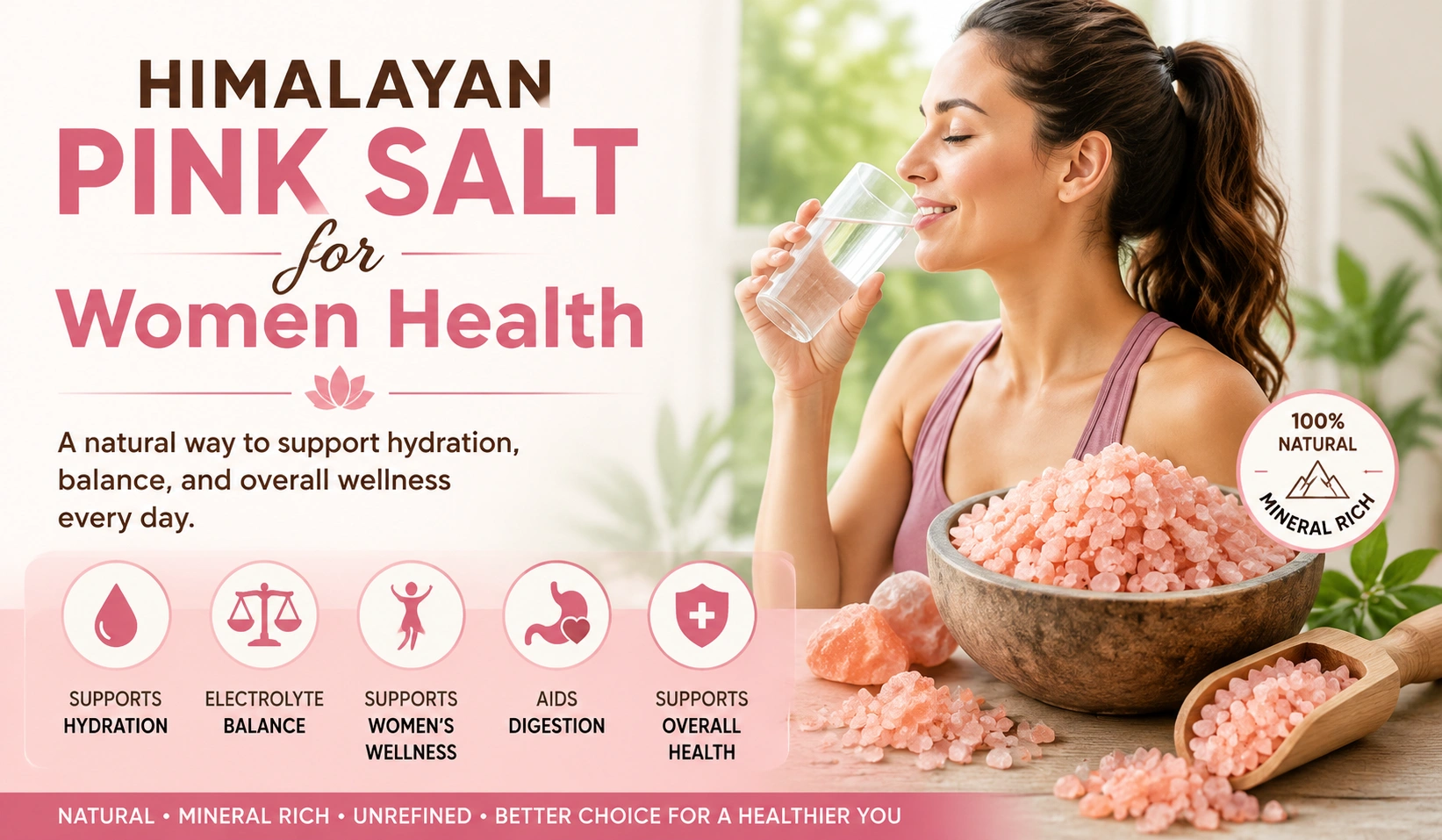

Many women today are taking a closer look at how daily habits influence their energy, digestion, and long-term wellness.
One ingredient that continually generates buzz in health and fitness circles is Himalayan pink salt.
Promoted as a mineral-dense alternative to standard table salt, many wonder about the real value of Himalayan pink salt for women’s health: Does it offer targeted functional benefits, or is it simply clever marketing?
Here is what science says about what pink salt can and cannot do for your body.
The Reality Check: While Himalayan pink salt is unrefined and contains micro-amounts of trace minerals, it is still ~98% sodium chloride. It effectively supports electrolyte balance and food flavor, but it is not a magic solution for weight loss, hormonal health, or detoxifying the body.
What Is Himalayan Pink Salt?
Himalayan pink salt is a naturally occurring salt extracted from underground salt deposits near the Himalayan mountain range.
Unlike highly processed table salt, which usually undergoes refining and may include additives, Himalayan pink salt typically receives minimal processing.
Its pink color comes from trace minerals naturally present in the salt. These minerals may include small amounts of:
- Iron
- Magnesium
- Potassium
- Calcium
- Zinc
The main nutritional component of Himalayan pink salt is still sodium chloride. Sodium is an essential mineral that the body requires for several important functions.
The body uses sodium to help maintain:
- Fluid balance
- Nerve communication
- Muscle contraction
- Normal blood pressure regulation
For women, maintaining proper electrolyte balance can be especially important during periods of increased fluid loss, physical activity, hot weather, or certain lifestyle changes.
Why Are Women Interested in Himalayan Pink Salt?
Interest in Himalayan pink salt has increased because many women are looking for simple, natural ways to support their health.
Modern lifestyles often include busy schedules, increased stress, irregular meals, and insufficient hydration. These factors can affect how women feel throughout the day.
Some common wellness concerns women experience include:
- Low energy
- Feeling dehydrated
- Muscle fatigue after exercise
- Digestive discomfort
- Increased stress levels
- Difficulty maintaining healthy habits
Many people believe Himalayan pink salt may help address some of these concerns because sodium plays an important role in hydration and electrolyte balance.
Himalayan pink salt may support normal body functions when consumed as part of a balanced diet, but it does not directly cause weight loss, detoxification, hormone correction, or disease prevention.
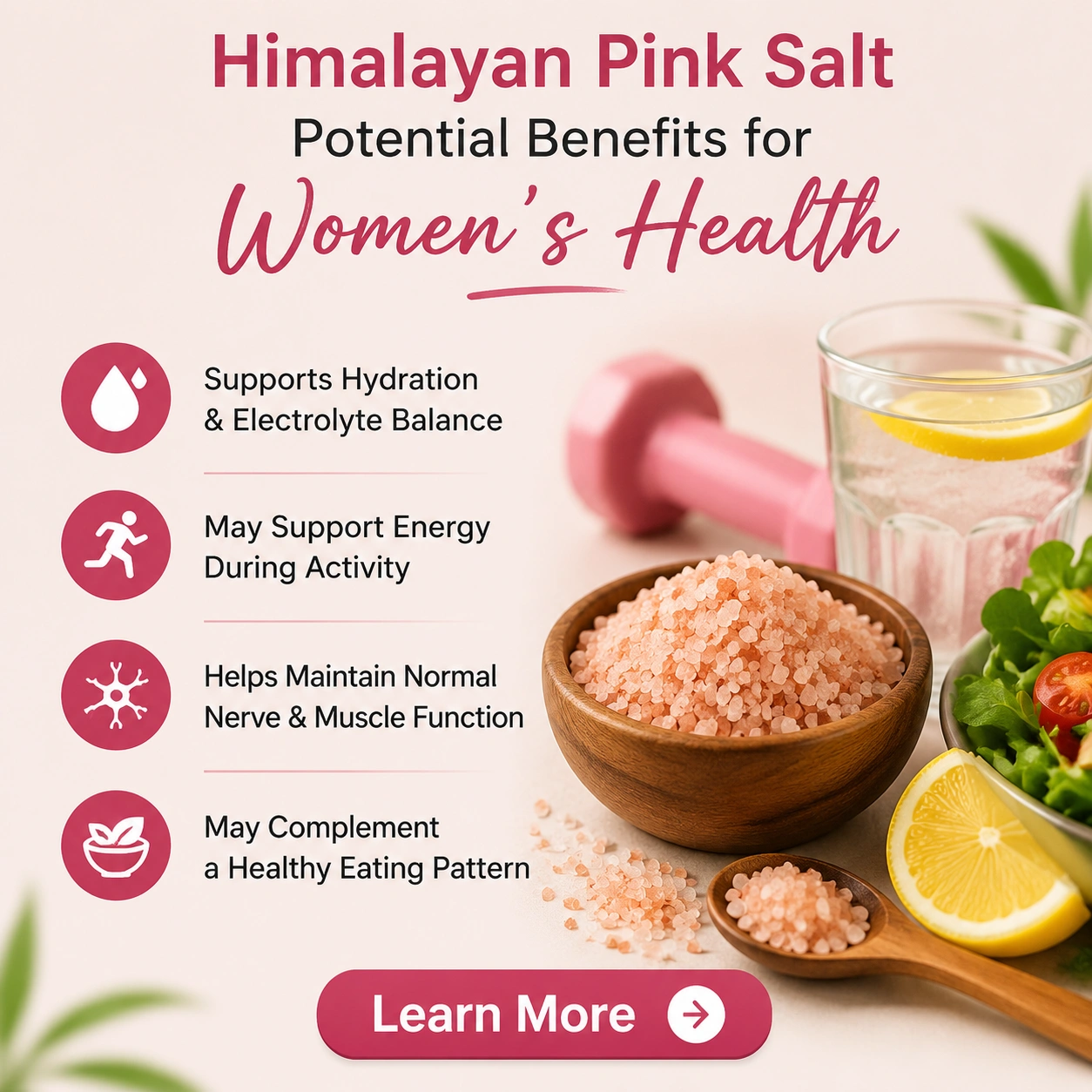
Potential Benefits of Himalayan Pink Salt for Women’s Health
★ Supports Hydration and Electrolyte Balance
One of the most discussed benefits of Himalayan pink salt is its potential role in hydration.
Water alone is essential, but the body also depends on electrolytes such as sodium and potassium to maintain proper fluid balance.
When women sweat during exercise, spend time in hot environments, or experience fluid loss, electrolytes can become important for maintaining normal hydration.
Sodium helps the body retain and distribute fluids effectively. This is why electrolyte beverages often contain sodium as one of their main ingredients.
Adding a small amount of Himalayan pink salt to meals or using it as part of a balanced hydration routine may help support normal electrolyte intake.
★ May Support Energy During Physical Activity
Many women include exercise as part of their wellness routine. Whether through walking, strength training, yoga, cycling, or other activities, physical movement increases the body’s need for proper hydration.
During prolonged exercise, sweating causes the loss of water and electrolytes.
Sodium helps maintain fluid balance and supports normal muscle function. Adequate electrolyte levels may help the body perform efficiently during physical activity.
Himalayan pink salt may be used as one source of sodium, but it should not replace a nutritious diet that includes:
- Protein-rich foods
- Fruits and vegetables
- Whole grains
- Healthy fats
- Adequate fluids
Energy levels depend on many factors, including sleep, nutrition, activity levels, and stress management.
★ Helps Maintain Normal Nerve and Muscle Function
Sodium plays an important role in communication between nerves and muscles.
The body relies on electrical signals to allow nerves to send messages and muscles to contract properly.
A balanced intake of sodium helps support:
- Normal nerve signaling
- Muscle movement
- Cellular function
For active women, maintaining appropriate electrolyte levels may be particularly important.
★ May Complement a Healthy Eating Pattern
Himalayan pink salt can be a useful ingredient for improving the flavor of healthy meals.
Many women trying to improve their nutrition focus on eating more:
- Vegetables
- Lean proteins
- Whole foods
- Fiber-rich meals
This can support long-term healthy eating habits because food satisfaction often plays an important role in maintaining consistency.
For example, adding a small amount of salt to roasted vegetables, homemade soups, or balanced meals may improve taste without relying on highly processed foods.
Himalayan Pink Salt and Weight Management
Himalayan pink salt does not burn fat or directly increase metabolism. There is no strong scientific evidence showing that pink salt alone causes weight loss.
Proper hydration and electrolyte balance may help support:
- Exercise performance
- Energy levels
- Consistent healthy habits
When women feel better physically, they may find it easier to maintain regular movement and nutritious eating patterns.
It is also important to understand that temporary changes in body weight can occur because sodium affects water balance. Eating more sodium may cause the body to temporarily hold more water.
Healthy weight management depends on sustainable habits, including:
- Balanced calorie intake
- Regular physical activity
- Quality sleep
- Stress management
- Consistent nutrition choices
Himalayan Pink Salt and Women’s Hormonal Health
Hormonal health is an important area of interest for many women, especially during different life stages.
Some people claim Himalayan pink salt can balance hormones, but scientific evidence does not support the idea that pink salt directly regulates hormone levels.
However, maintaining proper nutrition and hydration can support the body’s overall functions, including systems involved in hormone production and regulation.
Women can support overall hormonal wellness by focusing on:
- Eating nutrient-dense foods
- Managing stress
- Getting sufficient sleep
- Exercising regularly
- Maintaining a healthy body weight
Himalayan Pink Salt and Skin Health
Skin health is another reason many women are interested in Himalayan pink salt. Social media and wellness trends often highlight salt-based skincare practices, including salt scrubs, baths, and mineral treatments.
When used externally in skincare products, salt-based exfoliation may help remove dead skin cells and improve the feeling of smoother skin.
Healthy skin depends on several factors, including:
- Adequate hydration
- Balanced nutrition
- Sun protection
- Sleep quality
- Stress management
- Consistent skincare habits
The minerals found in Himalayan pink salt are present in very small amounts, so they are unlikely to create major changes in skin appearance through dietary intake alone.
Some women may enjoy using Himalayan salt-based scrubs or baths as part of a self-care routine. These practices may help create a relaxing experience and temporarily improve skin texture.
Himalayan Pink Salt and Digestive Wellness
Digestive health is another area where Himalayan pink salt receives attention.
Sodium plays a role in maintaining fluid balance throughout the body, including the digestive system. Proper hydration is important for normal digestion and regular bowel function.
Some wellness practices recommend drinking water mixed with Himalayan pink salt in the morning. Supporters claim this may improve digestion or “cleanse” the body.
The digestive system already has natural processes that remove waste and maintain balance. The body’s organs, including the liver and kidneys, continuously support natural detoxification.
For digestive wellness, women may benefit more from proven lifestyle habits such as:
- Eating enough dietary fiber
- Drinking sufficient water
- Including fruits and vegetables
- Staying physically active
- Maintaining regular meal patterns
Can Himalayan Pink Salt Help With Detox?
“Detox” is a common term used in many wellness discussions. Many products claim to remove toxins from the body, but the human body already has natural detoxification systems.
The liver, kidneys, digestive tract, and other organs work continuously to process and remove unwanted substances.
A healthier approach to supporting the body’s natural processes includes:
- Eating a nutrient-rich diet
- Drinking enough fluids
- Limiting excessive alcohol intake
- Getting regular movement
- Sleeping well
Women interested in improving wellness should focus on sustainable habits instead of relying on quick detox solutions.
How Women Can Use Himalayan Pink Salt Safely
Himalayan pink salt can be used in many everyday ways. The simplest approach is using it as a seasoning replacement for regular salt.
Common uses include:
- Adding a small amount to cooked vegetables
- Seasoning homemade meals
- Enhancing soups and salads
- Using it in balanced recipes
Although Himalayan pink salt is often marketed as healthier than regular salt, both contain sodium. The body responds to sodium intake regardless of the source.
A healthy eating pattern should focus on:
- Fresh foods
- Balanced portions
- Adequate protein
- Plenty of vegetables
- Whole-food ingredients
How Much Himalayan Pink Salt Should Women Consume?
The ideal amount of salt varies depending on individual health factors, activity level, climate, and dietary patterns.
Many health organizations recommend limiting sodium intake because excessive sodium consumption may increase health risks for some individuals.
Women who:
- Have high blood pressure
- Have kidney concerns
- Have heart-related conditions
- Follow sodium-restricted diets
should speak with a healthcare professional before increasing salt intake.
Reducing highly processed foods is often a more effective approach than simply switching from regular salt to Himalayan pink salt.
Himalayan Pink Salt vs. Standard Table Salt
| Feature | Himalayan Pink Salt | Standard Table Salt |
| Processing Level | Minimal (naturally mined & crushed) | High (refined and bleached) |
| Trace Minerals | Present in trace amounts (~2%) | Stripped during refinement |
| Iodine Content | Very low/negligible | Fortified with Iodine (supports thyroid health) |
| Sodium Content | ~2,200 mg per teaspoon | ~2,300 mg per teaspoon |
Who May Benefit From Using Himalayan Pink Salt?
Himalayan pink salt may be a suitable option for women who:
- Prefer minimally processed ingredients
- Enjoy natural food products
- Want a flavorful seasoning option
- Need sodium as part of an active lifestyle
It may be especially appealing for women who prepare most meals at home and want more control over ingredients.
Who Should Be Careful With Himalayan Pink Salt?
While salt is an essential nutrient, some women may need to monitor their sodium intake.
Women should use caution and discuss salt intake with a healthcare professional if they have:
- High blood pressure
- Kidney disease
- Heart conditions
- Fluid retention concerns
- Specific medical dietary restrictions
Pregnant women or individuals with health conditions should follow personalized medical advice regarding sodium intake.
Fact vs. Fiction: Popular Pink Salt Myths Debunked
| Common Myth | What the Science Says |
| “It burns belly fat.” | Myth. Pink salt has zero direct effect on calorie burning or fat breakdown. |
| “It balances women’s hormones.” | Myth. Salt does not regulate endocrine hormones. Hormonal health depends on sleep, diet, stress, and medical care. |
| “It satisfies daily mineral needs.” | Myth. Minerals make up only ~2% of the salt. You would need to consume dangerous levels of sodium to meet your daily mineral needs from salt alone. |
| “It detoxifies the entire body.” | Myth. Your liver and kidneys handle natural waste elimination continuously. Salt does not speed up this process. |
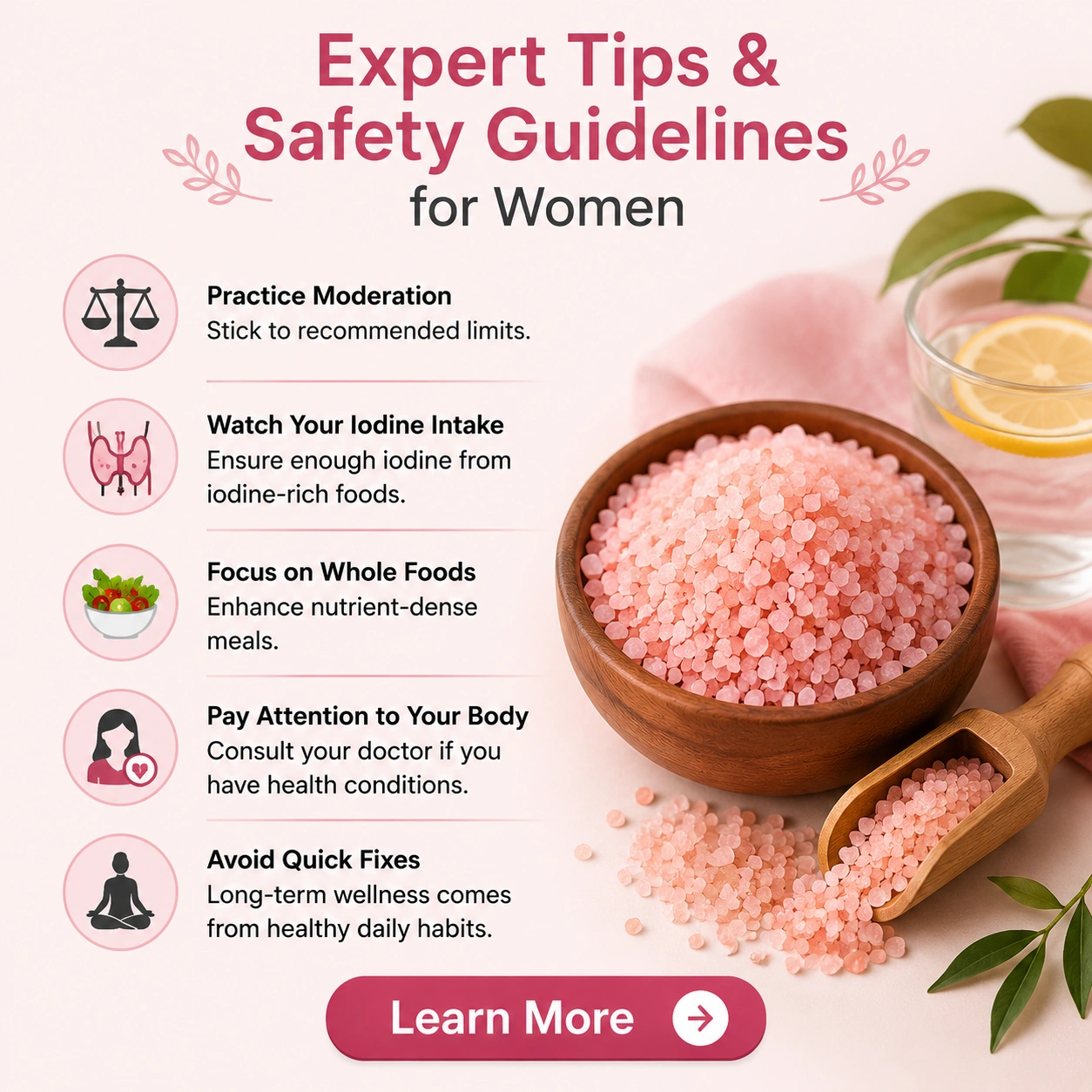
Expert Tips & Safety Guidelines for Women
👉Practice Moderation: Stick to recommended limits; most health organizations suggest capping total daily sodium intake at 2,300 mg per day (about 1 teaspoon of salt from all sources combined).
👉Watch Your Iodine Intake: Standard table salt is fortified with iodine, which is critical for thyroid health. Since pink salt lacks significant iodine, ensure you get enough from foods like eggs, dairy, seafood, or seaweed.
👉Focus on Whole Foods: Use pink salt to enhance the flavor of nutrient-dense meals like roasted vegetables, lean proteins, and fiber-rich whole grains.
👉Pay Attention to Your Body: If you experience swelling, fluid retention, or have conditions like High BP, heart issues, or are pregnant, consult your healthcare provider before drinking salt tonics or increasing sodium.
👉Avoid Quick Fixes: Long-term wellness comes from consistent habits, proper hydration, balanced nutrition, quality sleep, and regular activity, not a single “miracle” ingredient.
Frequently Asked Questions (FAQs)
Q1: Can drinking Himalayan salt water help women lose weight?
No. Drinking salt water does not burn body fat. Sustainable weight loss comes from consistent nutritional habits, active movement, and energy balance.
Q2: Is Himalayan pink salt better for high blood pressure than table salt?
Both salts contain roughly equivalent amounts of sodium per weight. If you are monitoring sodium for blood pressure management, you must limit overall salt intake regardless of the type used.
Q3: Does Himalayan pink salt contain iodine?
No, pink salt generally contains negligible amounts of iodine compared to iodized table salt.
Final Thoughts: Is It Worth It?
Himalayan pink salt is a great, minimally processed choice for enhancing the flavor of home-cooked meals.
However, it should be viewed as a quality culinary ingredient rather than a cure-all remedy.
For long-term vitality, focus on a foundational wellness strategy built on whole foods, regular activity, adequate sleep, and mindful living.
The best results come from maintaining a nutritious diet, staying active, managing stress, and getting enough quality sleep.
Himalayan pink salt can be enjoyed as part of a healthy routine when combined with habits that support long-term health and well-being.
.
