Sermorelin vs TRT: Key Differences, Benefits & Uses!
Sermorelin vs. TRT (⚖️ HORMONE SUPPORT GUIDE!) Understand the key differences, benefits, and uses of Sermorelin and TRT for hormone health and wellness.
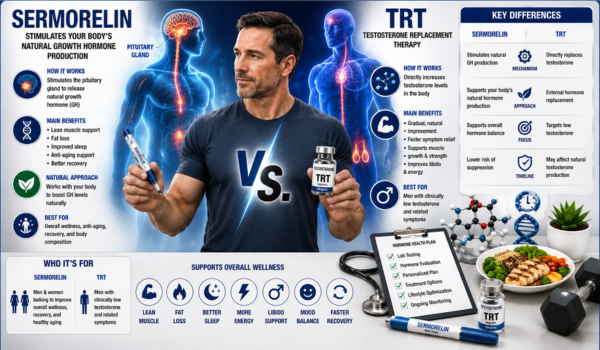

Hormone health plays an important role in energy levels, muscle maintenance, recovery, mood balance, and overall wellness.
As people age, natural hormone production may change, leading many individuals to explore different medical options for improving how they feel and function.
Two commonly discussed therapies are Sermorelin and Testosterone Replacement Therapy (TRT).
While both treatments are associated with hormone optimization, they work in very different ways. Sermorelin focuses on supporting the body’s natural growth hormone production, whereas TRT is designed to restore testosterone levels when they are lower than expected.
Understanding the differences between Sermorelin and TRT can help individuals have more informed conversations with healthcare professionals and determine which approach may better align with their health goals.
What Is Sermorelin?
Sermorelin is a peptide therapy that works by encouraging the body’s natural production and release of growth hormone.
It belongs to a class of compounds known as growth hormone-releasing hormone (GHRH) analogs.
Instead of directly providing growth hormone, Sermorelin signals the pituitary gland to produce and release more of the growth hormone that the body naturally makes. This approach focuses on supporting the body’s own hormone pathways.
Growth hormone is involved in several important processes, including:
- Supporting muscle growth and maintenance
- Helping with tissue repair and recovery
- Supporting healthy metabolism
- Contributing to sleep quality
- Maintaining overall body composition
Because Sermorelin works with the body’s existing systems, many people consider it an option for supporting natural hormone balance.
What Is TRT?
Testosterone Replacement Therapy, commonly known as TRT, is a treatment designed to increase testosterone levels in individuals who have low testosterone.
Testosterone is a major hormone involved in:
- Muscle strength and development
- Energy levels
- Sexual health
- Mood regulation
- Bone health
- Red blood cell production
When testosterone levels decline, some individuals may experience symptoms such as reduced energy, lower motivation, changes in body composition, and decreased overall well-being.
TRT works by providing testosterone through different delivery methods, allowing hormone levels to be restored under medical supervision.
Common TRT methods may include:
- Injections
- Topical gels
- Creams
- Other prescribed testosterone options
The goal of TRT is to bring testosterone levels into an appropriate range and help improve symptoms related to testosterone deficiency.
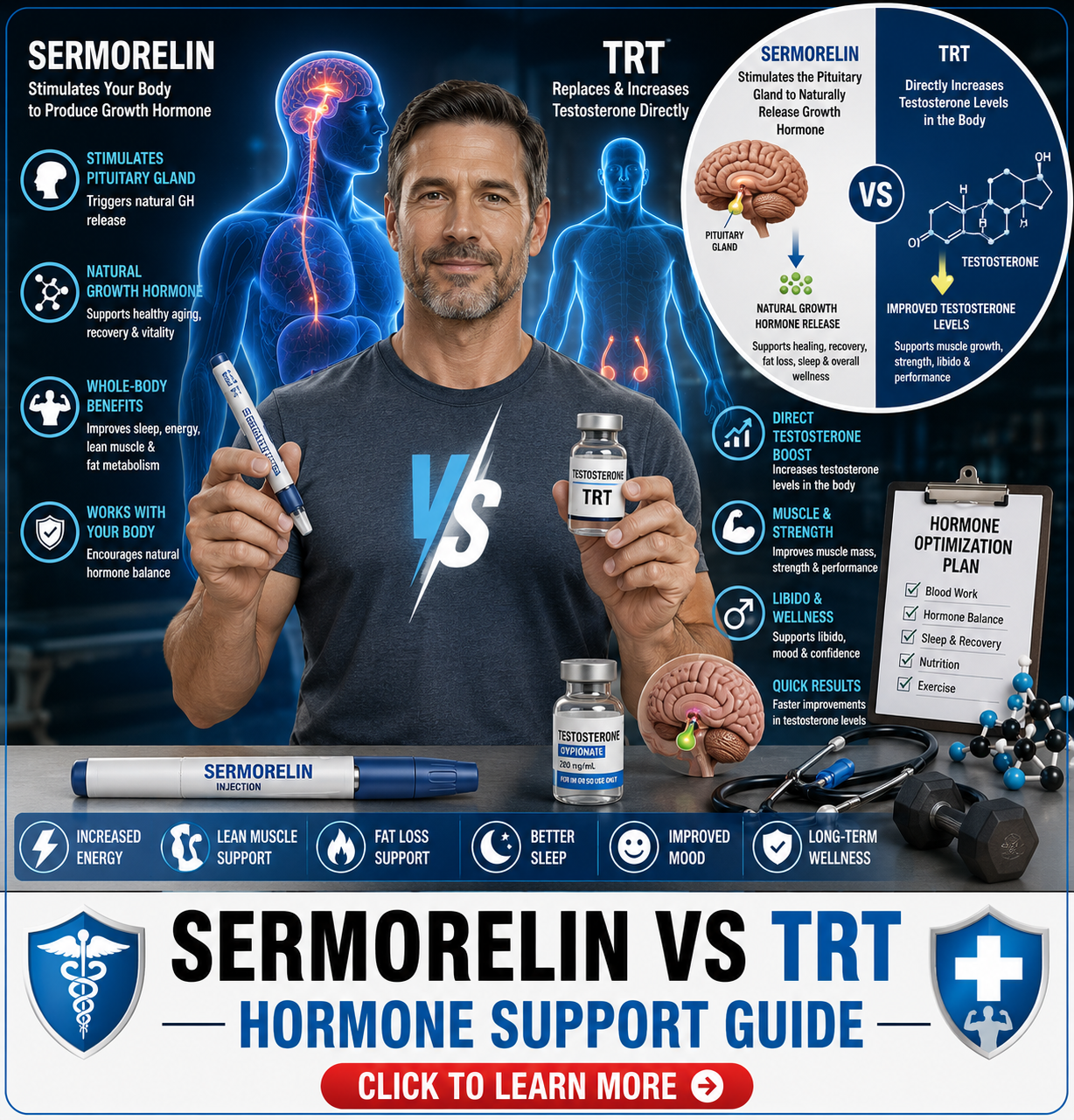
Sermorelin vs TRT: How They Work Differently
The biggest difference between Sermorelin and TRT is their mechanism of action. Sermorelin stimulates the body to increase its own growth hormone production.
It works indirectly by encouraging the pituitary gland to release growth hormone naturally. TRT works differently because it introduces testosterone into the body to increase testosterone levels directly.
A simple comparison:
Sermorelin
- Supports natural growth hormone release
- Targets growth hormone pathways
- Works with the body’s natural production system
- Often discussed for recovery, aging support, and wellness goals
TRT
- Replaces testosterone directly
- Targets testosterone deficiency
- Focuses on restoring testosterone levels
- Often used for individuals diagnosed with low testosterone
Both therapies influence hormone health, but they address different hormonal systems.
Sermorelin Benefits
Sermorelin is often considered by individuals interested in supporting natural growth hormone activity and healthy aging.
Potential benefits associated with Sermorelin may include:
- Supports Natural Growth Hormone Release: Sermorelin helps stimulate the body’s own production of growth hormone by encouraging the pituitary gland to release it naturally.
- Promotes Healthy Muscle Support: By supporting growth hormone activity, Sermorelin may help maintain muscle strength, recovery, and healthy body composition.
- Aids Recovery and Repair: Growth hormone plays a role in tissue repair, making Sermorelin a potential option for individuals focused on recovery and physical wellness.
- Supports Better Sleep Quality: Sermorelin may complement healthy sleep patterns by supporting natural growth hormone release, which typically occurs during deep sleep.
- Helps Support Healthy Aging: Many individuals explore Sermorelin as part of a wellness routine focused on maintaining vitality, energy, and age-related hormone balance.
- Supports Metabolic Health: Sermorelin may help support healthy metabolism and body composition when combined with proper nutrition and regular exercise.
- Encourages Overall Wellness: By supporting natural hormone pathways, Sermorelin may contribute to improved recovery, wellness routines, and quality of life.
TRT Benefits
TRT is primarily focused on improving symptoms associated with low testosterone levels.
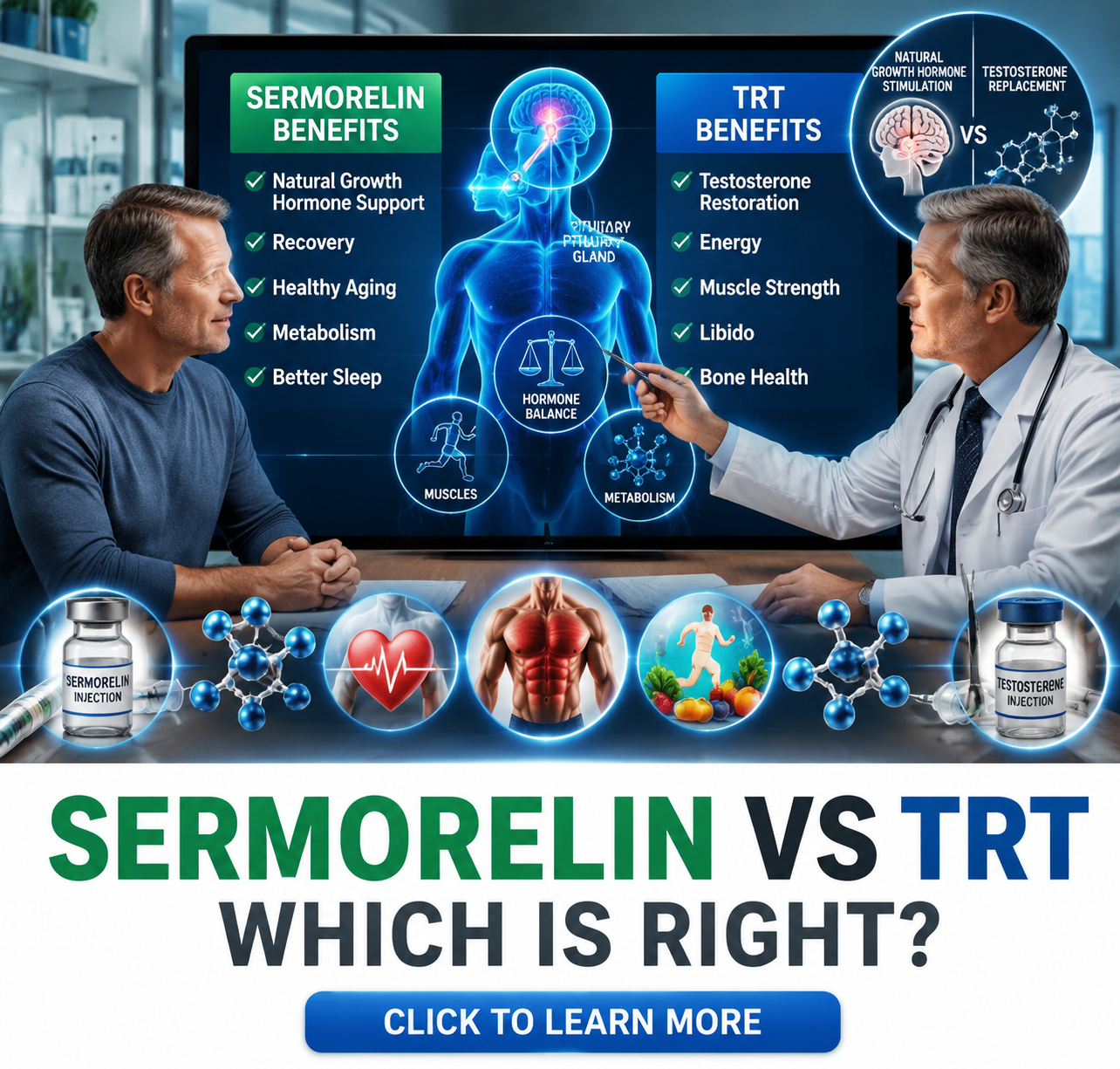
Muscle growth is one of the most common reasons people research hormone therapies.
Sermorelin and TRT may both be connected with muscle support, but they work through different pathways.
Sermorelin supports growth hormone activity, which is involved in:
- Muscle repair
- Recovery processes
- Body composition regulation
TRT directly affects testosterone levels, which are strongly linked to:
- Muscle protein production
- Strength development
- Lean muscle maintenance
For individuals with low testosterone, TRT may be more directly related to testosterone-driven muscle benefits. For those interested in supporting growth hormone pathways, Sermorelin may be a different approach.
The best option depends on individual hormone levels, medical history, and personal goals.
Sermorelin vs TRT for Weight Management
Hormones can influence metabolism and body composition.
Sermorelin may support healthy body composition by promoting growth hormone activity, which plays a role in fat metabolism and muscle maintenance.
TRT may support weight management indirectly by improving testosterone levels, which can influence muscle mass, energy, and physical performance.
However, neither therapy should be viewed as a standalone weight-loss solution. Healthy eating habits, exercise, sleep, and medical guidance remain important parts of achieving long-term wellness goals.
Sermorelin vs TRT for Energy Levels
Low energy can be connected to multiple factors, including lifestyle, stress, sleep, and hormone changes.
TRT may improve energy in individuals whose fatigue is related to clinically low testosterone.
Sermorelin may support energy indirectly through growth hormone pathways, recovery, and improved wellness routines.
Because fatigue has many possible causes, identifying the underlying reason is an important step before considering hormone therapy.
Sermorelin vs TRT Side Effects
Like any medical treatment, both Sermorelin and TRT may have potential considerations.
Possible Sermorelin Considerations
Some individuals may experience:
- Injection site discomfort
- Temporary redness or irritation
- Headache
- Changes in fluid balance
Healthcare providers evaluate individual factors before recommending treatment.
Possible TRT Considerations
Potential TRT-related considerations may include:
- Changes in hormone balance
- Acne or skin changes
- Fluid retention
- Changes in red blood cell levels
- Monitoring requirements
Regular medical monitoring helps ensure treatment remains appropriate and safe.
Who May Consider Sermorelin?
Sermorelin may be considered by individuals interested in supporting growth hormone activity and overall wellness.
People often explore Sermorelin for goals such as:
- Supporting healthy aging
- Improving recovery
- Maintaining body composition
- Supporting energy and wellness routines
A healthcare provider can determine whether Sermorelin aligns with a person’s health needs.
Who May Consider TRT?
TRT is generally considered for individuals who have confirmed low testosterone levels along with related symptoms.
People exploring TRT may experience concerns such as:
- Persistent low energy
- Reduced muscle strength
- Lower libido
- Mood changes
- Other symptoms associated with testosterone deficiency
A proper evaluation is important before beginning testosterone therapy.
Sermorelin vs TRT: Which One Is Better?
There is no universal answer when comparing Sermorelin and TRT because they address different hormone systems.
Sermorelin may be better suited for individuals interested in supporting natural growth hormone production.
TRT may be more appropriate for individuals who need testosterone replacement due to low testosterone levels.
The better choice depends on:
- Hormone test results
- Age
- Symptoms
- Medical history
- Personal wellness goals
A healthcare provider can help determine the most suitable approach based on individual needs.
Can Sermorelin and TRT Be Used Together?
When comparing Sermorelin vs TRT, it is important to focus on individual health needs rather than choosing based only on popularity.
A thoughtful approach includes:
Comprehensive Hormone Testing
- Understanding hormone levels provides important information about whether a person may benefit from specific therapy.
Professional Medical Guidance
- A qualified healthcare provider can review symptoms, goals, and medical history before recommending treatment.
Lifestyle Support
Hormone health works best when combined with:
- Balanced nutrition
- Regular exercise
- Quality sleep
- Stress management
These habits support overall wellness and can complement medical treatments.
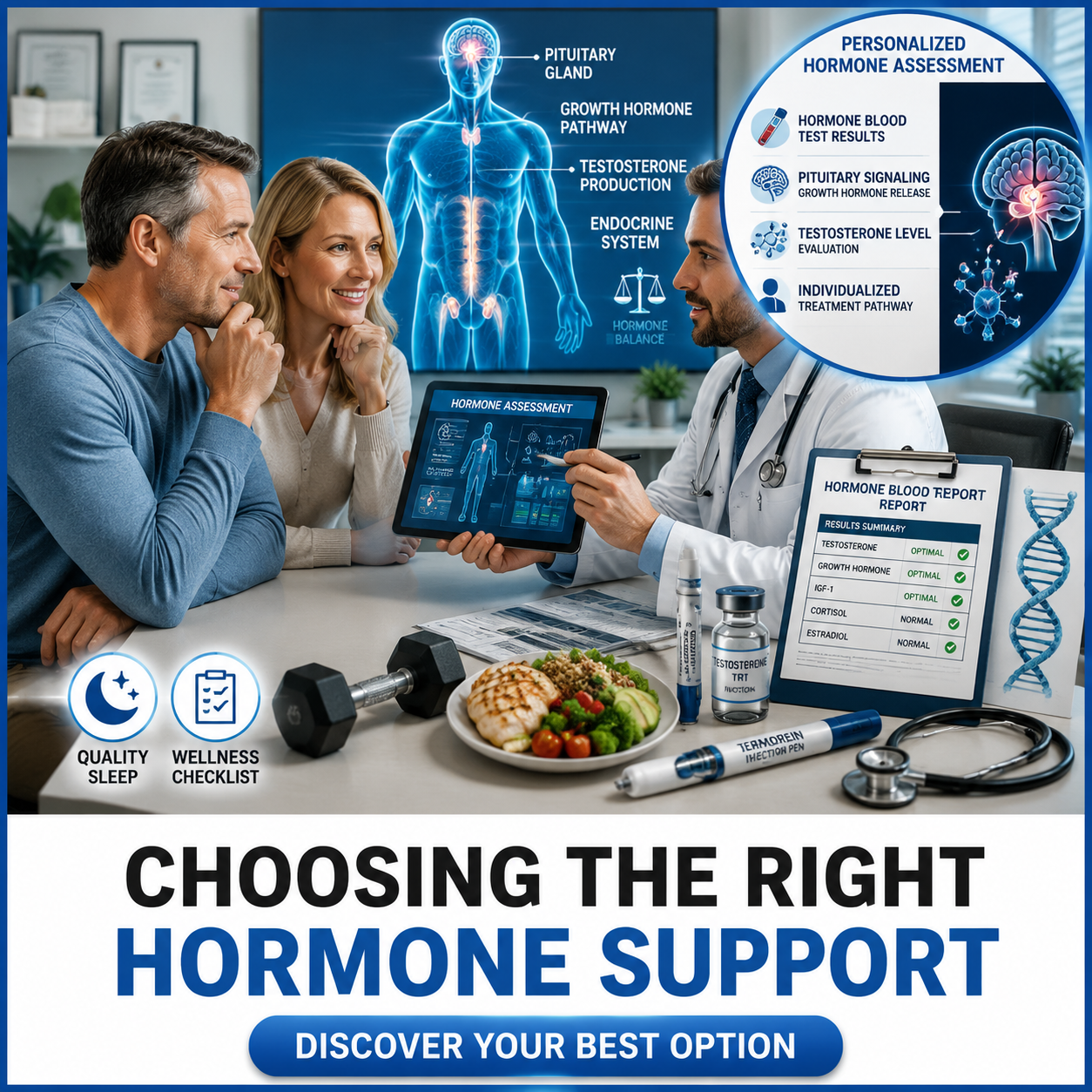
Final Thoughts
Sermorelin and TRT are both hormone-related therapies, but they serve different purposes. Sermorelin focuses on encouraging natural growth hormone release, while TRT focuses on restoring testosterone levels.
Choosing between Sermorelin vs TRT depends on personal health goals, hormone levels, symptoms, and professional medical recommendations.
For individuals interested in growth hormone support and healthy aging, Sermorelin may provide a pathway focused on natural hormone stimulation.
For those experiencing low testosterone, TRT may help restore important testosterone functions.
Understanding how each therapy works allows individuals to make more informed decisions and discuss the best options with a healthcare professional.
Hormone optimization should always be personalized, carefully monitored, and aligned with long-term wellness goals.
.
.
.
