Best Vitamins to Take While on GLP-1: Complete Guide
GLP-1 medications have transformed weight management by helping people control appetite, feel satisfied with smaller meals, and achieve meaningful weight loss.
Popular medications such as Ozempic, Wegovy, Mounjaro, and Zepbound have become important treatment options for people managing obesity, type 2 diabetes, and related metabolic conditions.
While these medications can be effective, eating significantly less food can make it more challenging to obtain all the vitamins and minerals your body needs. This is why understanding the best vitamins to take while on GLP-1 is an important part of maintaining good nutrition throughout treatment.
Essential nutrients such as vitamin B12, vitamin D, vitamin C, and several B vitamins contribute to energy metabolism, immune function, nerve health, and overall well-being. Minerals like magnesium, calcium, and iron also deserve attention.
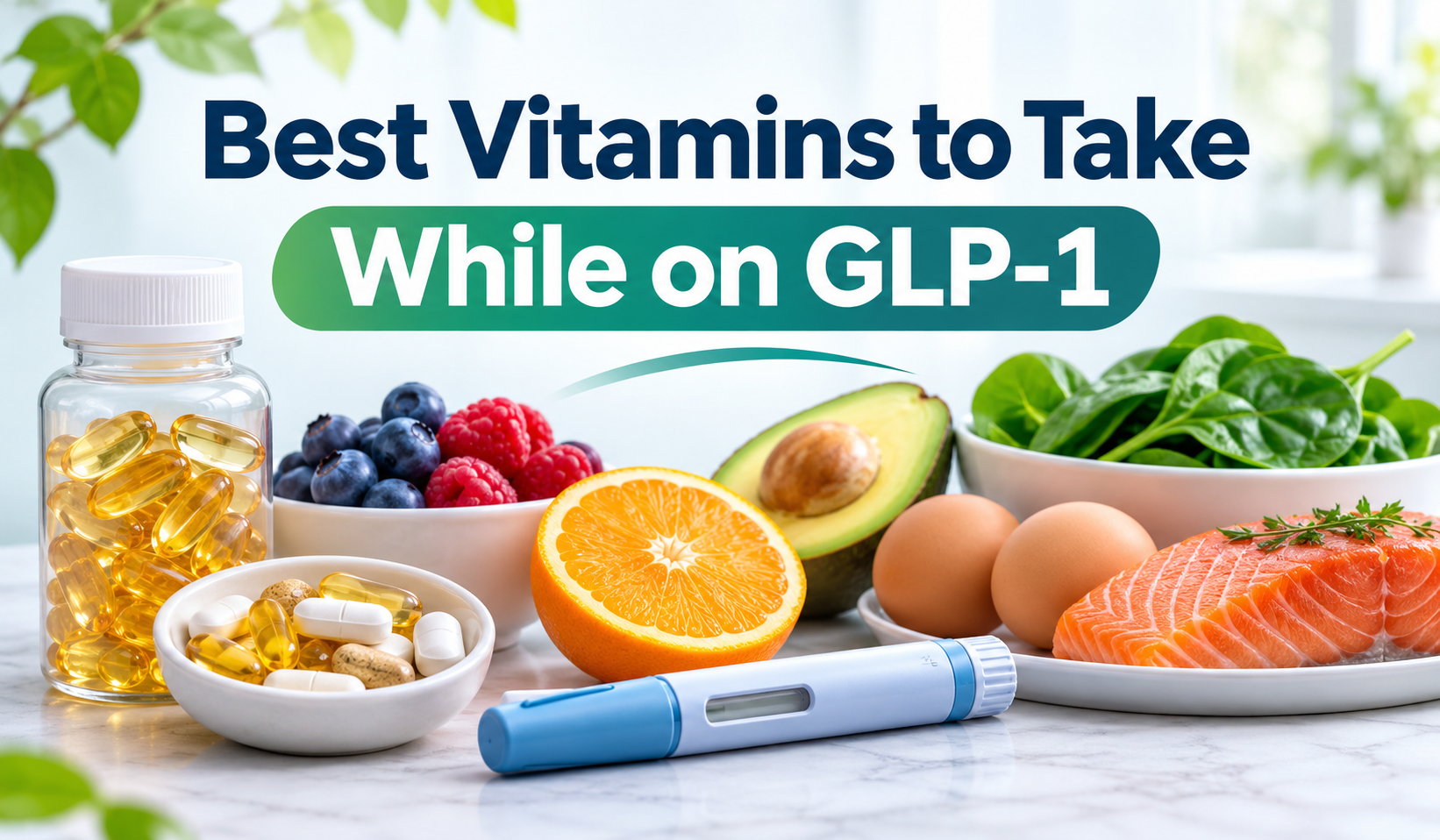
The good news is that a balanced diet, thoughtful meal planning, and appropriate nutritional supplements can help you meet your daily requirements.
In this comprehensive guide, we’ll explore which vitamins matter most during GLP-1 treatment, their potential benefits, the best dietary sources, and how to choose supplements that support your nutritional needs.
Why Are Vitamins Important While Taking GLP-1 Medications?
GLP-1 medications work partly by influencing appetite regulation, increasing feelings of fullness, and slowing gastric emptying. These effects can help reduce calorie consumption and support weight management.
As appetite decreases, people may naturally begin eating smaller portions or skipping meals. While this contributes to weight loss, it can also reduce the amount of essential nutrients consumed throughout the day.
For example, someone who previously ate three balanced meals may struggle to finish two smaller meals after starting treatment. Over time, a consistently restricted diet could increase the risk of inadequate vitamin and mineral intake.
Vitamins and minerals support several important functions, including:
-
Energy metabolism: B vitamins help the body convert food into usable energy.
-
Muscle function: Vitamin D, calcium, and magnesium contribute to normal muscle performance.
-
Immune health: Vitamins A, C, and D support normal immune function.
-
Bone strength: Vitamin D and calcium help maintain healthy bones.
-
Nervous system health: Vitamin B12 contributes to normal nerve function.
-
Red blood cell production: Vitamin B12, folate, and iron are essential for healthy blood cell formation.
A 2025 joint clinical advisory from major nutrition and obesity organizations recommends monitoring nutritional adequacy during GLP-1 therapy and considering supplements such as vitamin D, vitamin B12, and calcium when appropriate.
Importantly, GLP-1 medications do not automatically cause vitamin deficiencies. The primary concern is whether reduced food intake prevents someone from meeting their nutritional requirements.
 GLP-1 Starting at $59 Per Month – 100% Online
10 Best Vitamins and Nutrients to Take While on GLP-1
The following vitamins and minerals deserve particular attention during GLP-1 treatment. Their importance depends on your dietary habits, medical history, and individual nutritional needs.
1. Vitamin B12 – Best for Energy Metabolism and Nerve Health
Vitamin B12 is one of the most important nutrients to consider when taking GLP-1 medications, particularly for individuals who consume fewer animal-based foods.
This essential vitamin helps maintain healthy red blood cells, supports nerve function, and contributes to normal energy metabolism.
A vitamin B12 deficiency can cause tiredness, weakness, numbness, tingling, and difficulty concentrating.
Since GLP-1 treatment may reduce food intake, people who regularly skip meat, fish, eggs, or dairy products may have difficulty obtaining enough vitamin B12.
Potential benefits:
-
Supports healthy red blood cell formation.
-
Contributes to normal nerve function.
-
Helps maintain energy metabolism.
-
Supports healthy brain and neurological function.
Best food sources: Salmon, eggs, lean meat, milk, yogurt, and fortified cereals.
Recommended daily intake: 2.4 mcg for most adults.
Vitamin B12 supplementation may be especially helpful for vegans, older adults, people with diagnosed deficiencies, and individuals taking metformin, which can lower B12 levels over time.
2. Vitamin D – Best for Bone Strength and Muscle Function
Vitamin D plays a central role in maintaining strong bones, supporting muscle function, and helping the body absorb calcium.
It is particularly important during substantial weight loss because maintaining muscle strength and bone health should remain a priority.
People who get little sunlight, consume few vitamin D-rich foods, or have an existing deficiency may benefit from supplementation.
Potential benefits:
-
Helps maintain healthy bones and teeth.
-
Supports normal muscle function.
-
Contributes to immune system regulation.
-
Improves the body’s ability to absorb calcium.
Best food sources: Fatty fish, fortified dairy products, egg yolks, and fortified plant-based milk.
Recommended daily intake: 600 IU (15 mcg) for most adults ages 19–70 and 800 IU (20 mcg) for adults over 70.
Vitamin D3 is a commonly used supplement form. A healthcare professional can recommend an appropriate amount based on your health and vitamin D status.
Taking vitamin D with a meal containing some dietary fat may improve absorption.
3. Vitamin B6 – Best for Metabolism and Nervous System Support
Vitamin B6 contributes to protein metabolism, neurotransmitter production, and normal nervous system function.
During GLP-1 treatment, maintaining adequate vitamin B6 intake helps support the body’s everyday metabolic processes.
Vitamin B6 is found in numerous foods, making it possible for many individuals to obtain sufficient amounts through a balanced diet.
Potential benefits:
-
Supports normal protein metabolism.
-
Contributes to healthy nervous system function.
-
Helps with red blood cell production.
-
Supports normal immune function.
Best food sources: Chicken, tuna, chickpeas, potatoes, bananas, and fortified grains.
Recommended daily intake: Approximately 1.3 mg for adults ages 19–50, with requirements varying by age and sex thereafter.
High-dose vitamin B6 supplements can cause nerve damage when taken excessively, so routine megadoses are unnecessary.
4. Vitamin C – Best for Immune Health and Collagen Production
Vitamin C is an essential antioxidant that supports immune function, collagen formation, and healthy connective tissues.
It also improves the absorption of non-heme iron, the type found in plant foods.
People who eat fewer fruits and vegetables while taking GLP-1 medications may benefit from paying closer attention to their vitamin C intake.
Potential benefits:
-
Supports normal immune function.
-
Contributes to collagen production.
-
Helps protect cells from oxidative stress.
-
Improves iron absorption from plant-based foods.
Best food sources: Oranges, strawberries, kiwi, bell peppers, broccoli, and tomatoes.
Recommended daily intake: 75 mg for most adult women and 90 mg for most adult men. Smokers require an additional 35 mg daily.
Vitamin C is generally best obtained from fruits and vegetables, which also provide fiber and water.
5. Folate (Vitamin B9) – Best for Cell Growth and Blood Health
Folate is a B vitamin involved in DNA synthesis, cell division, and healthy red blood cell development.
It is especially important for people who are pregnant or could become pregnant, although GLP-1 medications used for weight management generally should not be taken during pregnancy.
Adequate folate intake also supports normal metabolic processes during periods of dietary change.
Potential benefits:
-
Supports normal cell division.
-
Contributes to healthy red blood cell production.
-
Helps maintain normal DNA synthesis.
-
Supports healthy tissue development.
Best food sources: Spinach, asparagus, lentils, beans, avocado, and fortified grains.
Recommended daily intake: 400 mcg dietary folate equivalents (DFE) for most adults.
People planning pregnancy should discuss both folic acid requirements and the appropriate timing for stopping GLP-1 treatment with their healthcare provider.
6. Vitamin A – Best for Vision and Immune Function
Vitamin A supports normal vision, healthy skin, immune function, and cellular development.
It is found in animal foods as preformed vitamin A and in colorful vegetables as provitamin A carotenoids.
Individuals consuming a wide variety of vegetables can often meet their needs without additional supplementation.
Potential benefits:
-
Supports healthy vision.
-
Contributes to immune system function.
-
Helps maintain healthy skin and tissues.
-
Supports normal growth and development.
Best food sources: Sweet potatoes, carrots, spinach, pumpkin, eggs, and dairy products.
Recommended daily intake: 700 mcg RAE for most adult women and 900 mcg RAE for most adult men.
Excessive intake of preformed vitamin A from supplements can be harmful. Pregnant individuals should be particularly careful about high-dose vitamin A products.
7. Vitamin E – Best for Antioxidant Protection
Vitamin E is a fat-soluble antioxidant that helps protect cells from oxidative damage.
It also supports immune function and contributes to the normal functioning of cell membranes.
People following very low-fat diets may consume fewer vitamin E-rich foods, particularly nuts, seeds, and vegetable oils.
Potential benefits:
-
Helps protect cells from oxidative stress.
-
Supports normal immune function.
-
Contributes to cellular health.
-
Helps maintain normal tissue function.
Best food sources: Almonds, sunflower seeds, sunflower oil, avocado, and spinach.
Recommended daily intake: 15 mg for most adults.
Food sources are generally preferable to high-dose vitamin E supplements, which can increase bleeding risk and interact with certain medications.
8. Magnesium – Best for Muscle and Nerve Function
Magnesium is not a vitamin, but it is an important mineral to consider during GLP-1 treatment.
It participates in hundreds of biochemical reactions, including those involved in muscle contraction, nerve signaling, glucose metabolism, and energy production.
People who consume fewer whole grains, nuts, legumes, and leafy vegetables may struggle to obtain adequate magnesium.
Potential benefits:
-
Supports normal muscle function.
-
Contributes to nerve signaling.
-
Helps maintain healthy bones.
-
Participates in energy production.
Best food sources: Pumpkin seeds, almonds, spinach, black beans, and whole grains.
Recommended daily intake: 310–320 mg for most adult women and 400–420 mg for most adult men.
Some magnesium supplements cause diarrhea, which may worsen gastrointestinal discomfort during GLP-1 treatment. People with kidney disease should seek medical advice before supplementing.
9. Calcium – Best for Bone Health During Weight Loss
Calcium is essential for maintaining bone density, supporting muscle contractions, and enabling normal nerve signaling.
During significant weight loss, protecting bone health becomes particularly important.
GLP-1 users who consume little milk, yogurt, cheese, or calcium-fortified alternatives may need to assess their calcium intake.
Potential benefits:
-
Maintains strong bones and teeth.
-
Supports healthy muscle contractions.
-
Contributes to normal nerve communication.
-
Works with vitamin D to maintain skeletal health.
Best food sources: Yogurt, milk, fortified soy milk, calcium-set tofu, and certain leafy greens.
Recommended daily intake: Generally 1,000–1,200 mg for adults, depending on age and sex.
Calcium supplements are best used to close a dietary gap rather than automatically added to every routine.
10. Iron – Best for Oxygen Transport and Red Blood Cell Health
Iron is essential for hemoglobin production, allowing red blood cells to carry oxygen throughout the body.
Insufficient iron intake can lead to iron deficiency, which may cause fatigue, weakness, and reduced exercise tolerance.
Individuals who consume fewer iron-rich foods, menstruate heavily, or have certain gastrointestinal conditions may face a greater risk of low iron levels.
Potential benefits:
-
Supports normal oxygen transport.
-
Contributes to healthy red blood cell production.
-
Helps prevent iron-deficiency anemia.
-
Supports normal physical performance.
Best food sources: Lean beef, lentils, beans, spinach, seafood, and fortified cereals.
Recommended daily intake: 18 mg for most women ages 19–50 and 8 mg for most adult men and women over 50.
Iron supplements should generally be taken when a deficiency or specific need has been identified. Excess iron can be harmful, and supplementation may aggravate constipation or nausea.
GLP-1 Starting at $59 Per Month – 100% Online
Should You Take a Multivitamin While on GLP-1?
A daily multivitamin can be a convenient option for people whose reduced appetite makes eating a nutritionally balanced diet difficult.
Multivitamins typically contain combinations of vitamins A, C, D, E, and B-complex vitamins, along with essential minerals.
They may be particularly useful for individuals who frequently skip meals, follow restrictive diets, or have difficulty consuming enough nutrient-dense foods.
Clinical guidance suggests considering a multivitamin-mineral supplement for people consuming fewer than 1,200 calories daily, excluding major food groups, or experiencing nutritional inadequacy during weight-loss treatment.
When selecting a multivitamin, consider products that provide approximately 100% of the daily value for most nutrients rather than unnecessarily high doses.
Choose a supplement that matches your age, sex, dietary needs, and medical history. Third-party testing from organizations such as USP or NSF can provide additional quality assurance.
Remember that a multivitamin cannot replace the protein, fiber, healthy fats, and other nutritional benefits of balanced meals.
Best Vitamins for Common Concerns During GLP-1 Treatment
Different nutrients serve different purposes, so identifying your specific nutritional needs can make supplementation more effective.
| Concern | Nutrients to consider | Primary role |
|---|---|---|
| Low energy or fatigue | Vitamin B12, folate, iron | Supports blood health and energy metabolism |
| Bone health | Vitamin D, calcium | Supports bone strength |
| Muscle function | Vitamin D, magnesium | Supports normal muscle activity |
| Immune health | Vitamins C, D, A | Supports normal immune defenses |
| Hair thinning | Iron, vitamin D, zinc | Correcting deficiencies may support healthy hair growth |
| Low dietary variety | Standard multivitamin | Helps fill nutritional gaps |
| Nerve health | Vitamins B12 and B6 | Supports normal nervous system function |
These nutrients do not necessarily treat the symptoms listed. Fatigue, hair loss, and other concerns may have causes unrelated to vitamin deficiencies and deserve proper evaluation.
GLP-1 Starting at $59 Per Month – 100% Online
What Vitamins Should You Avoid Taking With GLP-1?
Most standard-dose vitamins do not have a known direct interaction with commonly prescribed GLP-1 medications. Still, certain supplements require additional caution.
High-dose vitamin B6: Excessive long-term intake can cause peripheral neuropathy, resulting in numbness or tingling.
High-dose vitamin A: Too much preformed vitamin A may cause toxicity, including liver damage.
Excessive iron: Iron supplements can worsen constipation, nausea, and abdominal discomfort.
High-dose magnesium: Some magnesium formulations can cause loose stools or diarrhea.
High-dose vitamin E: Large supplemental doses may increase bleeding risk, especially for individuals taking anticoagulant medications.
Avoid combining several supplements with overlapping ingredients without checking the total amounts. A healthcare professional or pharmacist can review your medications and supplement labels for potential interactions.
Best Time to Take Vitamins While on GLP-1
The ideal time to take vitamins depends on the nutrient, supplement formulation, and how well your stomach tolerates it.
Fat-soluble vitamins, including A, D, E, and K, are generally better absorbed when taken with food containing some healthy fat.
Water-soluble vitamins, including vitamin C and most B vitamins, can usually be taken with or without food. Taking them with breakfast may help reduce stomach discomfort.
Iron absorption may be improved when taken with vitamin C, but iron supplements can cause nausea on an empty stomach.
Calcium carbonate is generally best absorbed with food, while calcium citrate can be taken with or without meals.
For individuals experiencing nausea, dividing supplements across meals may be more comfortable than taking multiple tablets together.
If you use oral semaglutide, such as Rybelsus, follow its specific administration instructions. It must be taken on an empty stomach with plain water, followed by at least 30 minutes before eating, drinking, or taking other oral medications, including vitamins.
GLP-1 Starting at $59 Per Month – 100% Online
How to Prevent Nutrient Deficiencies While Taking GLP-1
Taking supplements is only one part of supporting good nutrition during GLP-1 therapy.
The most effective approach combines balanced meals, appropriate supplementation, and regular monitoring.
Prioritize Nutrient-Dense Foods
When your appetite is smaller, every meal becomes an opportunity to obtain valuable nutrients.
Focus on foods that provide a combination of protein, vitamins, minerals, fiber, and healthy fats.
For example, a small meal containing salmon, vegetables, and quinoa offers protein, B vitamins, magnesium, and several other essential nutrients.
Include Protein at Every Meal
Protein is especially important during weight loss because it helps maintain muscle mass.
Good sources include eggs, Greek yogurt, chicken, fish, tofu, beans, and cottage cheese.
The amount needed varies according to body weight, age, activity level, and medical conditions.
Eat Smaller, Balanced Meals
Large meals can feel uncomfortable when gastric emptying is delayed.
Smaller meals throughout the day may make it easier to maintain adequate nutrition without feeling overly full.
Stay Hydrated
Adequate hydration supports digestion, circulation, and normal physical function.
Drinking water regularly is particularly important when nausea, vomiting, diarrhea, or constipation occurs.
Monitor Nutritional Health
Ask your healthcare provider whether blood tests for vitamin B12, vitamin D, iron status, or other nutrients are appropriate.
Testing is particularly useful if you develop persistent fatigue, muscle weakness, numbness, anemia, or unexpected hair shedding.
Can Vitamins Help With GLP-1 Side Effects?
Certain nutritional strategies can help address concerns that sometimes arise during GLP-1 treatment, particularly when inadequate food intake contributes to symptoms.
For example, correcting vitamin B12 or iron deficiency may improve fatigue caused by those deficiencies. Adequate magnesium, calcium, and vitamin D support normal muscle function, while sufficient protein is essential for maintaining muscle mass.
Nonetheless, vitamins are not established treatments for GLP-1-related nausea, vomiting, or constipation.
Persistent gastrointestinal symptoms may require dietary adjustments, hydration, medication review, or changes to the treatment plan under medical supervision.
The 2025 multidisciplinary clinical advisory emphasizes individualized nutritional assessment, adequate protein intake, resistance exercise, and monitoring for nutrient deficiencies throughout treatment.
Final Verdict:
The best vitamins to take while on GLP-1 are those that address your individual nutritional needs rather than a fixed combination that everyone must use.
Vitamin B12 and vitamin D are particularly important to assess in individuals at risk of deficiency. Vitamin C, B6, folate, A, and E also contribute to essential functions, while calcium, magnesium, and iron deserve attention when dietary intake is insufficient.
For people who struggle to eat balanced meals, a standard multivitamin may offer a practical way to help meet daily requirements.
Ultimately, the goal is to support healthy weight loss without compromising nutritional well-being. A diet rich in protein, vegetables, fruits, whole grains, and healthy fats remains the foundation of good nutrition.
Consult your healthcare provider before starting new supplements, especially if you take multiple medications or have an existing medical condition.
GLP-1 Starting at $59 Per Month – 100% Online
References
https://www.healthline.com/health/drugs/supplements-while-taking-glp-1s
https://wikem.org/wiki/GLP-1_agonists
https://www.mayoclinic.org/drugs-supplements/semaglutide-subcutaneous-route/description/drg-20406730
