Important note before you start
This article is educational and is not medical or nutritional advice. Individual nutritional needs vary based on age, sex, weight, health conditions, medications, and goals. Work with a registered dietitian (RD) or your prescribing clinician to personalize any eating plan, especially if you have diabetes, kidney disease, food allergies, or other dietary considerations.
For patients on GLP-1 medications who experience persistent vomiting, severe abdominal pain, or signs of dehydration, see our GLP-1 side effects guide and contact your clinician immediately.
The short answer: A GLP-1 eating plan is anchored by 5 priorities: (1) protein at every meal (target 80-130g/day, 0.7-1g per pound of ideal body weight); (2) fiber from vegetables, fruits, and whole grains (25-35g/day); (3) healthy fats (olive oil, nuts, avocado, fish); (4) hydration (~64-100 oz of water daily); (5) minimizing ultra-processed and high-fat foods that worsen GLP-1 side effects.
The single most important thing: protect your muscle mass through high protein intake and resistance training. Without these, GLP-1 weight loss often comes from muscle as much as fat — which slows metabolism and impairs long-term success.
In this guide
- Why GLP-1 needs a specific eating plan
- The 5 core principles
- Protein targets and how to hit them
- Fiber, vegetables & fruits
- Healthy fats vs. inflammatory fats
- Hydration strategy
- Foods to emphasize vs limit
- 7-day sample GLP-1 eating plan
- Meal timing & frequency
- Eating around GLP-1 side effects
- Supplements worth discussing with your clinician
- Dining out & travel
- Long-term sustainability
- Telehealth platforms with integrated nutrition support
- Frequently asked questions
Why GLP-1 Needs a Specific Eating Plan
GLP-1 medications create a unique nutritional situation that standard "eat less, move more" advice doesn't fully address:
- Appetite is dramatically reduced — patients often eat 30-50% less than before. With fewer total bites, each one must be more nutrient-dense.
- Muscle loss is a real risk — without intentional protein intake and resistance training, weight loss can be 25-40% muscle rather than fat (per analyses summarized by the The Obesity Society).
- Gastric emptying is slowed — large meals, fatty foods, and certain combinations can worsen nausea, vomiting, and reflux.
- Hair loss risk increases with rapid weight loss and inadequate protein.
- Long-term weight maintenance depends on habits built during treatment, not just the medication itself.
The 5 Core Principles
Every effective GLP-1 eating plan follows the same five principles. The specifics flex around your life, preferences, and clinical situation:
Protein first at every meal
FoundationStart every meal by eating your protein first — you'll often hit fullness with much of your protein quota already in. Aim for 25-40g protein per meal across 3-4 meals to reach 80-130g total daily.
Fiber-rich vegetables & fruit
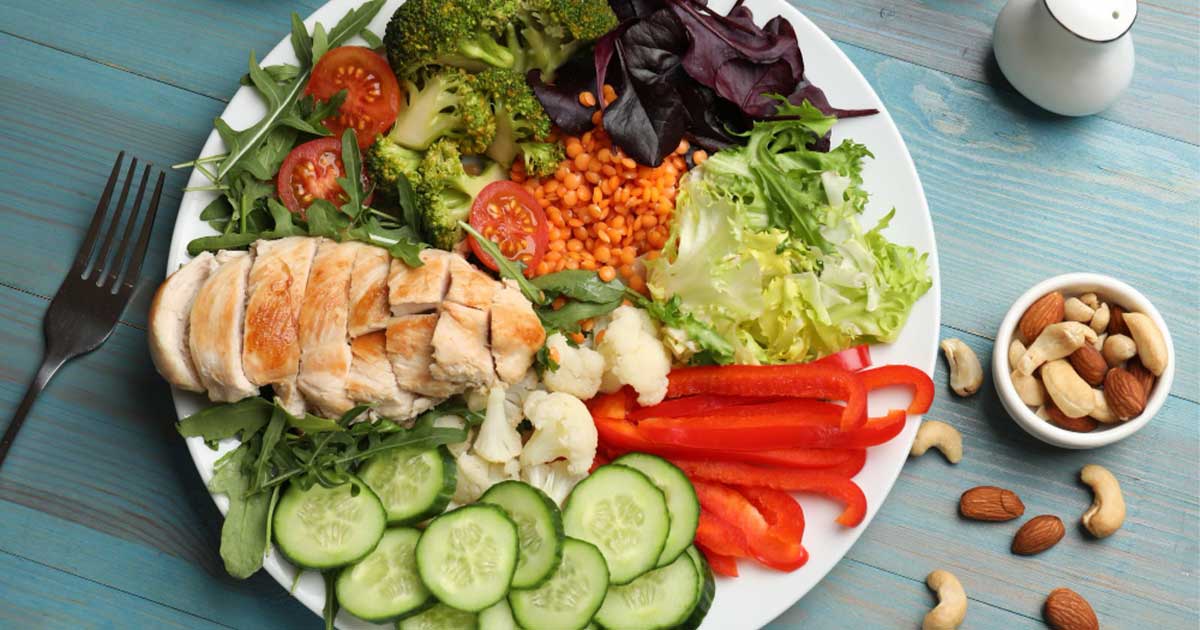
Daily volumeFill half your plate with non-starchy vegetables (and fruit). Provides volume, satiety, micronutrients, and supports gut and metabolic health. Aim for 25-35g fiber per day.
Healthy fats in moderation
Quality not quantityOlive oil, nuts, avocado, fatty fish. Necessary for hormone production, vitamin absorption, satiety. Limit fried, greasy, and high-saturated-fat foods that worsen GI side effects.
Hydration first & constant
All dayAim for 64-100+ oz water daily. GLP-1 reduces thirst cues. Dehydration worsens constipation, fatigue, and kidney stress. Sip throughout the day, not just at meals.
Minimize problem foods
What to limitUltra-processed foods, added sugars, large fatty meals, alcohol, very spicy foods, highly carbonated drinks. Not strict elimination — smart prioritization with occasional exceptions.
Resistance train alongside
Non-nutrition essentialThe eating plan only works alongside resistance training 2-3x per week. Without it, muscle loss is much harder to prevent. Even bodyweight exercises help significantly.
Protein Targets and How to Hit Them
Protein is the single most important nutritional priority on a GLP-1 medication. The recommended targets exceed standard adult guidelines because of the muscle-loss risk from rapid weight loss. Both the Mayo Clinic and Cleveland Clinic highlight protein adequacy as foundational to healthy weight loss.
Target ranges:
- Conservative target: 0.7g per pound of ideal body weight (most adults: 80-100g daily)
- Optimal target for muscle preservation: 0.8-1.0g per pound of ideal body weight (most adults: 100-130g daily)
- Athletic / strong muscle focus: Up to 1.2g per pound (work with a sports dietitian)
To hit these numbers when appetite is suppressed, you have to be intentional. Here's what 30g of protein looks like in common foods:
| Food | Portion for ~30g protein | Notes |
|---|---|---|
| Chicken breast | 4 oz cooked | ~120 calories; very lean |
| Greek yoghurt (plain, non-fat) | 1.5 cups | See our GLP-1 yoghurt guide |
| Cottage cheese (low-fat) | 1 cup | Slow-digesting; great before bed |
| Salmon | 4-5 oz cooked | Healthy fats included |
| Eggs | 4-5 large eggs | Complete protein; nutrient-dense |
| Tuna (canned in water) | 5 oz | Very convenient; high protein per calorie |
| Whey or casein protein powder | 1 scoop in shake | Easy when appetite is low |
| Tofu (firm) | 6 oz | Plant-based; pair with grain for complete |
| Lentils (cooked) | ~1.5 cups | High fiber bonus; not complete on own |
| Lean ground turkey | 4 oz cooked (93% lean) | Versatile base for many meals |
Protein hacks when appetite is low
- Whey protein shakes — easiest way to add 25g protein when food is hard to face. Mix with milk or fortified almond milk for extra protein.
- Start meals with protein — eat your protein first before vegetables or carbs. You may hit fullness with most of your protein already in.
- Plain Greek yoghurt or skyr — easy 15-20g protein per cup; tolerable when nauseous.
- Cottage cheese — slow-digesting; great for evening snack to support overnight muscle preservation.
- Hard-boiled eggs — portable, calorie-dense, complete protein.
- Pre-portioned cooked chicken or fish — Sunday-prep makes weekday targets easier to hit.
Fiber, Vegetables & Fruits
Fiber matters for satiety, gut health, blood sugar stability, and managing GLP-1-related constipation. The general adult target is 25-35g per day — most adults eat far less. On GLP-1 medications fiber becomes even more important.
Best sources:
- Non-starchy vegetables — broccoli, cauliflower, leafy greens, peppers, zucchini, asparagus, brussels sprouts. Eat to fullness; very low calorie density.
- Berries — blueberries, raspberries, blackberries, strawberries. Among the highest-fiber lowest-sugar fruits.
- Apples and pears with skin — soluble fiber plus volume.
- Legumes — lentils, black beans, chickpeas. Combine fiber with plant protein. Start with smaller portions if you're new to high fiber.
- Whole grains — oats, quinoa, brown rice in modest portions.
- Chia seeds and ground flaxseed — 1-2 tablespoons adds 5-8g fiber. Mix into yoghurt or oatmeal.
- Psyllium husk supplement — discuss with your clinician if dietary fiber alone isn't enough.
Healthy Fats vs. Inflammatory Fats
Fats are not the enemy on a GLP-1 eating plan — but the type and amount matter significantly. GLP-1 medications slow gastric emptying, and very fatty meals can dramatically worsen nausea, vomiting, and reflux. The strategy: quality fats in moderate portions.
Healthy fats to emphasize
- Extra virgin olive oil — primary cooking and dressing fat
- Avocado — fiber, monounsaturated fats
- Fatty fish (salmon, sardines, mackerel) — omega-3s
- Nuts and seeds in measured portions (~1 oz)
- Nut butters (natural, no added sugar)
- Eggs — full-fat, complete nutrition
- Greek yoghurt full-fat for satiety
- Chia and flax seeds
Fats to limit (worsen GLP-1 side effects)
- Fried foods (french fries, fried chicken, etc.)
- Very greasy fast food meals
- Heavy cream sauces and gravies
- Excessive butter or coconut oil in single meals
- Processed meats (sausage, bacon in large portions)
- Pastries and baked goods with hydrogenated fats
- Tropical oils in processed snacks
- Vegetable oils in fried/processed foods
Hydration Strategy
GLP-1 medications can reduce thirst cues alongside reducing hunger — meaning you can become dehydrated without realizing it. Dehydration worsens constipation, fatigue, headaches, and can stress the kidneys (see our GLP-1 kidney disease guide for CKD-specific guidance).
Daily targets:
- Baseline: 64 oz (about 8 cups) of water daily for most adults
- Higher target: 80-100 oz for larger adults or those who exercise
- Even higher in hot climates, during illness, or with persistent diarrhea/vomiting
What counts: Water, herbal teas, sparkling water, unsweetened iced tea or coffee, broth. Sugary drinks, alcohol, and high-caffeine drinks can hydrate but with downsides.
Hydration habits that work on GLP-1
- Start every day with 16 oz of water — set a glass next to your bed at night.
- Drink before every meal — supports satiety and tracks intake.
- Carry a refillable water bottle — visual reminder; track number of refills.
- Set hourly reminders on your phone for the first few weeks.
- Add electrolytes (potassium, magnesium, sodium) if you're losing weight quickly — discuss with clinician.
- Drink more if vomiting or with diarrhea — these losses must be replaced.
Foods to Emphasize vs Foods to Limit
This is the practical food list for daily decision-making on a GLP-1 eating plan:
Foods to emphasize
- Lean proteins — chicken breast, turkey, fish, eggs, tofu, tempeh
- Plain Greek yoghurt & cottage cheese
- Fatty fish 2-3x per week (salmon, sardines)
- Non-starchy vegetables at every meal
- Berries & whole fruit
- Legumes (lentils, beans, chickpeas)
- Whole grains in modest portions (oats, quinoa, brown rice)
- Healthy fats — olive oil, nuts, seeds, avocado
- Herbs & spices for flavor without calories
- Water, herbal tea, sparkling water
- Bone broth for protein-rich liquid nutrition
Foods to limit (or avoid)
- Ultra-processed foods with long ingredient lists
- Added sugar (candy, soda, baked goods, sweetened yoghurts)
- Fried foods — worsens GI side effects
- Large fatty meals — slow gastric emptying problems
- Very spicy foods if prone to reflux
- Highly carbonated drinks — bloating
- Excessive alcohol — empty calories, GI effects
- Energy drinks & sweetened beverages
- Excessive processed meat (deli, hot dogs, sausage)
- White flour-based products in large portions
- Trigger foods you've noticed cause nausea
7-Day Sample GLP-1 Eating Plan
Below is a sample 7-day plan demonstrating how the principles come together. This is a template, not a prescription — adapt to your preferences, budget, and clinician guidance. All days target ~100g protein and ~30g fiber:
Day 1 — Monday ~105g protein · 32g fiber
Day 2 — Tuesday ~108g protein · 35g fiber
Day 3 — Wednesday ~100g protein · 30g fiber
Day 4 — Thursday ~110g protein · 33g fiber
Day 5 — Friday ~102g protein · 31g fiber
Day 6 — Saturday ~106g protein · 34g fiber
Day 7 — Sunday ~98g protein · 32g fiber
Meal Timing & Frequency
For most patients on GLP-1 medications, 3 well-structured meals plus 1-2 protein-focused snacks works well. The slowed gastric emptying makes very large single meals uncomfortable, while 5-6 small meals can keep your stomach constantly working.
Practical timing guidance:
- Avoid eating within 2-3 hours of bedtime — slowed emptying can worsen overnight reflux.
- Inject your weekly GLP-1 dose on a day/time that fits your tolerance pattern — many patients prefer evenings or Saturdays so peak nausea coincides with rest.
- Don't skip breakfast even if not hungry — set the day's protein direction with an early protein-rich meal.
- Pre-plan when life gets busy. Hunger cues are unreliable on GLP-1, so eating becomes more scheduled than reactive.
- Eat slowly and stop when comfortable, not stuffed. GLP-1 sharpens fullness signals dramatically.
Eating Around GLP-1 Side Effects
For side effect management through food, here's what works for each common symptom:
If you're nauseous
- Cool, plain foods (yoghurt, applesauce, dry crackers, smoothies)
- Small frequent portions; avoid large meals
- Avoid greasy, fatty, very rich, or strong-smelling foods
- Ginger (tea, raw, or candied) helps many patients
- Sip electrolyte drinks if not eating much
If you're constipated
- Increase soluble fiber gradually (chia, flax, psyllium, oats)
- Drink more water than feels necessary
- Magnesium citrate at bedtime (discuss with clinician)
- Daily walks help GI motility
- Don't suddenly increase fiber; build up over a week
If you have acid reflux
- Don't eat within 3 hours of bedtime
- Avoid trigger foods (spicy, acidic, fatty, chocolate, caffeine, alcohol)
- Smaller portions; eat slowly
- Elevate head of bed if frequent
- Discuss antacids or PPI with clinician if persistent
For comprehensive side effect management, see our GLP-1 weight loss side effects guide.
Supplements Worth Discussing with Your Clinician
With reduced food intake on GLP-1 medication, certain nutrients are commonly under-consumed. Always discuss supplements with your prescribing clinician, particularly if you take other medications or have medical conditions:
- Multivitamin — a basic insurance policy when eating less.
- Vitamin D3 — many adults are deficient; supports bone, mood, immunity.
- B12 — particularly if vegetarian or vegan.
- Iron — particularly for menstruating women; check ferritin level first.
- Magnesium — supports muscle, sleep, GI regularity. Magnesium citrate or glycinate forms.
- Omega-3 (fish oil or algae oil) — particularly if you don't eat fatty fish 2x weekly.
- Calcium — for bone health during rapid weight loss.
- Protein powder (whey or plant) — to hit protein targets when food alone is hard.
- Creatine monohydrate — 3-5g daily supports muscle preservation alongside resistance training.
- Psyllium husk fiber — for constipation management.
Dining Out & Travel
You don't have to eat at home forever. Dining out and travel are sustainable with simple strategies:
- Look at the menu before arriving. Identify protein options and side substitutions in advance.
- Order the protein and a vegetable. Most restaurants will substitute extra vegetables for fries or pasta.
- Ask for sauces on the side. Cream-based and butter-heavy sauces can drive nausea.
- Eat half, take half home. Restaurant portions are often 1.5-2x what you need.
- Bring snacks when traveling. Beef jerky, hard-boiled eggs, protein bars, plain Greek yoghurt cups (when refrigerated), nuts, single-serve cheese.
- Hotel-room breakfast strategy. Continental breakfast: eggs + plain yoghurt + fruit. Skip pastries.
- Airport eating. Most airports now have salad bowls, sushi, and grilled chicken options.
- Pre-trip protein prep. Pack a protein powder and shaker bottle for backup.
Long-Term Sustainability
The eating plan that fails is the one too restrictive to follow for a year. Build flexibility:
- Allow a "free meal" 1-2 times per week. Within reason — not a binge-eating green light, but space for life events, family meals, and emotional satisfaction.
- Focus on adding, not subtracting. "More protein and fiber" tends to crowd out problem foods naturally.
- Cook 80% of meals at home. Controls ingredients, sodium, fat, and portion sizes.
- Build a small repertoire of go-to meals you actually enjoy.
- Track for 2-4 weeks to learn portions — then loosen tracking once you have intuition.
- Plan for life after medication. Many patients eventually stop GLP-1 — the habits you build now determine whether weight returns.
Telehealth Platforms with Integrated Nutrition Support
If you want structured nutrition guidance — registered dietitian access, meal planning, or behavioral coaching — alongside GLP-1 medication, these platforms in our 2026 set bundle this in:
For the cleanest cash-pay GLP-1 path with clinician support.
TrimRx (4.8/5) offers $179/mo flat-rate cash-pay with unlimited provider check-ins bundled in — useful for nutrition questions, side effect management, and dose adjustments. Covers both compounded and FDA-approved branded options including Wegovy, Zepbound, and Mounjaro.
Get TrimRx › ★ Sponsored · TrimRx is a Bartley sponsor. We earn a commission if you sign up.Frequently Asked Questions
What should I eat on a GLP-1 eating plan?
Build meals around three foundations: lean protein at every meal (chicken, fish, eggs, Greek yoghurt, tofu), high-fiber non-starchy vegetables and fruit, and healthy fats (olive oil, nuts, avocado). Prioritize hitting at least 80-100g of protein per day with smaller more frequent meals. Limit ultra-processed foods, added sugars, fried and greasy foods, and large portions that can worsen GLP-1 GI side effects.
How much protein do I need on GLP-1?
Most clinicians and registered dietitians recommend approximately 0.7-1g of protein per pound of ideal body weight per day for patients on GLP-1 medications. For most adults that translates to 80-130g of protein daily, distributed across 3-4 meals (25-40g per meal). The higher protein target supports muscle preservation during the calorie deficit GLP-1 medications create and helps maintain satiety.
What foods should I avoid on GLP-1 medication?
Foods that commonly worsen GLP-1 side effects include very fatty or fried foods (slower digestion, worse nausea), heavily processed and high-sugar foods, large portion sizes (overwhelm slowed gastric emptying), highly carbonated drinks (bloating), excessive caffeine and alcohol (dehydration risk), and very spicy foods if you're prone to reflux. The goal is not strict elimination but smart prioritization.
Can I drink alcohol on a GLP-1 eating plan?
Moderate alcohol can be consumed by most GLP-1 patients but with care: GLP-1 medications can amplify alcohol's effects, alcohol has no nutritional value while displacing protein and nutrients you need, alcohol can worsen reflux and nausea, and alcohol can increase pancreatitis risk in susceptible individuals. Discuss specific alcohol guidance with your prescribing clinician.
Do I need to count calories on GLP-1?
Many GLP-1 patients do not need strict calorie counting because the medication naturally reduces appetite. The bigger risk is undereating — particularly underconsuming protein and key nutrients. Focus instead on hitting daily protein and fiber targets, eating nutrient-dense foods, and tracking how you feel. If weight loss stalls or you're losing too much muscle, work with a registered dietitian or your telehealth platform's nutrition support.
Can I do intermittent fasting on GLP-1?
Generally not recommended for most patients on GLP-1 medications. The medication already creates significant appetite suppression and time-restricted eating risks making protein and nutrient targets harder to hit. Many clinicians advise three meals plus 1-2 snacks across the day, ensuring steady nutrition. Discuss your specific situation with your prescribing clinician.
Should I eat differently on injection day?
Many patients adjust their eating around injection day to manage peak side effects: smaller, blander meals on injection day and the day after; emphasizing easy-to-digest protein (yoghurt, eggs, protein shakes); avoiding very greasy/spicy/heavy meals; and timing injections for low-stress days (Friday night before a low-activity weekend works for many). Tolerance usually improves over weeks.
Can vegetarians or vegans follow this plan?
Yes — but plant-based GLP-1 patients need to be particularly intentional about protein. Combine sources: tofu, tempeh, edamame, lentils, beans, chickpeas, Greek yoghurt (if vegetarian), eggs (if vegetarian), plant protein powder, nutritional yeast, quinoa. Consider B12 supplementation. Work with a registered dietitian for personalization, especially if you're vegan and on GLP-1.
Where can I learn more about GLP-1 nutrition?
Authoritative resources include Academy of Nutrition and Dietetics, Harvard's Nutrition Source, Mayo Clinic, and Cleveland Clinic. For platform reviews with integrated nutrition support, see our directory at Bartley Weight Loss.
References & Further Reading
- U.S. Food & Drug Administration. Medications Containing Semaglutide. fda.gov
- Mayo Clinic. Are You Getting Enough Protein? mayoclinic.org
- Mayo Clinic. Obesity — Diagnosis and Treatment. mayoclinic.org
- Cleveland Clinic. Protein: What It Is and How Much You Need. my.clevelandclinic.org
- Cleveland Clinic. GLP-1 Agonists Overview. my.clevelandclinic.org
- Harvard T.H. Chan School of Public Health. The Nutrition Source — Fiber. nutritionsource.hsph.harvard.edu
- Academy of Nutrition and Dietetics. Nutrition for Weight Management. eatright.org
- USDA FoodData Central. Nutritional Composition Database. fdc.nal.usda.gov
- The Obesity Society. Clinical Position Statements. obesity.org
- American Diabetes Association. Nutrition Therapy for Adults with Diabetes. diabetesjournals.org
- National Library of Medicine. PubMed Clinical Research Database. pubmed.ncbi.nlm.nih.gov
Last reviewed: June 24, 2026 · Spot a factual issue? Tell our editors.