Do GLP-1 Patches Really Work? Benefits, Risks & Facts
GLP-1 medications have transformed the conversation around weight loss, helping many people manage appetite, improve blood sugar regulation, and achieve meaningful weight reduction.
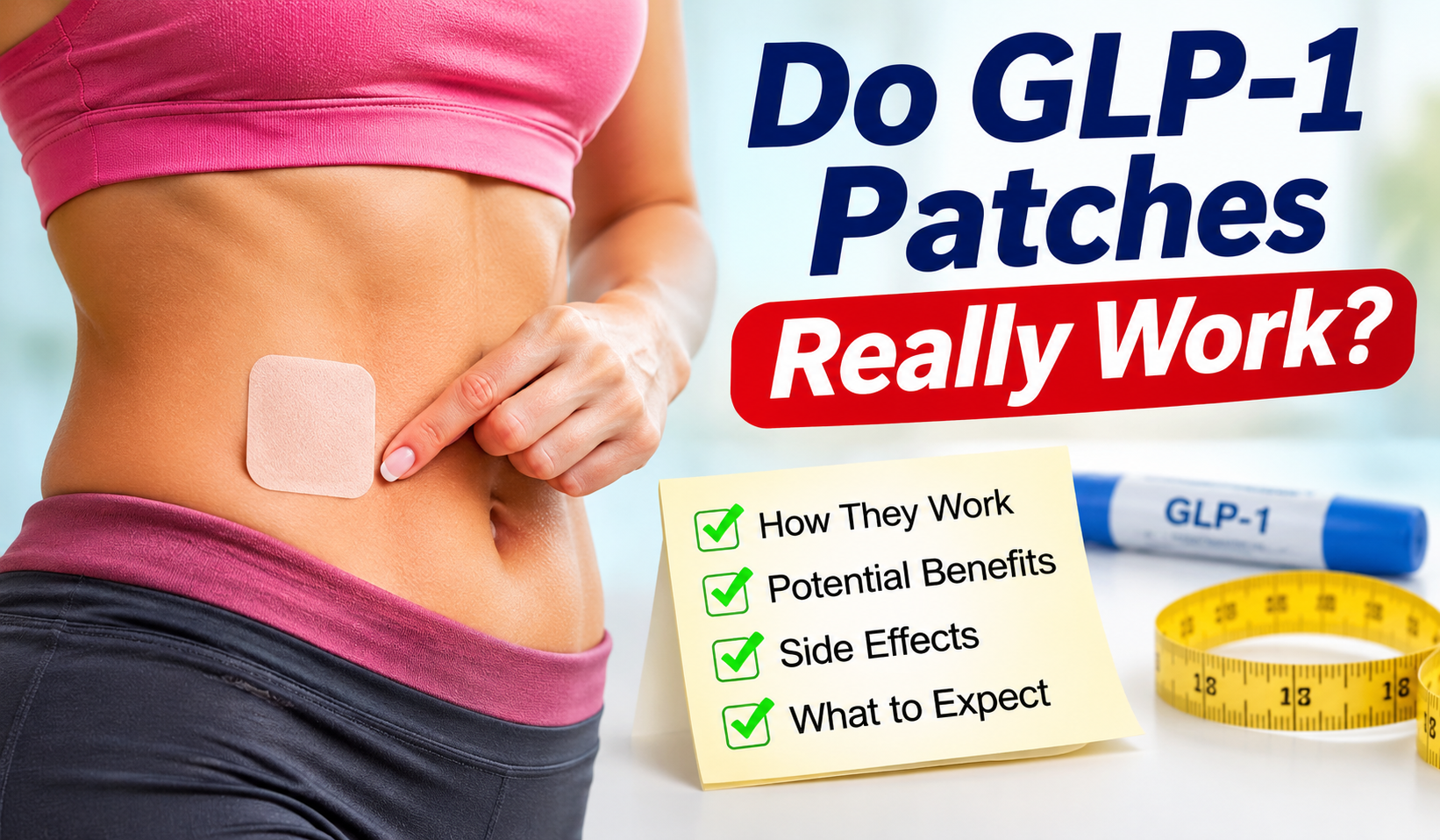
But as interest in these treatments continues to grow, a new category of products has gained attention: GLP-1 weight loss patches.
GLP-1 weight loss patches promise a convenient, needle-free approach to weight management. Instead of swallowing pills or receiving injections, users simply apply a patch to their skin.
Some products claim to support natural GLP-1 activity, reduce cravings, promote fat metabolism, and help control hunger throughout the day.
But one important question remains: Do GLP-1 patches really work, or are they another weight loss trend with more marketing than scientific support?
The answer depends on what the patch contains, how its ingredients are delivered, and whether the product has undergone credible scientific testing.
While prescription GLP-1 medications have demonstrated significant effectiveness in clinical studies, over-the-counter GLP-1 patches are different products.
Most contain herbal extracts, vitamins, or other wellness ingredients rather than prescription GLP-1 medications.
In this comprehensive guide, we’ll explore how GLP-1 patches are supposed to work, what science says about their effectiveness, potential benefits, side effects, and whether they are worth trying for weight management.
 GLP-1 Starting at $59 Per Month – 100% Online
What Are GLP-1 Patches?
GLP-1 patches are adhesive products designed to be worn on the skin, usually on areas such as the abdomen, arm, or upper body.
They are promoted as a convenient alternative to traditional weight management supplements and prescription weight loss injections.
Most commercially available GLP-1 patches contain combinations of botanical ingredients, vitamins, and plant-derived compounds intended to support appetite control, metabolism, or general wellness.
Unlike prescription GLP-1 medications, these patches typically do not contain semaglutide, tirzepatide, or another approved GLP-1 receptor agonist.
Instead, manufacturers may include ingredients associated with metabolic health or natural GLP-1 secretion.
Common Features of GLP-1 Patches
-
Needle-Free Application: Applied directly to the skin without injections.
-
Convenient Design: Small, lightweight patches that can be worn discreetly.
-
Herbal Ingredients: Some contain berberine, green tea extract, or other botanical compounds.
-
Appetite Support Claims: Promoted to help reduce hunger and manage cravings.
-
Metabolic Wellness: Often positioned as products that support normal metabolic processes.
-
Daily Application: Typically designed for regular use following the manufacturer’s directions.
Although these features may sound appealing, convenience alone does not establish whether a patch can produce meaningful weight loss.
The most important consideration is whether its ingredients can penetrate the skin in sufficient amounts to produce a measurable biological effect.
GLP-1 Starting at $59 Per Month – 100% Online
Do GLP-1 Patches Really Work for Weight Loss?
There is currently insufficient reliable clinical evidence that commercially available over-the-counter GLP-1 patches produce significant or sustained weight loss.
This distinction is important because GLP-1 patches are frequently discussed alongside prescription GLP-1 medications, even though their ingredients, mechanisms, and evidence are very different.
Prescription medications such as semaglutide activate GLP-1 receptors involved in appetite regulation and blood sugar control. Their effectiveness has been evaluated through large clinical trials.
Over-the-counter GLP-1 patches generally rely on ingredients that may have metabolic effects when taken orally. Whether those ingredients can work effectively when delivered through a skin patch is a separate scientific question.
For a patch to produce meaningful benefits, several conditions must be met.
First, its active ingredients must remain stable within the patch. Second, they must penetrate the skin barrier. Third, they must enter the body at concentrations high enough to create the intended effect.
Without reliable studies measuring these factors, it is difficult to determine whether a particular patch delivers its ingredients effectively.
Some people report reduced cravings or better appetite awareness while wearing patches. These experiences may be genuine, but they do not establish that the patch caused the changes.
Dietary changes, expectations, increased attention to eating habits, and natural weight fluctuations can all influence perceived results.
The bottom line: GLP-1 patches may be convenient wellness products, but they should not be considered clinically established alternatives to prescription GLP-1 weight loss treatments.
How Do GLP-1 Patches Work?
GLP-1 stands for glucagon-like peptide-1, a hormone naturally released by the intestines after eating.
This hormone plays an important role in regulating appetite, digestion, and blood sugar levels.
GLP-1 helps the body respond to food by increasing glucose-dependent insulin secretion, reducing inappropriate glucagon release, slowing gastric emptying, and communicating with brain pathways involved in hunger and fullness.
These effects explain why medications targeting GLP-1 receptors have become important tools for managing type 2 diabetes and obesity.
GLP-1 Starting at $59 Per Month – 100% Online
How Skin Patches Are Supposed to Deliver Ingredients
Most weight management patches use a concept known as transdermal delivery.
The patch contains ingredients intended to move through the skin and potentially enter the bloodstream.
However, human skin is designed to prevent unwanted substances from entering the body.
The outermost layer, called the stratum corneum, creates a strong protective barrier. Only certain molecules can penetrate this barrier efficiently without specialized delivery technology.
Approved transdermal medications are specifically formulated and tested to overcome this challenge.
Many herbal compounds have properties that make effective skin delivery difficult.
Therefore, an ingredient being present in a patch does not necessarily mean it reaches the bloodstream or affects GLP-1 activity.
Do These Patches Actually Increase GLP-1?
Some plant compounds have been studied for their possible influence on natural GLP-1 secretion.
Nevertheless, evidence from oral supplements, animal studies, or laboratory experiments cannot automatically be applied to transdermal patches.
A manufacturer would need controlled human studies demonstrating increased GLP-1 activity following patch application to support that specific claim.
For most consumer GLP-1 patches, such evidence has not been established.
GLP-1 Starting at $59 Per Month – 100% Online
GLP-1 Patch Ingredients: What Does Science Say?
Different brands use different formulas. Understanding the ingredients can help consumers evaluate product claims more carefully.
| Ingredient | Potential Role | Scientific Considerations |
|---|---|---|
| Berberine | Blood sugar and metabolic support | Primarily studied orally; patch effectiveness remains unclear |
| Green Tea Extract | Contains catechins associated with metabolic processes | Weight effects are generally modest in oral studies |
| Chromium | Supports normal macronutrient metabolism | Weight loss benefits are small or inconsistent |
| Cinnamon Extract | Studied for glucose metabolism | Evidence does not establish effective skin delivery |
| Bitter Melon | Traditionally used for metabolic wellness | Human evidence is mixed |
| Vitamin B12 | Supports energy metabolism and nerve function | Does not directly cause weight loss in people with adequate B12 |
| Garcinia Cambogia | Promoted for appetite and weight management | Reliable weight loss benefits remain uncertain |
Berberine
Berberine is a plant-derived compound studied for its effects on glucose metabolism and other metabolic pathways.
Some research suggests that orally administered berberine may influence pathways associated with insulin sensitivity and intestinal hormone activity.
That does not establish that berberine patches can deliver effective doses or produce meaningful weight loss.
Green Tea Extract
Green tea contains catechins, including EGCG, which have been investigated for possible effects on energy expenditure and fat oxidation.
Research involving oral green tea preparations suggests that any average weight loss effect is typically modest.
There is no strong basis for assuming that applying green tea extract through a standard adhesive patch will deliver equivalent results.
Chromium
Chromium is a trace mineral involved in normal metabolism.
Some weight management products include chromium because of its role in nutrient metabolism and its association with insulin activity.
Studies of oral chromium supplementation have not demonstrated substantial, consistent weight loss.
Its inclusion in a patch does not establish effectiveness.
Vitamin B12
Vitamin B12 is important for red blood cell formation, nerve health, and normal energy metabolism.
People with vitamin B12 deficiency may experience fatigue and other symptoms that improve when the deficiency is treated.
But additional B12 does not automatically accelerate fat burning or suppress hunger.
Important: The effectiveness of individual ingredients taken orally should never be interpreted as proof that a patch containing them will produce the same results.
GLP-1 Patches vs. GLP-1 Injections: What’s the Difference?
One of the biggest misconceptions surrounding GLP-1 patches is that they work like prescription injections.
In reality, these products belong to very different categories.
| Feature | GLP-1 Patches | Prescription GLP-1 Injections |
|---|---|---|
| Product Type | Usually OTC wellness products | Prescription medications |
| Active Ingredients | Commonly botanical extracts and vitamins | GLP-1 receptor agonists or related medicines |
| Application | Adhesive patch on the skin | Subcutaneous injection |
| Appetite Control | Not reliably established | Demonstrated in clinical trials |
| Weight Loss Results | Significant weight loss not clinically established | Clinically demonstrated for approved weight management treatments |
| Clinical Testing | Often lacks product-specific controlled trials | Extensive human clinical studies |
| FDA Approval for Weight Loss | Consumer GLP-1 wellness patches are not FDA-approved weight loss drugs | Certain prescriptions are FDA-approved for chronic weight management |
| Medical Supervision | Often sold without a prescription | Requires a prescription and clinical oversight |
Prescription medications, including Wegovy and Zepbound, have demonstrated substantial weight reduction in clinical trials when combined with appropriate lifestyle interventions.
These results should not be used to predict the effectiveness of herbal weight loss patches.
Another important distinction involves dosing.
Prescription medicines contain precisely measured amounts of active pharmaceutical ingredients.
For many wellness patches, the amount of each ingredient that actually penetrates the skin is unknown.
Consequently, comparing a GLP-1 patch to a prescription injection simply because both are promoted for appetite management can be misleading.
GLP-1 Starting at $59 Per Month – 100% Online
Potential Benefits of GLP-1 Patches
Although significant weight loss benefits have not been reliably established, some features make patches attractive to consumers interested in non-oral wellness products.
Convenient, Needle-Free Application
One of the most appealing aspects of weight management patches is their simplicity.
Users can apply a patch without preparing injections, swallowing capsules, or mixing powdered supplements.
This convenience may make them attractive to people who dislike traditional supplement formats.
Easy to Incorporate Into Daily Routines
Depending on the product, a patch may be designed to remain in place for several hours.
This allows users to continue daily activities without repeatedly taking a product.
However, longer wear time does not necessarily mean better ingredient absorption or stronger results.
Potential Metabolic Wellness Support
Some ingredients commonly included in these patches have been investigated for their effects on metabolism.
Nevertheless, these findings primarily involve oral administration.
Whether a finished patch produces comparable biological effects remains uncertain.
Non-Oral Supplement Format
Skin patches offer an alternative format for people who prefer not to swallow pills.
Unlike oral supplements, they do not pass directly through the stomach and intestines before absorption.
This is a delivery distinction, not evidence that a patch is safer or more effective.
Greater Attention to Weight Management
Using a structured wellness product may encourage some individuals to pay closer attention to meal timing, eating patterns, hydration, and physical activity.
These behavioral changes can support weight management independently of the patch.
For this reason, any reported improvement should be evaluated in the context of the person’s overall routine.
Do GLP-1 Patches Reduce Appetite and Food Cravings?
Appetite control is one of the primary reasons people become interested in GLP-1 patches.
Prescription GLP-1 medications can influence hunger and fullness through established biological mechanisms.
These medications activate receptors involved in appetite regulation, helping many individuals feel satisfied with smaller portions.
But over-the-counter patches do not necessarily activate these same receptors.
Some patch manufacturers claim that botanical ingredients stimulate natural GLP-1 secretion or support appetite-related hormones.
While certain compounds have shown interesting effects in preliminary research, this does not demonstrate that a wearable patch meaningfully changes hunger signals in humans.
Food cravings are also influenced by sleep, stress, dietary patterns, medications, and environmental factors.
Someone who experiences fewer cravings while wearing a patch might also be eating more protein, drinking more water, or following a structured meal plan.
Without controlled testing, the role of the patch cannot be isolated.
For people seeking natural appetite support, strategies with stronger evidence include consuming protein-rich meals, increasing dietary fiber, getting adequate sleep, and maintaining regular physical activity.
These habits may support fullness and long-term weight management without relying on untested transdermal supplement claims.
GLP-1 Starting at $59 Per Month – 100% Online
Are GLP-1 Patches Safe? Possible Side Effects
GLP-1 patches are frequently promoted as gentle alternatives to weight loss injections.
However, products described as natural are not automatically free from side effects.
Safety depends on the ingredients, adhesive materials, manufacturing quality, and amount of each substance absorbed through the skin.
Possible Side Effects
Skin irritation: Some users may experience redness, itching, dryness, or discomfort where the patch is applied.
Allergic reactions: Botanical extracts, fragrances, adhesives, and other components may cause contact dermatitis in sensitive individuals.
Uncertain ingredient absorption: Without proper testing, it may be difficult to know how much of an active substance reaches the body.
Ingredient interactions: If biologically active compounds are absorbed, they could potentially interact with medications or existing health conditions.
Delayed medical treatment: Relying on an ineffective patch instead of receiving appropriate treatment may delay access to proven options for obesity or diabetes.
People who are pregnant, breastfeeding, managing diabetes, or taking prescription medications should consult a qualified healthcare professional before using weight management patches.
Anyone experiencing significant redness, swelling, blistering, or another concerning reaction should remove the patch and seek medical advice.
How Long Do GLP-1 Patches Take to Work?
Some manufacturers promote noticeable effects within days or weeks.
Others suggest that consistent application over several months is necessary for best results.
But without credible product-specific clinical trials, these timelines should be viewed cautiously.
There is no established timeframe showing when over-the-counter GLP-1 patches begin producing clinically meaningful appetite reduction or weight loss.
GLP-1 Starting at $59 Per Month – 100% Online
What About Results After 30 Days?
A person may experience weight changes over 30 days for numerous reasons.
Dietary calorie intake, physical activity, fluid balance, sleep quality, and medication use can all influence body weight.
If someone loses weight while wearing a patch, that outcome alone cannot confirm that the patch produced the weight loss.
What About Results After 60 or 90 Days?
Longer use does not automatically establish effectiveness.
A product must demonstrate measurable benefits through properly controlled studies.
For meaningful weight management, changes in body weight should be considered alongside health markers, nutritional adequacy, physical activity, and overall well-being.
The most useful question is not simply how quickly a patch promises results, but whether controlled human research demonstrates those results.
Are GLP-1 Patches FDA-Approved?
Over-the-counter herbal GLP-1 weight loss patches should not be confused with FDA-approved GLP-1 medications.
The FDA regulates dietary supplements differently from prescription drugs.
Products sold as dietary supplements generally do not undergo the same premarket approval process required for new medications.
A product’s availability online does not establish that the FDA has evaluated or approved it for weight loss.
Additionally, a manufacturer operating in an FDA-registered facility does not mean the finished product is FDA-approved.
These distinctions matter when evaluating phrases such as clinically tested, doctor recommended, or medical-grade technology.
Consumers should look for clear ingredient disclosures, identifiable manufacturers, documented safety information, and peer-reviewed studies involving the actual finished product.
If a patch claims to produce prescription-like GLP-1 effects, the manufacturer should be able to provide credible evidence supporting that claim.
GLP-1 Starting at $59 Per Month – 100% Online
Can GLP-1 Patches Help With Belly Fat?
Many people searching for GLP-1 patches specifically want to reduce abdominal fat.
Some products are promoted using phrases such as belly fat burning, targeted slimming, or waistline support.
However, applying a patch to the abdomen does not mean it will selectively reduce fat in that location.
The body does not generally lose stored fat based on where a topical product is applied.
Fat distribution is influenced by genetics, hormones, age, overall energy balance, and other biological factors.
Prescription weight management medications can help reduce overall body weight and may improve measures of abdominal fat.
That does not mean herbal adhesive patches produce comparable results.
For reducing excess abdominal fat, sustained nutritional improvements, resistance training, aerobic activity, and appropriate medical care offer more established approaches.
Who Should Consider GLP-1 Patches and Who Should Avoid Them?
Consumers sometimes view GLP-1 patches as simple wellness accessories. But a weight loss product should be evaluated based on safety, evidence, and individual health needs.
| Group | Recommendation |
|---|---|
| Adults curious about wearable wellness products | Review ingredients and understand that weight loss benefits are not established |
| People seeking proven obesity treatment | Discuss evidence-based treatment options with a healthcare professional |
| Individuals with diabetes | Avoid replacing prescribed treatment with patches |
| Pregnant or breastfeeding individuals | Avoid weight loss patches unless specifically cleared by a clinician |
| People with sensitive skin | Be cautious about adhesives and botanical ingredients |
| Individuals taking medications | Ask a clinician or pharmacist about potential interactions |
| People seeking substantial weight loss | Prioritize treatments with demonstrated effectiveness |
For individuals who are overweight or living with obesity, a healthcare professional can help assess whether lifestyle interventions, behavioral treatment, prescription medication, or another approach is appropriate.
GLP-1 Starting at $59 Per Month – 100% Online
How to Choose a GLP-1 Patch Carefully
If you’re considering a GLP-1 patch, evaluating the manufacturer and product information is more useful than relying on promotional promises.
Start by examining the complete ingredient list.
A trustworthy manufacturer should clearly disclose what the patch contains and provide enough information for consumers to understand potential risks.
Next, investigate the available research.
Look for clinical trials involving the specific patch rather than studies involving isolated ingredients taken orally.
Another important consideration is dosage and delivery.
A manufacturer should be able to explain whether its ingredients penetrate the skin and how this has been tested.
Finally, examine return policies, customer service information, manufacturing details, and independent reviews.
Be particularly cautious of products promising dramatic weight loss without lifestyle changes, prescription-level results, or guaranteed fat reduction.
Claims that a patch works exactly like Ozempic or Wegovy deserve careful scrutiny.
Better Alternatives to GLP-1 Patches for Weight Loss
People interested in GLP-1 patches are often seeking easier appetite control or a more manageable approach to losing weight.
Several strategies have stronger scientific support.
Protein-rich meals: Including adequate protein can promote fullness and help preserve muscle mass during weight loss.
Fiber-rich foods: Vegetables, legumes, whole grains, and fruits can support digestive health and improve meal satisfaction.
Regular exercise: Combining resistance training with aerobic activity supports weight management, cardiovascular health, and muscle preservation.
Consistent sleep: Poor sleep can influence hunger signals and make appetite management more challenging.
Evidence-based medical treatment: For eligible individuals, prescription obesity medications may offer clinically demonstrated benefits under professional supervision.
Behavioral support: Structured counseling, self-monitoring, and sustainable habit changes can improve long-term weight management outcomes.
These approaches may be used individually or in combination depending on personal needs.
Final Verdict:
GLP-1 patches have not been reliably demonstrated to deliver meaningful or sustained weight loss in controlled human studies.
Although these products offer a convenient, needle-free format, their effectiveness depends on more than the ingredients listed on the packaging.
The ingredients must successfully penetrate the skin, reach biologically meaningful concentrations, and produce measurable effects on appetite or metabolism.
For most commercially available GLP-1 wellness patches, these essential steps have not been adequately demonstrated.
It is also important to distinguish between a patch containing herbal extracts and a prescription medication that directly activates GLP-1 receptors.
Products such as Wegovy and Zepbound have undergone extensive clinical evaluation, while consumer GLP-1 patches should not be assumed to provide similar results.
For people who want a simple wearable wellness product, a patch may appear attractive. But those seeking dependable appetite control, improved metabolic health, or substantial weight reduction should prioritize methods supported by stronger scientific evidence.
GLP-1 Starting at $59 Per Month – 100% Online
References
https://www.mayoclinic.org/diseases-conditions/type-2-diabetes/expert-answers/byetta/faq-20057955
https://www.healthline.com/health/drugs/do-glp-1-patches-work
