Does Sermorelin Cause Hair Loss? Hair Health Explained
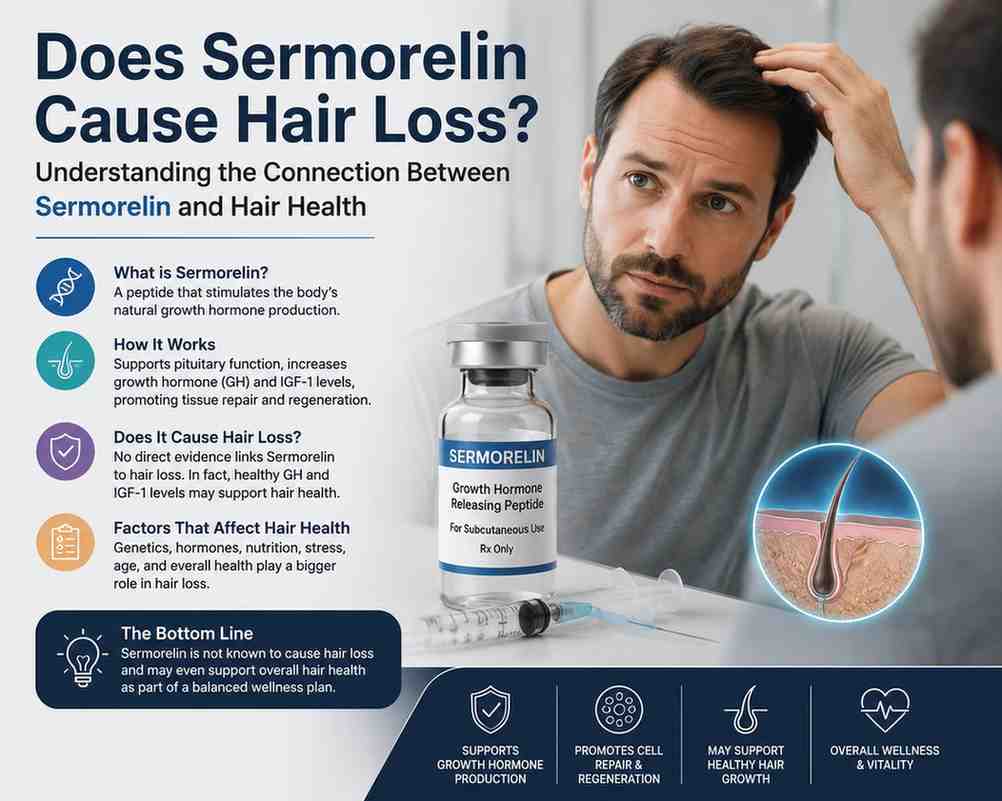
Does Sermorelin Cause Hair Loss? Understanding the Connection Between Sermorelin and Hair Health

Introduction
Sermorelin has become increasingly popular among adults looking for ways to support healthy aging, energy levels, muscle maintenance, sleep quality, and overall wellness.
As a growth hormone–releasing hormone (GHRH) analog, Sermorelin works by encouraging the body’s natural production of growth hormone instead of directly replacing it.
However, one common concern among people considering Sermorelin therapy is: “Does Sermorelin cause hair loss?”
Hair loss can be frustrating and concerning because it may affect confidence and appearance. Many people want to understand whether changes in hair thickness, shedding, or growth patterns are directly related to Sermorelin or whether other factors are responsible.
The available evidence does not show that Sermorelin directly causes hair loss. In fact, because Sermorelin may help support healthy growth hormone and insulin-like growth factor-1 (IGF-1) levels, some people believe it may contribute to healthier hair conditions.
However, individual responses vary, and changes in hormones, aging, genetics, stress, nutrition, and underlying health conditions can all influence hair growth.
This article explores the relationship between Sermorelin and hair loss, how Sermorelin works, why some people may notice changes in their hair, and which factors to consider before starting treatment.
Understanding the science behind Sermorelin can help separate facts from myths about its effects on hair health.
What Is Sermorelin?
Sermorelin is a synthetic peptide that functions similarly to a naturally occurring hormone called growth hormone–releasing hormone (GHRH).
It is designed to stimulate the pituitary gland, encouraging the body to naturally release more growth hormone.
Unlike direct growth hormone replacement, which introduces growth hormone into the body, Sermorelin works through the body’s own regulatory system.
Growth hormone plays an important role in several biological processes, including:
- Muscle maintenance
- Bone health
- Metabolism
- Tissue repair
- Recovery
- Cellular regeneration
The body naturally produces growth hormone, but levels often decline with age. This decline may contribute to changes commonly associated with aging, such as reduced muscle strength, slower recovery, lower energy, and changes in body composition.
Because growth hormone influences many areas of the body, some people question whether altering growth hormone levels could also affect hair growth.
How Does Sermorelin Work?
Sermorelin works by signaling the pituitary gland to stimulate the production of natural growth hormone.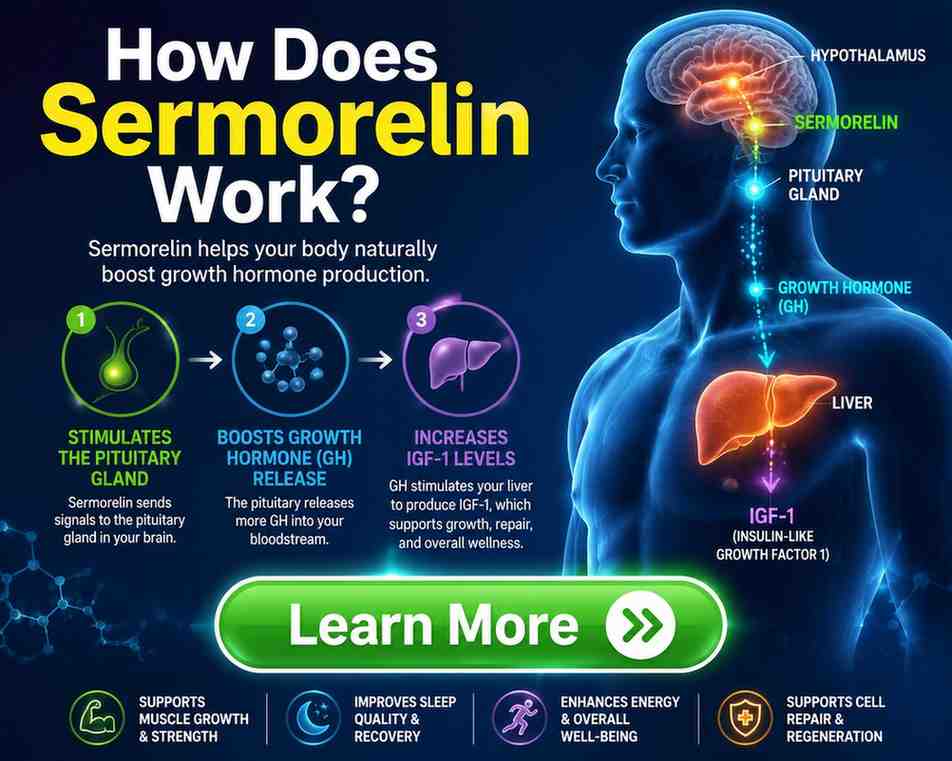
The process generally involves:
1. Stimulating Growth Hormone Release
After Sermorelin administration, the pituitary gland receives signals similar to those created by natural growth hormone–releasing hormone.
This encourages the release of growth hormone in a more natural pattern rather than providing a constant external supply.
2. Increasing IGF-1 Production
Growth hormone stimulates the liver and other tissues to produce insulin-like growth factor-1 (IGF-1).
IGF-1 plays an important role in:
- Cell growth
- Tissue repair
- Protein production
- Regeneration processes
Because hair follicles rely on active cellular activity, researchers have studied how growth-related hormones may influence hair follicle function.
3. Supporting Natural Body Processes
By supporting the growth hormone pathway, Sermorelin may influence recovery, metabolism, and overall wellness.
However, hormone-related treatments can affect people differently. Some individuals may notice positive changes, while others may experience temporary adjustments as their body adapts.
Does Sermorelin Cause Hair Loss?
The Short Answer: No, Sermorelin Is Not Known to Directly Cause Hair Loss
Current evidence does not identify Sermorelin as a direct cause of hair loss.
Sermorelin does not contain ingredients known to damage hair follicles or trigger common forms of hair shedding. Unlike certain medications that interfere with hormones linked to hair loss, Sermorelin primarily works by supporting the body’s natural release of growth hormone.
However, some individuals may notice changes in hair shedding after starting any hormone-related treatment. These changes are not necessarily caused by Sermorelin itself.
Several factors may explain why someone notices hair changes during Sermorelin use:
- Natural aging-related hair changes
- Genetic hair loss patterns
- Hormonal fluctuations
- Stress levels
- Nutritional deficiencies
- Thyroid changes
- Sleep patterns
- Other medications or supplements
Hair loss after starting Sermorelin does not automatically mean Sermorelin is the cause.
A healthcare professional can help determine whether changes are related to Sermorelin or another underlying factor.
Understanding Hair Growth and Hormones
Hair growth is a complex biological process influenced by many systems in the body.
Each hair follicle goes through different growth phases:
Anagen Phase (Growth Phase)
This is the active growth period when hair follicles produce new hair strands.
A healthy growth cycle depends on:
- Adequate nutrients
- Proper blood circulation
- Hormonal balance
- Healthy follicle activity
Catagen Phase (Transition Phase)
During this stage, hair growth slows as follicles prepare for rest.
Telogen Phase (Resting Phase)
During this phase, older hairs naturally shed before new growth begins.
Changes in hormones, stress, illness, or nutritional issues can interrupt this cycle and cause increased shedding.
The Relationship Between Growth Hormone and Hair Health
Growth hormone and IGF-1 are involved in many growth and repair processes throughout the body.
Hair follicles are highly active structures that require continuous cellular activity. Because of this, researchers have investigated whether growth hormone pathways may influence hair follicle function.
Growth hormone and IGF-1 may contribute to:
- Supporting follicle activity
- Maintaining healthy skin structure
- Supporting tissue repair
- Encouraging cellular renewal
Some studies suggest that reduced growth hormone activity may be associated with aging-related changes, including changes in skin and hair quality.
However, this does not mean increasing growth hormone automatically creates new hair growth or reverses genetic hair loss.
Hair loss caused by conditions such as androgenetic alopecia is mainly influenced by genetics and sensitivity to hormones like dihydrotestosterone (DHT).
Can Sermorelin Improve Hair Growth?
Although Sermorelin is not approved specifically for hair loss, some people report improvements in overall hair quality when using treatments that support hormone balance.
Potential reasons include:
Better Cellular Support
Growth hormone pathways are involved in repair and regeneration, which may support healthier conditions for hair follicles.
Improved Overall Wellness
Factors such as:
- Better sleep
- Improved recovery
- Increased energy
- Healthier lifestyle habits
may indirectly contribute to better hair health.
Supporting Aging-Related Changes
Since growth hormone levels naturally decline with age, supporting healthy hormone function may help address some age-related changes.
However, Sermorelin should not be considered a guaranteed hair restoration solution.
Sermorelin may support overall wellness, but it is not a proven standalone treatment for baldness or genetic hair loss.
Why Do Some People Notice Hair Shedding After Starting Sermorelin?
Even though Sermorelin is not considered a direct cause of hair loss, some people may experience temporary shedding after beginning hormone-related treatments.
Possible explanations include:
1. Hormonal Adjustment Period
When hormone levels change, the body may require time to adapt.
During this adjustment period, some individuals may notice temporary changes in:
- Hair shedding
- Skin condition
- Energy levels
- Sleep patterns
2. Existing Hair Loss Becomes More Noticeable
Many people already have gradual hair thinning due to:
- Genetics
- Age
- Lifestyle factors
Starting a new treatment may simply make people pay closer attention to changes that were already occurring.
3. Other Health Factors
Hair loss can occur because of:
- Low iron levels
- Vitamin deficiencies
- Stress
- Rapid weight changes
- Illness
- Poor sleep
- Hormonal disorders
These factors should be evaluated before blaming Sermorelin.
Does Sermorelin Cause Hair Loss?
Sermorelin Side Effects Related to Hormone Changes
Sermorelin is generally considered well tolerated when used under healthcare supervision. Since it influences the growth hormone pathway, some side effects may occur as the body adjusts to changes in hormone signaling.
Commonly reported side effects may include:
- Redness or irritation at the injection site
- Headache
- Dizziness
- Flushing
- Sleep changes
- Temporary water retention
- Muscle or joint discomfort
These effects are usually mild and may improve as the body adapts.
Hair loss is not commonly listed as a direct side effect of Sermorelin. If someone experiences noticeable shedding, healthcare providers typically evaluate other possible causes rather than immediately connecting it to Sermorelin.
Possible contributing factors may include:
- Age-related hormonal changes
- Thyroid imbalance
- Stress-related shedding
- Nutritional deficiencies
- Genetics
- Other medications
A comprehensive health evaluation is important when unexpected changes in hair occur.
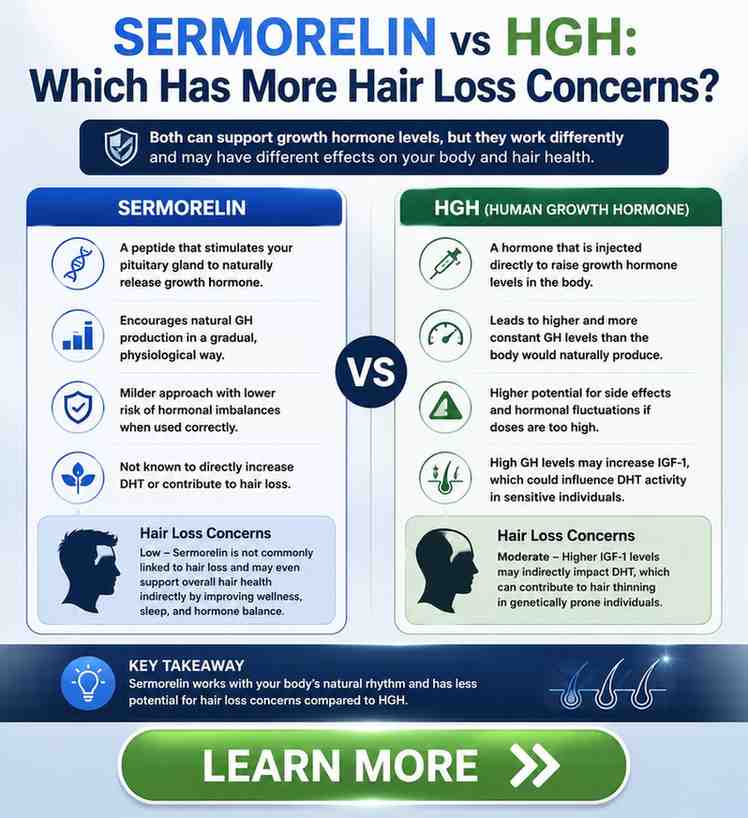
Sermorelin vs HGH: Which Has More Hair Loss Concerns?
Sermorelin and human growth hormone (HGH) both affect the growth hormone pathway, but they work differently.
Sermorelin
Sermorelin encourages the pituitary gland to produce and release the body’s own growth hormone.
Potential characteristics:
- Supports natural hormone release patterns
- Allows the body to regulate production
- Works through the natural growth hormone pathway
HGH
HGH therapy involves directly administering growth hormone into the body.
Potential differences:
- Creates higher external hormone exposure
- May have stronger effects on growth hormone levels
- Requires careful medical monitoring
Neither Sermorelin nor HGH is scientifically established as a direct cause of hair loss.
However, because HGH can create greater hormonal changes, improper use or excessive levels may potentially influence hormone balance, which could affect various body systems.
Sermorelin is often considered a more gradual approach because it works by stimulating the body’s natural production of growth hormone rather than directly replacing it.
Male Pattern Hair Loss and Sermorelin
Male pattern hair loss, also called androgenetic alopecia, is the most common cause of hair loss in men.
It is mainly associated with:
- Genetics
- Age
- Sensitivity to dihydrotestosterone (DHT)
DHT is a hormone produced from testosterone. In genetically sensitive individuals, DHT can gradually shrink hair follicles, leading to:
- Receding hairline
- Thinning crown area
- Reduced hair density
Sermorelin does not directly increase DHT or block DHT activity.
Therefore, it is not considered a typical trigger for male pattern baldness.
However, men with early-stage genetic hair loss may continue to lose hair while using Sermorelin simply because the underlying condition is progressing.
Sermorelin does not remove the genetic factors responsible for male pattern hair loss.
Female Hair Loss and Sermorelin
Women may experience hair thinning due to several different factors, including:
- Hormonal changes
- Menopause
- Pregnancy-related changes
- Stress
- Nutritional deficiencies
- Thyroid issues
- Certain medical conditions
Because Sermorelin influences hormone pathways, women considering treatment should discuss their complete hormone profile with a qualified healthcare provider.
Some women may experience improvements in overall wellness, energy, and recovery, while others may notice no significant changes in hair.
Hair health depends on many factors beyond growth hormone levels.
Important contributors include:
- Protein intake
- Iron levels
- Vitamin status
- Scalp health
- Hormonal balance
- Genetics
Can Low Growth Hormone Levels Affect Hair?
Growth hormone naturally declines as people age. This reduction is sometimes associated with changes in:
- Skin elasticity
- Muscle maintenance
- Recovery ability
- Body composition
Because hair follicles are constantly renewing themselves, researchers have explored whether reduced growth hormone activity may influence hair quality.
Growth hormone and IGF-1 contribute to cellular processes that support tissue maintenance.
However, hair loss is usually caused by multiple factors working together.
For example:
A person may have lower growth hormone levels but maintain healthy hair because they do not have genetic sensitivity to hair loss.
Another person may have normal hormone levels but experience significant thinning due to genetics.
Hair loss is usually a combination of biological, environmental, and lifestyle factors.
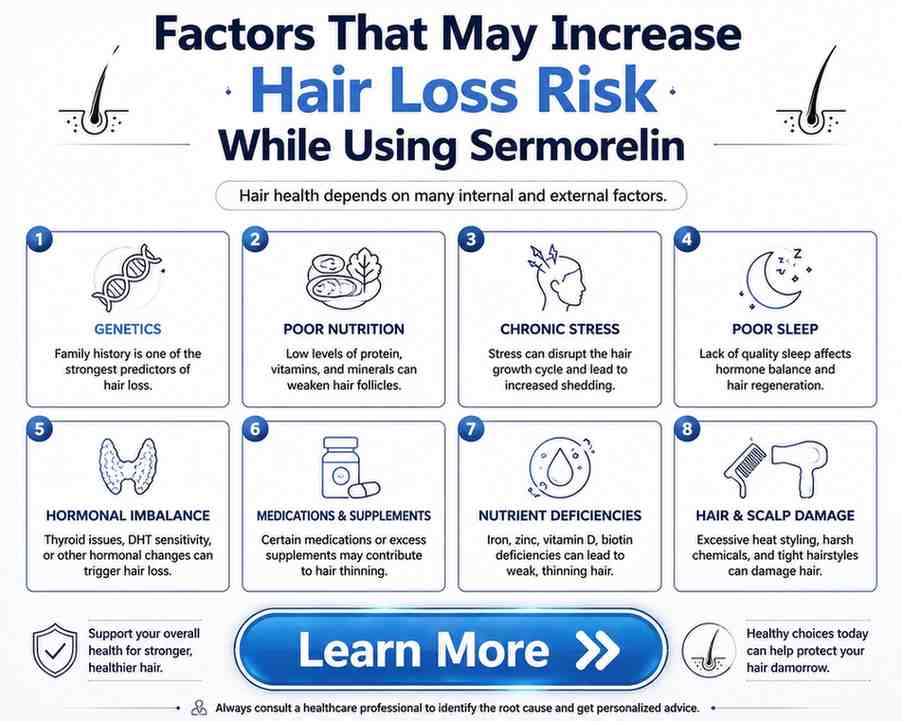
Factors That May Increase Hair Loss Risk While Using Sermorelin
Although Sermorelin itself is not considered a hair-loss medication, several factors may increase the likelihood of noticing changes in hair.
1. Genetics
Family history is one of the strongest predictors of hair loss.
If close relatives experience thinning or baldness, natural progression may occur regardless of Sermorelin use.
2. Poor Nutrition
Hair follicles require nutrients to produce healthy strands.
Low levels of:
- Protein
- Iron
- Zinc
- Vitamin D
- B vitamins
may contribute to increased shedding.
3. Chronic Stress
Stress can affect the hair growth cycle.
A condition called telogen effluvium may cause temporary increased shedding after:
- Emotional stress
- Illness
- Major life changes
- Significant weight loss
4. Poor Sleep
Sleep plays an important role in:
- Hormone regulation
- Recovery
- Cellular repair
Since Sermorelin is often used to support wellness and recovery, maintaining healthy sleep habits may help optimize results.
5. Underlying Hormonal Issues
Conditions involving:
- Thyroid hormones
- Testosterone balance
- Estrogen changes
- Insulin regulation
may influence hair health.
Ways to Support Healthy Hair While Using Sermorelin
If you are using Sermorelin and want to maintain healthy hair, consider supporting your body with healthy lifestyle habits.
Maintain a Protein-Rich Diet
Hair is primarily made of keratin, a protein structure.
Include quality protein sources such as:
- Eggs
- Fish
- Lean meats
- Dairy products
- Legumes
- Plant-based proteins
Focus on Nutrient-Dense Foods
A balanced diet rich in vitamins and minerals supports normal hair function.
Important nutrients include:
- Iron
- Zinc
- Omega-3 fatty acids
- Vitamin D
- Antioxidants
Prioritize Quality Sleep
Growth hormone release naturally occurs during deep sleep.
Helpful habits include:
- Maintaining a regular sleep schedule
- Reducing screen exposure before bed
- Creating a comfortable sleep environment
Manage Stress Levels
Stress management techniques may help support healthy hair cycles.
Examples include:
- Exercise
- Meditation
- Walking
- Relaxation practices
Avoid Excessive Hair Damage
Protect hair by limiting:
- Excessive heat styling
- Harsh chemical treatments
- Tight hairstyles
- Overwashing
When Should You Talk to a Healthcare Provider?
While mild hair shedding can happen for many reasons, certain changes should be evaluated.
Contact a healthcare professional if you experience:
- Sudden severe hair loss
- Bald patches
- Scalp irritation
- Significant thinning within a short period
- Other unusual symptoms
A provider may evaluate:
- Hormone levels
- Thyroid function
- Nutrient deficiencies
- Medication interactions
- Family history
Finding the actual cause is the best way to choose an appropriate solution.
Expert Analysis: Does Sermorelin Cause Hair Loss?
Based on current understanding, Sermorelin is not considered a direct cause of hair loss.
The peptide works by stimulating the natural release of growth hormone and does not directly attack hair follicles or commonly trigger baldness-related pathways.
Some people may notice hair changes after beginning treatment, but these changes are more likely related to:
- Natural aging
- Existing genetic hair loss
- Hormonal adjustments
- Lifestyle factors
- Nutritional status
Sermorelin may support overall wellness by modulating growth hormone pathways, but it should not be viewed as a guaranteed hair-growth treatment.
A personalized approach that considers genetics, health history, nutrition, and hormone balance is the best way to protect hair health.
Final Thoughts: Does Sermorelin Cause Hair Loss?
Sermorelin does not appear to cause hair loss directly. Current evidence does not identify Sermorelin as a medication that damages hair follicles or triggers common patterns of baldness.
Instead, Sermorelin works by supporting the body’s natural growth hormone release process, which plays a role in repair, recovery, and overall wellness.
However, hair health is complex. Genetics, hormones, nutrition, stress, aging, and lifestyle choices all influence whether someone experiences thinning or shedding.
For individuals considering Sermorelin, the best approach is to use it under professional guidance while maintaining healthy habits that support strong hair and overall wellness.
A balanced lifestyle, combined with proper medical supervision, can help achieve the best possible outcomes when using Sermorelin.
.
