GLP-1 Diet Plan PDF Free Download: 7-Day Meal Guide
Starting a weight loss journey with GLP-1 medications can feel exciting, especially when you begin noticing changes in your appetite and eating habits. Yet one question often comes up: What should you eat while taking GLP-1 medications to support healthy weight loss?
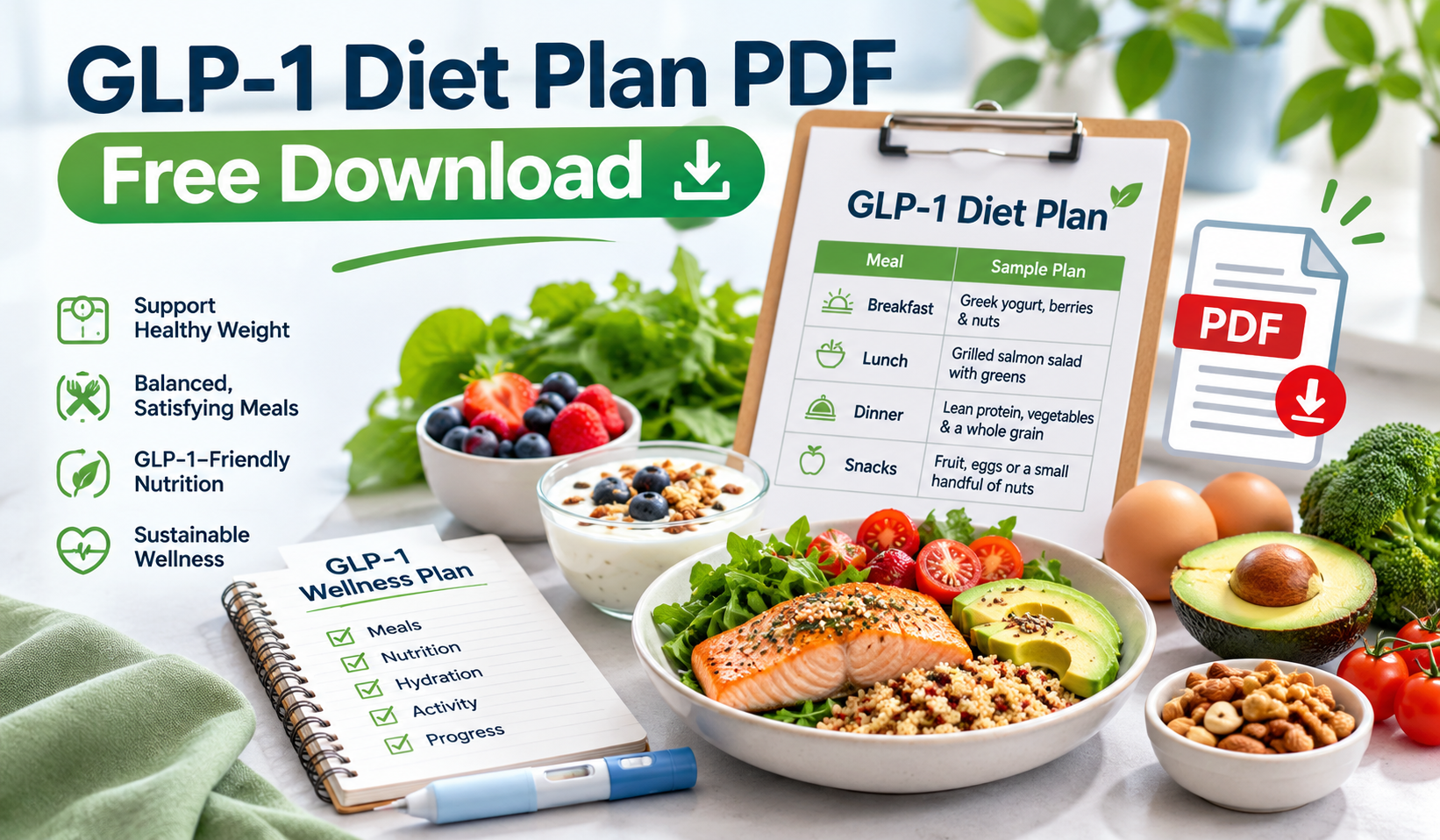
A well-structured GLP-1 diet plan can make everyday nutrition easier by helping you choose balanced meals, manage portions, and maintain adequate protein intake.
Whether you are taking Wegovy, Ozempic, Zepbound, or another GLP-1-based medication, your food choices remain an important part of your overall health.
If you are searching for a GLP-1 diet plan PDF free download, this guide provides a practical seven-day meal plan, recommended foods, shopping suggestions, and simple strategies for planning nutritious meals.
The goal is not to follow an overly restrictive diet. Instead, it is to create a sustainable eating routine that supports your nutritional needs, digestive comfort, muscle health, and long-term weight management.
 GLP-1 Starting at $59 Per Month – 100% Online
What Is a GLP-1 Diet Plan?
A GLP-1 diet plan is a structured eating approach designed to complement medications that affect appetite, fullness, and blood sugar regulation.
GLP-1 stands for glucagon-like peptide-1, a hormone naturally produced in the digestive system. It helps regulate blood sugar levels, influences appetite signals, and slows stomach emptying.
Medications that act on GLP-1 receptors can make people feel satisfied after eating smaller portions. As a result, individuals may naturally consume fewer calories throughout the day.
A GLP-1-friendly meal plan prioritizes nutrient-rich foods, including lean proteins, vegetables, fruits, whole grains, and healthy fats.
The primary nutritional goals include maintaining muscle mass, getting enough essential vitamins and minerals, supporting digestion, and preventing inadequate food intake.
Unlike restrictive crash diets, a balanced GLP-1 eating plan emphasizes food quality, regular meals, and sustainable eating habits that can continue beyond the initial weight loss period.
Why Is a GLP-1 Diet Plan Important for Weight Loss?
GLP-1 medications can substantially reduce appetite, making it easier to eat less. But eating less does not automatically mean eating well.
When portions become smaller, every meal becomes an opportunity to provide the body with valuable nutrients.
A structured diet plan can help individuals maintain adequate protein consumption, support digestive regularity, and establish consistent eating habits.
Protein is especially important because weight loss can involve a reduction in both body fat and muscle tissue. Consuming sufficient protein alongside resistance training helps preserve lean muscle mass.
Fiber-rich foods can support bowel regularity, while appropriate hydration can help prevent constipation and dehydration.
Clinical nutrition guidance also emphasizes personalized nutrition, adequate protein, micronutrients, and strength training during GLP-1 therapy.
GLP-1 Starting at $59 Per Month – 100% Online
GLP-1 Diet Plan PDF Free Download: 7-Day Meal Plan
This seven-day GLP-1 meal plan provides practical breakfast, lunch, dinner, and snack ideas using familiar ingredients.
The meals emphasize protein, fiber, and nutrient density while allowing flexibility for personal preferences and appetite.
This is a sample meal-planning guide, not a fixed-calorie prescription. Portions and additional snacks should be adjusted to meet individual energy and nutritional needs.
| Day | Breakfast | Lunch | Dinner |
| Mon | Greek yogurt, berries, oats | Chicken quinoa bowl | Salmon, sweet potato, broccoli |
| Tue | Eggs, spinach, toast | Turkey avocado wrap | Chicken, brown rice, green beans |
| Wed | Protein smoothie | Lentil vegetable soup | Tofu vegetable stir-fry |
| Thu | Overnight oats, chia | Tuna chickpea salad | Turkey meatballs, whole-grain pasta |
| Fri | Cottage cheese, fruit | Chicken vegetable soup | Baked cod, quinoa, asparagus |
| Sat | Egg and vegetable scramble | Hummus chicken pita | Lean beef or tofu, vegetables |
| Sun | Yogurt berry smoothie bowl | Quinoa bean salad | Roast chicken, potatoes, carrots |
Optional snacks include fruit, yogurt, cottage cheese, crackers, nuts, or a protein-rich drink, depending on appetite and individual needs.
Day 1: Monday — Start With Balanced Nutrition
Begin your week with familiar foods that deliver protein, fiber, and essential nutrients.
Breakfast: Plain Greek yogurt topped with blueberries, strawberries, and rolled oats. Add chia seeds if tolerated.
Lunch: Grilled chicken breast served with quinoa, cucumber, cherry tomatoes, and a small amount of olive oil dressing.
Dinner: Baked salmon accompanied by roasted sweet potatoes and steamed broccoli.
Snack: Apple slices with peanut butter.
This combination provides high-quality protein, complex carbohydrates, and healthy fats. Starting with uncomplicated meals can make it easier to build a consistent routine.
Day 2: Tuesday — Focus on Protein and Fiber
Breakfast: Scrambled eggs with cooked spinach and whole-grain toast.
Lunch: Whole-wheat tortilla filled with sliced turkey, avocado, lettuce, and tomatoes.
Dinner: Grilled chicken with brown rice and steamed green beans.
Snack: Cottage cheese with fresh pineapple.
Protein-rich meals are particularly helpful when appetite is reduced. Including protein across breakfast, lunch, and dinner can make meeting your daily nutritional requirements easier.
Day 3: Wednesday — Choose Easy-to-Digest Meals
Breakfast: Smoothie prepared with Greek yogurt, banana, milk or fortified soy milk, and a small amount of peanut butter.
Lunch: Homemade lentil and vegetable soup with whole-grain toast.
Dinner: Tofu stir-fry with cooked carrots, zucchini, and brown rice.
Snack: Plain yogurt or a small handful of almonds.
Soft foods, soups, and smoothies can be useful when larger meals feel uncomfortable. Adjust the amount of fiber and fat to match digestive tolerance.
Day 4: Thursday — Support Consistent Energy
Breakfast: Overnight oats prepared with milk, chia seeds, and sliced banana, served with Greek yogurt.
Lunch: Tuna and chickpea salad with cucumber, leafy greens, and lemon dressing.
Dinner: Lean turkey meatballs with whole-grain pasta and cooked vegetables.
Snack: A boiled egg and a piece of fruit.
Balanced meals containing protein and complex carbohydrates provide nutrients needed for everyday activities and exercise.
Day 5: Friday — Include Colorful Vegetables
Breakfast: Cottage cheese with sliced peaches and a small serving of walnuts.
Lunch: Chicken and vegetable soup with whole-grain crackers.
Dinner: Baked cod served with quinoa and roasted asparagus.
Snack: Greek yogurt with berries.
Different-colored fruits and vegetables contribute vitamins, minerals, and protective plant compounds. Cooked vegetables may be easier to tolerate than large raw salads.
Day 6: Saturday — Keep Meals Flexible
Breakfast: Egg scramble with mushrooms, bell peppers, and whole-grain toast.
Lunch: Whole-wheat pita with grilled chicken, hummus, and cucumber.
Dinner: Lean beef or tofu served with roasted vegetables and a baked potato.
Snack: Banana with almond butter.
Weekend meals do not need to be complicated. Preparing familiar dishes with balanced ingredients helps make the eating plan realistic over time.
Day 7: Sunday — Prepare for the Coming Week
Breakfast: Smoothie bowl prepared with Greek yogurt, berries, and oats.
Lunch: Quinoa salad with black beans, cucumber, tomatoes, and a lemon-olive oil dressing.
Dinner: Roasted chicken with potatoes, carrots, and steamed spinach.
Snack: Cottage cheese or a protein-rich smoothie.
Use Sunday to review your favorite meals, prepare ingredients, and plan the following week.
Consistency matters more than creating an entirely new menu every day.
GLP-1 Starting at $59 Per Month – 100% Online
Foods to Limit While Taking GLP-1 Medications
Certain foods may worsen digestive symptoms or make it more difficult to maintain a balanced eating pattern.
| Food category | Examples |
|---|---|
| Fried foods | French fries, fried chicken, greasy takeout |
| High-sugar drinks | Soda, sweetened coffee, sugary juices |
| Highly processed snacks | Candy, chips, packaged desserts |
| Large high-fat meals | Oversized fast-food meals, heavy cream sauces |
| Alcohol | Beer, wine, spirits |
Large meals, high-fat foods, and spicy dishes may aggravate nausea, reflux, or feelings of excessive fullness.
Food tolerance varies. Rather than eliminating entire food groups unnecessarily, pay attention to which foods cause symptoms and make practical adjustments.
How Much Protein Should You Eat on a GLP-1 Diet?
Protein is an important consideration during GLP-1-assisted weight loss.
As appetite decreases, some people struggle to consume enough protein to support muscle maintenance.
Current clinical guidance recommends a minimum of approximately 60 grams of protein daily for many adults using obesity medications, with higher individualized targets often considered. Needs depend on body size, activity, health conditions, and nutritional status.
Protein sources can be distributed throughout the day rather than consumed in one large meal.
For example, breakfast might include Greek yogurt, lunch could feature chicken or tofu, and dinner might contain fish, eggs, or beans.
People with kidney disease or other conditions requiring dietary restrictions should discuss protein targets with their healthcare professional.
Combining adequate protein with resistance exercise is especially helpful for preserving muscle during weight loss.
GLP-1 Starting at $59 Per Month – 100% Online
How to Manage Nausea and Digestive Discomfort
Digestive symptoms are common during GLP-1 treatment, especially when starting medication or increasing the dose.
Some individuals experience nausea, constipation, diarrhea, reflux, or uncomfortable fullness.
Simple changes to eating habits may help improve comfort.
Try consuming smaller meals, chewing food thoroughly, and eating slowly.
Avoid forcing yourself to finish large portions when you already feel satisfied. Staying upright after eating may also reduce reflux symptoms.
When nausea occurs, bland foods such as toast, rice, bananas, or soup may be easier to tolerate.
For constipation, adequate hydration, appropriate fiber intake, and gentle physical activity can be helpful. Increase fiber gradually if your digestion is sensitive.
Persistent vomiting, severe abdominal pain, or an inability to keep fluids down requires prompt medical attention.
How to Follow a GLP-1 Diet Plan Successfully
A structured eating plan works best when it fits naturally into your daily schedule.
Begin by choosing a few easy breakfast, lunch, and dinner options. You do not need seven completely different meals every week.
Preparing protein sources, washing vegetables, and cooking grains ahead of time can simplify meal preparation.
Try maintaining regular eating opportunities, even when your appetite is smaller than usual. Skipping meals repeatedly may make it harder to get enough nutrients.
Keep water accessible and drink throughout the day. If plain water is unappealing, unsweetened beverages may offer variety.
Gentle exercise, walking, and strength training can complement your nutritional routine.
Finally, focus on sustainable habits rather than expecting every meal to be perfect.
GLP-1 Starting at $59 Per Month – 100% Online
Common Mistakes to Avoid on a GLP-1 Diet
One common mistake is assuming that eating as little as possible will produce better results.
While GLP-1 medications reduce hunger, insufficient food intake can lead to inadequate protein, vitamins, minerals, and overall energy.
Another mistake is concentrating entirely on weight changes while overlooking strength, hydration, and digestive health.
Relying heavily on shakes without eating a variety of foods may also reduce dietary diversity.
Some individuals eliminate carbohydrates unnecessarily. Whole grains, fruits, and legumes can remain valuable components of a balanced eating plan.
A successful approach prioritizes nutritious foods, appropriate portions, and regular assessments of how you feel.
Can You Follow a GLP-1 Diet Without Taking Medication?
Yes. Many principles of a GLP-1-friendly eating plan are useful even for individuals who are not taking GLP-1 medications.
Eating lean proteins, vegetables, fruits, whole grains, and healthy fats is consistent with established nutrition recommendations.
These foods can support general health, digestive function, and weight management.
The important distinction is that following a particular diet does not reproduce the effects of prescription GLP-1 medications.
Natural GLP-1 secretion is influenced by food intake, but this is different from the sustained receptor activity produced by medications.
Individuals seeking weight management without medication can still use the meal plan as a foundation for developing healthy eating habits.
GLP-1 Starting at $59 Per Month – 100% Online
How to Download and Print Your Free GLP-1 Diet Plan PDF
A printable meal plan can help you organize meals, track grocery purchases, and make healthier decisions throughout the week.
To turn the seven-day plan into a PDF, copy the meal schedule and shopping list into a document, make any dietary adjustments, and select Print → Save as PDF.
You can also use the Create PDF option above to request a formatted downloadable version.
For additional personalization, consider recording meal timing, food tolerance, hydration, and how you feel after eating.
A simple weekly review can help identify meals that are enjoyable, practical, and comfortable for digestion.
Final Thoughts
Finding a reliable GLP-1 diet plan PDF free download can be a useful first step toward building a consistent and nutritious eating routine.
The most effective approach is not necessarily the strictest one. A sustainable plan makes room for protein-rich meals, colorful vegetables, high-fiber carbohydrates, healthy fats, and adequate hydration.
The seven-day meal plan in this guide offers a practical starting point for meal preparation, grocery shopping, and daily food choices.
As your appetite and nutritional needs change, adjust the plan with guidance from your healthcare professional or registered dietitian.
The goal is to support healthy weight loss while maintaining strength, digestive comfort, and long-term nutritional well-being.
GLP-1 Starting at $59 Per Month – 100% Online
References
https://www.webmd.com/obesity/features/ozempic-diet-foods
https://www.healthline.com/health/nutrition/glp-1-diet
https://en.wikipedia.org/wiki/Anti-obesity_medication
