GLP-1 Diet Plan: A Complete 7-Day Meal Plan Guide
A well-balanced GLP-1 diet plan can make a meaningful difference in your weight loss journey, especially when you are taking medications such as Ozempic, Wegovy, Mounjaro, or Zepbound.
These medications can help regulate appetite, increase feelings of fullness, and support blood sugar management.
Choosing the right foods is equally important for maintaining energy, supporting muscle health, and meeting your nutritional needs.
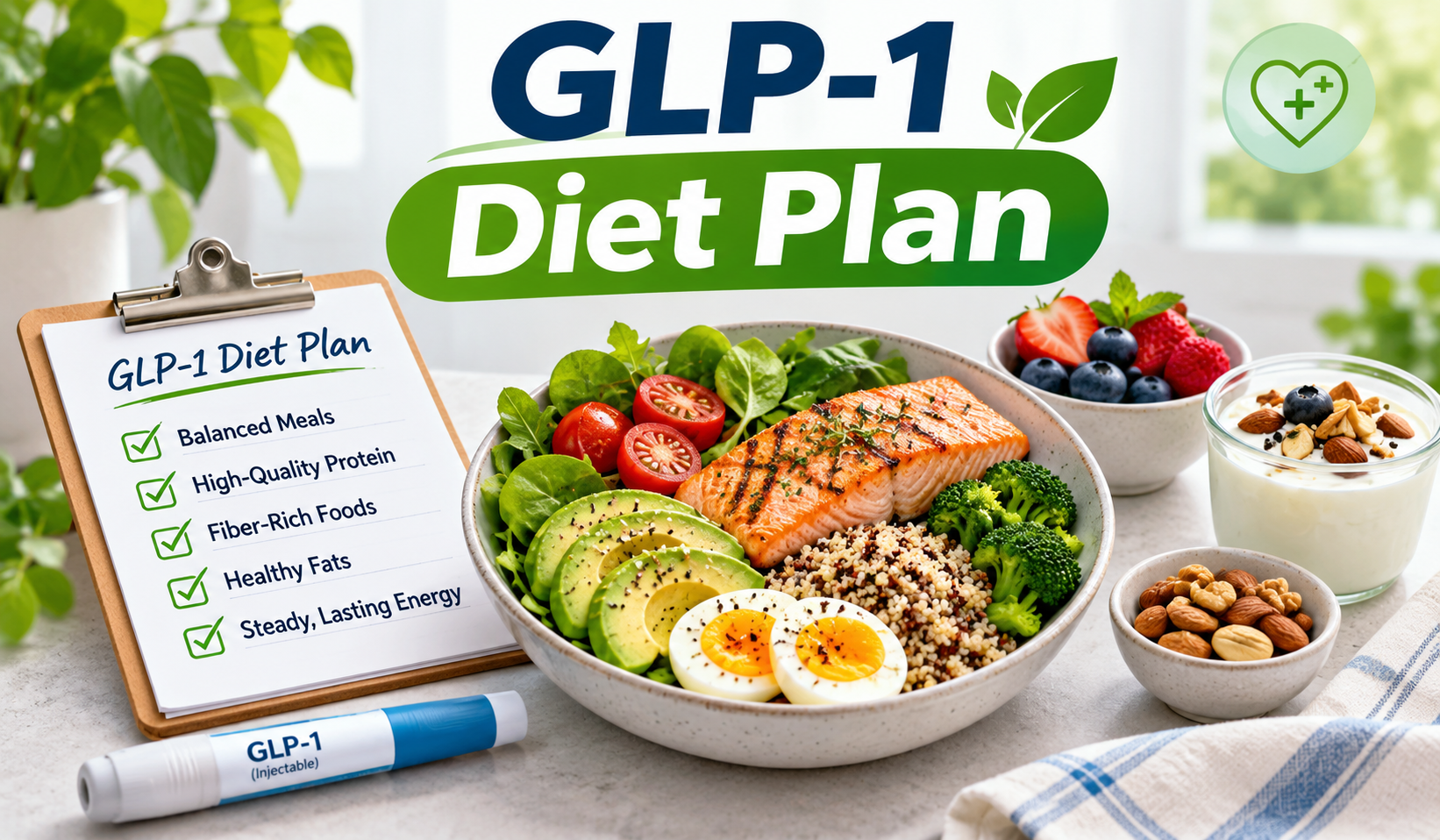
One of the biggest challenges people experience while using GLP-1 medications is figuring out what to eat when their appetite decreases.
Large meals may become uncomfortable, familiar foods might feel less appealing, and some individuals experience digestive changes.
The good news is that following a GLP-1-friendly eating plan does not require complicated recipes, expensive ingredients, or extreme restrictions.
This guide explains how to create a balanced GLP-1 diet plan for weight loss, including recommended foods, a practical seven-day meal plan, helpful eating habits, and strategies for maintaining long-term results.
 GLP-1 Starting at $59 Per Month – 100% Online
What Is a GLP-1 Diet Plan?
A GLP-1 diet plan is a structured approach to eating that supports people using glucagon-like peptide-1 receptor agonists or related medications for weight management and metabolic health.
Rather than focusing exclusively on reducing calories, this eating strategy emphasizes nutrient-dense foods that provide protein, fiber, vitamins, minerals, and healthy fats.
GLP-1 medications influence appetite and digestion by acting on pathways involved in hunger, fullness, and blood sugar regulation. As a result, people often feel satisfied after consuming smaller portions.
A thoughtfully designed meal plan helps ensure that reduced food intake does not result in inadequate nutrition.
The primary goals of a GLP-1 diet include maintaining muscle mass, supporting digestion, encouraging sustainable weight loss, and improving overall nutritional quality.
A Mediterranean-style eating pattern, adjusted for individual preferences and digestive tolerance, is often a practical foundation.
How Does a GLP-1 Diet Plan Work?
A GLP-1-friendly diet works alongside medication-related changes in appetite and digestion.
Because these medications can slow stomach emptying and increase satiety, smaller meals may feel more comfortable than large portions. Prioritizing nutrient-rich foods helps people meet their nutritional needs even when they eat less.
Three important mechanisms explain why food choices matter.
Appetite management: Protein-rich meals and fiber-containing foods can support fullness, making it easier to maintain consistent eating habits without unnecessary snacking.
Blood sugar support: Balanced meals containing protein, fiber-rich carbohydrates, and healthy fats can help moderate post-meal blood sugar fluctuations.
Muscle preservation: Adequate protein intake combined with resistance exercise can help minimize muscle loss during weight reduction.
A 2025 joint advisory from major nutrition and obesity organizations emphasizes nutritional adequacy, managing digestive side effects, and preserving muscle and bone health during GLP-1 therapy.
GLP-1 Starting at $59 Per Month – 100% Online
Best Foods to Include in a GLP-1 Diet Plan
Choosing the right foods is one of the most important parts of creating an effective meal plan. The focus should be on ingredients that provide substantial nutritional value in manageable portions.
1. Lean Protein Sources
Protein is particularly important during weight loss because it supports muscle maintenance, tissue repair, and everyday physical function.
Excellent options include chicken breast, turkey, fish, eggs, cottage cheese, Greek yogurt, tofu, and tempeh.
Try to include a protein source in each main meal. When your appetite is reduced, eating protein first can be a practical way to prioritize nutrition.
2. Fiber-Rich Vegetables
Vegetables provide essential nutrients while contributing to digestive and metabolic health.
Popular GLP-1-friendly vegetables include spinach, broccoli, carrots, zucchini, green beans, cauliflower, and bell peppers.
Cooked vegetables may be easier to tolerate than large raw salads during periods of nausea or bloating.
3. Whole Grains
Whole grains provide carbohydrates, fiber, and important micronutrients.
Oatmeal, quinoa, brown rice, barley, and whole-grain bread can fit comfortably into a balanced GLP-1 eating plan.
Portion sizes should reflect your appetite, nutritional needs, and activity level.
4. Healthy Fats
Healthy fats support normal hormone function and help the body absorb fat-soluble vitamins.
Good sources include olive oil, avocado, almonds, walnuts, chia seeds, and fatty fish.
Because high-fat meals can worsen digestive discomfort for some GLP-1 users, moderate portions are generally preferable.
5. Fruits
Fresh fruit offers vitamins, antioxidants, water, and dietary fiber.
Berries, apples, oranges, pears, kiwi, and bananas are convenient options.
Whole fruits are generally preferable to fruit juices because they retain fiber and are often more satisfying.
How to Adjust This Meal Plan
The meal plan works best when it is personalized. Someone who exercises frequently may require more carbohydrates and protein than someone with a sedentary lifestyle.
If you feel full quickly, divide meals into smaller portions throughout the day. If you struggle to eat enough, consider nutrient-dense additions such as yogurt, milk, tofu, eggs, or a suitable protein smoothie.
Vegetarian users can replace meat and fish with tofu, tempeh, beans, lentils, and dairy or fortified alternatives.
Those managing diabetes should also consider blood glucose patterns and discuss medication-related adjustments with their healthcare team.
GLP-1 Starting at $59 Per Month – 100% Online
How Much Protein Do You Need on a GLP-1 Diet?
Protein deserves special attention because weight loss can involve reductions in both fat mass and lean body mass.
A 2026 obesity-care guideline recommends at least 60 grams of protein daily for many adults using obesity medications, with higher amounts often appropriate depending on body size, activity, and clinical circumstances. Some weight-management recommendations use approximately 1.2–1.6 grams per kilogram of body weight daily, individualized to the patient.
Useful protein choices include:
| Food | Approximate protein |
|---|---|
| Cooked chicken breast, 3 oz | 26 g |
| Plain Greek yogurt, ¾ cup | 15–18 g |
| Two large eggs | 12–13 g |
| Cooked lentils, 1 cup | 18 g |
| Cottage cheese, ½ cup | 12–14 g |
| Firm tofu, ½ cup | 10–20 g |
These amounts vary by product and preparation.
People with chronic kidney disease or other conditions affecting protein needs should receive individualized guidance rather than automatically following a high-protein diet.
How Much Fiber Should You Eat?
Fiber supports regular bowel movements, helps promote fullness, and contributes to overall digestive health.
For many adults, general fiber targets are around 25–38 grams daily, depending on age and sex. Individual requirements vary.
Good sources include oats, berries, pears, vegetables, lentils, beans, and whole grains.
One important consideration is that suddenly increasing fiber can cause bloating or discomfort, particularly when stomach emptying is slower.
Increase fiber gradually, drink adequate fluids, and adjust food choices based on digestive tolerance.
During periods of pronounced nausea, softer, lower-fiber foods may temporarily feel more comfortable.
Foods to Limit While Taking GLP-1 Medications
No single food needs to be permanently eliminated from every GLP-1 diet plan. Still, certain choices may be harder to tolerate or provide fewer nutrients relative to their calories.
Fried and high-fat foods
Fried chicken, greasy takeout meals, and heavy creamy dishes may worsen nausea, reflux, or uncomfortable fullness.
Sugary drinks and desserts
Sweetened beverages and frequent sugary snacks can add calories without providing substantial protein or other essential nutrients.
Oversized meals
Large portions can increase abdominal discomfort, particularly when your appetite has decreased significantly.
Alcohol and very spicy foods can also aggravate digestive symptoms in some individuals. The 2026 cardiovascular-kidney-metabolic guideline recommends smaller meals, slower eating, hydration, and avoiding common gastrointestinal triggers during GLP-1 treatment.
GLP-1 Starting at $59 Per Month – 100% Online
GLP-1 Diet Plan for Managing Common Side Effects
Digestive symptoms are among the most common challenges when beginning GLP-1 treatment or increasing a medication dose.
Making simple dietary changes can improve comfort.
Managing Nausea
When nausea occurs, large meals may feel overwhelming. Try smaller portions and bland foods such as oatmeal, toast, bananas, rice, or soup.
Eating slowly, staying upright after meals, and avoiding particularly greasy foods may help.
Some people find ginger tea soothing.
Managing Constipation
Constipation may develop when food intake decreases, fluid consumption drops, or digestion slows.
To support regularity, gradually increase fiber-rich foods, drink enough water, and maintain gentle physical activity.
Walking after meals can be helpful.
Managing Diarrhea
During episodes of diarrhea, prioritize hydration and temporarily select foods that are easier to digest.
Rice, toast, bananas, and simple soups may be better tolerated than heavy meals.
Persistent diarrhea, vomiting, or inability to maintain fluid intake requires medical attention.
The 2025 nutritional advisory identifies digestive symptom management and dehydration prevention as key parts of GLP-1 care.
How Much Water Should You Drink?
Hydration is essential for digestion, circulation, temperature regulation, and normal kidney function.
Because GLP-1 medications can reduce appetite and sometimes cause nausea, individuals may unintentionally drink less.
General adequate total-water intake estimates are approximately 2.7 liters daily for adult women and 3.7 liters for adult men, including water from food and all beverages. These are not universal drinking-water requirements.
Actual fluid needs depend on activity, climate, body size, and medical conditions.
Water, unsweetened tea, and other low-sugar beverages can help maintain hydration. Those with heart failure, advanced kidney disease, or prescribed fluid restrictions should follow their clinician’s instructions.
GLP-1 Starting at $59 Per Month – 100% Online
How to Build a GLP-1-Friendly Plate
A balanced plate offers an easy way to organize meals without tracking every ingredient.
Simple balanced plate guide
Start with a protein source, add vegetables, and include a moderate portion of whole grains or other fiber-rich carbohydrates.
A small amount of healthy fat can complete the meal.
This pattern is flexible. When appetite is low, protein and nutritional adequacy should take priority over filling an entire plate.
GLP-1 Diet Plan for Vegetarians
Vegetarians can successfully follow a GLP-1-friendly eating plan by combining varied plant-based foods and suitable dairy or egg products.
Some examples include tofu stir-fry with brown rice, lentil soup with whole-grain bread, Greek yogurt with berries, and chickpea salad with quinoa.
Plant-based protein sources also contribute valuable fiber and micronutrients.
People following fully vegan diets should pay particular attention to vitamin B12, iron, calcium, and other nutrients that may require fortified foods or supplementation.
A registered dietitian can help create a vegetarian plan that meets energy and protein requirements.
Tips for Making Your GLP-1 Diet Plan Successful
Creating a meal plan is only the first step. Developing realistic habits makes it easier to maintain.
-
Eat smaller meals regularly. Avoid forcing large portions when you feel full, but do not routinely skip meals to the point of inadequate nutrition.
-
Prioritize protein. Include protein sources throughout the day to support muscle maintenance.
-
Prepare meals ahead of time. Keep cooked protein, chopped vegetables, fruit, and convenient snacks available.
-
Stay hydrated. Sip fluids consistently, especially if your appetite or thirst is reduced.
-
Practice mindful eating. Eat slowly, notice your fullness signals, and avoid eating beyond comfort.
-
Include resistance exercise. Strength training supports muscle preservation during weight reduction.
-
Monitor nutritional intake. If you are consistently eating very little, discuss your intake with a healthcare professional.
Small, sustainable improvements are generally more useful than complicated routines that become difficult to follow.
Common Mistakes to Avoid on a GLP-1 Diet
One common mistake is assuming that eating as little as possible will produce the best results.
While GLP-1 medications may naturally reduce calorie intake, extremely restrictive eating can contribute to fatigue, nutrient deficiencies, and muscle loss.
Another mistake is focusing only on weight changes rather than overall health.
Adequate nutrition, strength, mobility, and digestive comfort are important measures of progress.
Some individuals also rely heavily on protein shakes while neglecting vegetables, fruit, and whole foods. Protein drinks can be useful when appetite is low, but they should complement a varied eating pattern when possible.
Finally, frequently changing diets can make consistency difficult. Choose familiar foods, build meals around your preferences, and make gradual adjustments.
GLP-1 Starting at $59 Per Month – 100% Online
How Long Should You Follow a GLP-1 Diet Plan?
A balanced GLP-1 eating plan is best viewed as a long-term approach rather than a temporary weight loss challenge.
During the early weeks of treatment, digestive tolerance and appetite may change. Meals may need to be smaller or softer until symptoms settle.
As treatment continues, maintaining protein intake, consuming varied nutrient-dense foods, and preserving physical activity become important priorities.
After reaching a weight-management goal, eating habits may need to change to support weight maintenance.
People who reduce or discontinue GLP-1 medication may experience changes in appetite and fullness. Continuing structured, balanced meals can help support ongoing nutritional and weight-management goals.
The ideal plan should evolve with your health, preferences, activity level, and treatment response.
Final Thoughts
A successful GLP-1 diet plan is not about eating the smallest possible amount of food. It is about making thoughtful nutritional choices that support healthy weight management, muscle preservation, digestive comfort, and long-term well-being.
Protein-rich meals, fiber-containing foods, appropriate portions of healthy fats, and consistent hydration create a strong foundation for people using GLP-1 medications.
The seven-day meal plan in this guide offers a practical starting point, with simple recipes and flexible food choices that can be adjusted to different preferences.
For the best results, combine balanced nutrition with regular physical activity, adequate sleep, and appropriate medical follow-up.
The most effective GLP-1 diet plan is one that provides enough nourishment, fits your lifestyle, and remains manageable over time.
GLP-1 Starting at $59 Per Month – 100% Online
References
https://www.webmd.com/obesity/features/ozempic-diet-foods
https://www.healthline.com/health/nutrition/glp-1-diet
https://en.wikipedia.org/wiki/Healthy_diet
